
Why condition is king
‘Grading is one of the most important factors in assigning value’
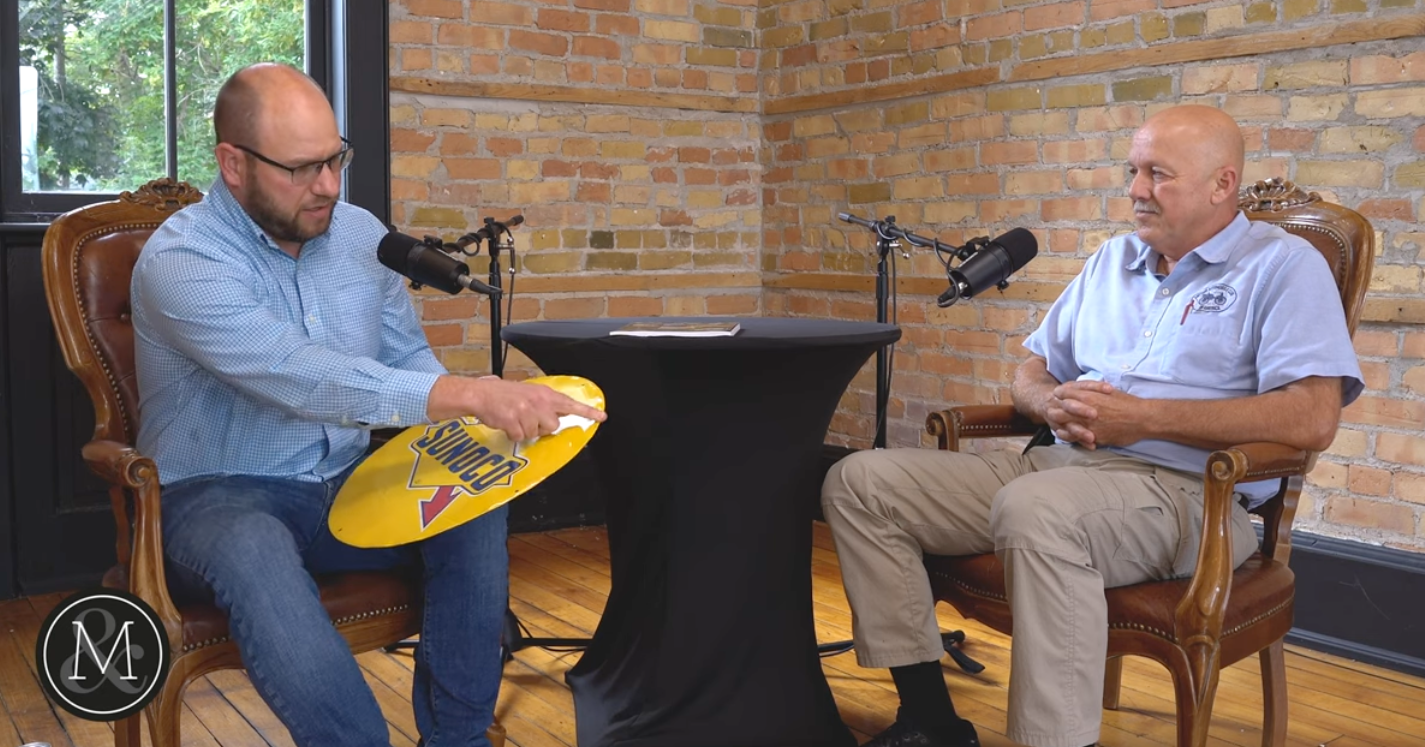
Pictured above are Justin Miller, co-owner of Miller & Miller Auctions, and Dan Matthews, founder of The Authentication Company (TAC).
Sophisticated buyers of antique advertising are predictable perfectionists, some might even say fanatical in their quest for the best. And condition is always top of mind.
“Condition is one of the main factors affecting values in a lot of categories – in fact in anything collectible,” says Miller & Miller Auctions co-owner Justin Miller, “but now with Petroliana and Advertising being among the hottest categories it becomes even more important. It’s the result of a maturing market and a sign that collectors are becoming increasingly demanding.”
That’s one reason Miller & Miller Auctions has been using a grading scale since 2024, developed by TAC (The Authentication Company). It was founded in 2018 in Illinois by Dan Matthews, who after spending decades in the auction business recognized a need and an opportunity.
Miller & Miller continues to work closely with TAC to provide peace of mind to discriminating buyers of advertising, ensuring they’re getting what they think they’re getting. The authentication process confirms the piece is not a reproduction, or restored, assesses condition and assigns a grade. Every piece is examined in person and given a unique serial number and holographic sticker. Driving home the point, Dan Matthews says he once met a Texas collector with 100 advertising signs, 95 of which he identified as fake.

All TAC authenticated items receive a unique serial number and a holographic sticker.
“Grading a sign is one of the most important factors in assigning value, plus it takes the pressure off prospective buyers to try and grade something themselves,” says Justin. “You don’t need to have that granular knowledge since it’s been TAC stickered, which eliminates the guesswork.” It also ensures when something is passed along to a future generation it’s clear what’s being inherited is the real thing.
TAC’s grading system will next be applied to all signs in Miller & Miller’s fall Petroliana & Advertising auctions, slated for September 12 and 13.
A grade of 9 is considered an “investment grade – the best example of that particular sign out there,” Justin explains. And there are further distinctions, with 9.25, 9.5 and 9.75 grades. Nothing gets a 10 apparently. The only time collectors might be forgiving of condition is if a sign is extremely rare, or never before seen. And Justin knows from experience that “when rarity and condition collide anything can happen on the auction block.”
So apart from impacting value, what’s the other reason Miller & Miller assigns so much weight to condition?
“It’s been instilled in us by our father. He was a condition freak,” says Justin, referring to the late Jim Miller, the renowned antiques and classic car dealer, a driven mover and shaker and a trailblazer in the business who died of cancer in 2010 at the age of 58. “When Dad was buying in the 1980s and ‘90s advertising was not nearly as mature a market as it is today. Nowadays it’s a different story. It’s extremely competitive and there are a lot more sophisticated buyers. It’s become its own world now.”
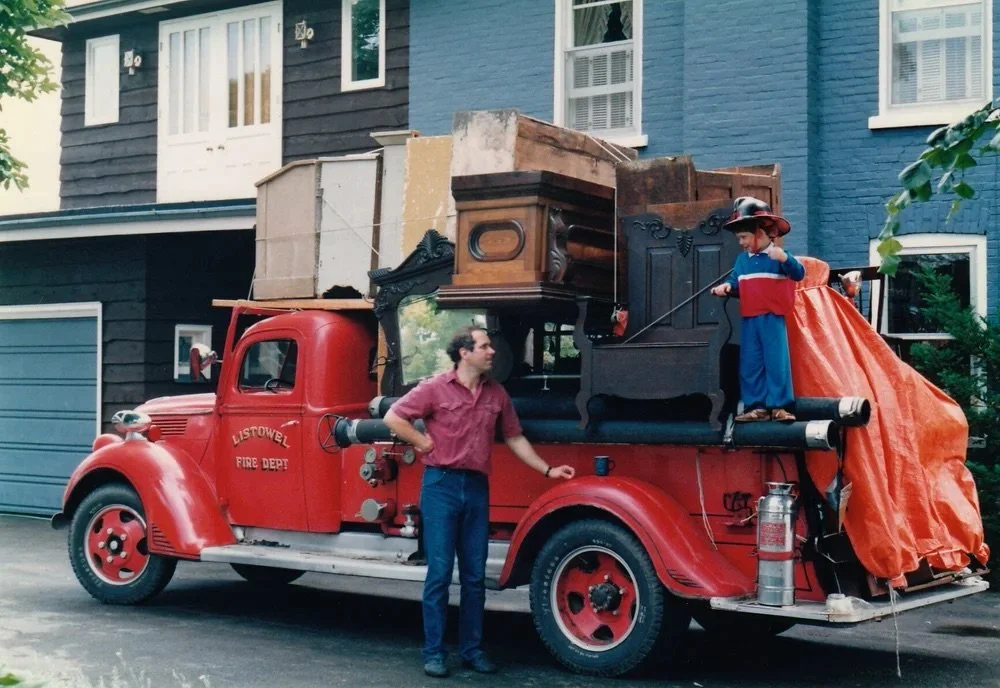
Jim Miller is pictured above gathering new acquisitions with his second son, Ethan, now co-owner of Miller & Miller Auctions.
Dealer Ken Aubrey vividly recalls Jim Miller’s obsession with condition. Ken, who lives in the Ottawa area, has been buying and selling antique advertising since 1977 and Jim was a frequent customer and a friend. He’d see Jim at the Toronto shows, “jumping on anything really good and clean.” If he was offered something that was chipped, faded or scratched Ken knew he’d turn it down. “Jim was ahead of the Canadian market. He went to a lot of U.S. shows and got educated faster than the rest of us did,” he says. “In fact, it was Jim who educated the Canadian market on condition.”
Ken remembers Jim phoning him as he was en route to set up at the now-defunct Christie Antique and Vintage Show near Hamilton, Ontario. It was a short, straight-to-the-point call, typical of Jim. “What’s the best thing you’ve got in your truck Ken?” he asked. “And what’s the condition?” Ken described the piece as accurately as he could, then Jim said, “It’s sold Ken. I’ll pick it up before the show opens.”

The above 4' Supertest Service Station Sign was authenticated by TAC (#402634) and awarded a grade of 8.75 on both sides. It sold for CA$33,880 at Miller & Miller in June 2026.
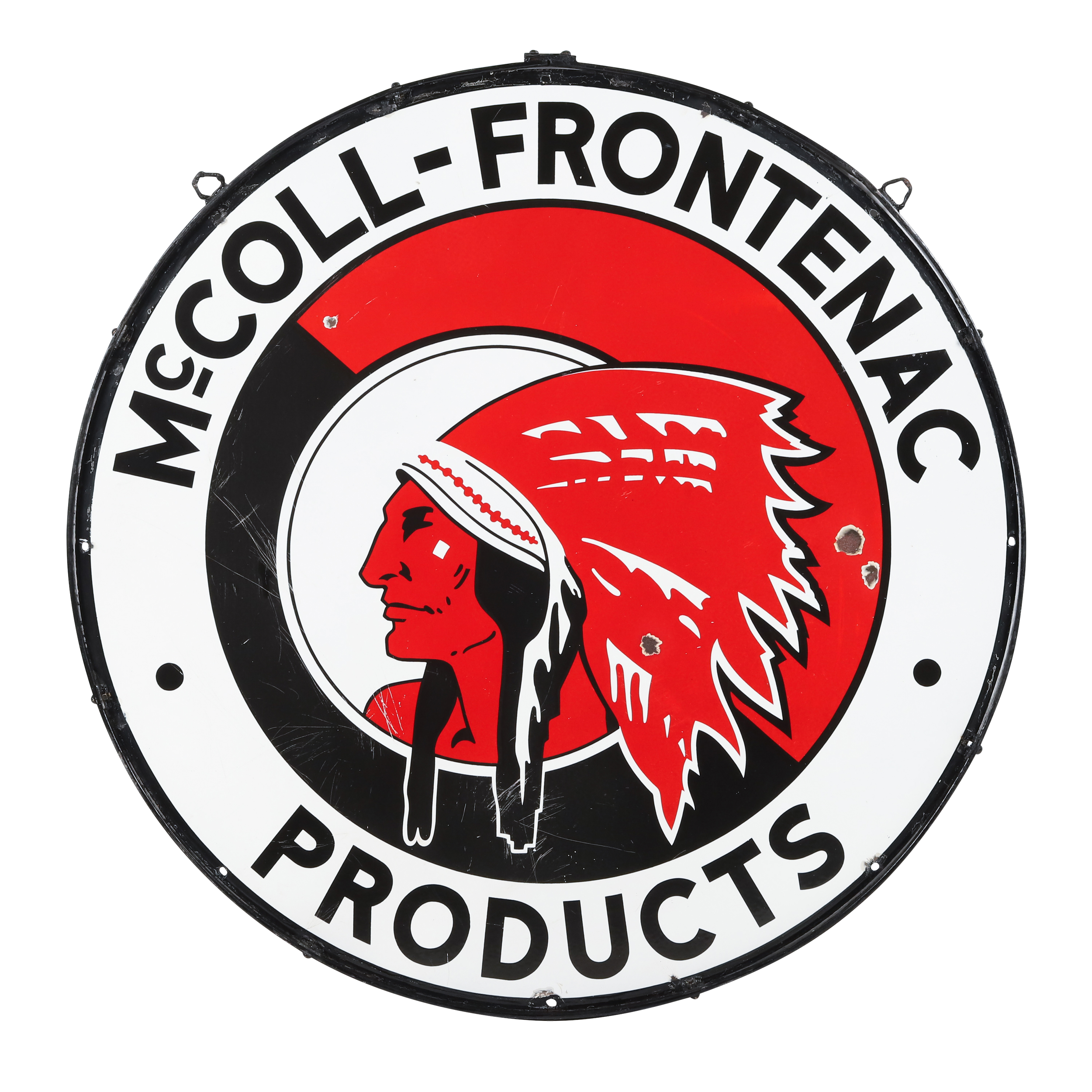
The above 5’ McColl-Frontenac Red Indian Service Station Sign was authenticated by TAC (#401833) and awarded a grade of 8.75. It sold for CA$18,150 at Miller & Miller in June 2026.
Miller & Miller Auctions co-owner, Ethan Miller, learned first-hand the importance of condition and early on. As a budding collector at age 12 he remembers visiting a young collector friend who was obsessed with condition and railed on about how he “celebrated mint”, suggesting everything else was a failure in degrees. “He was so persuasive and so passionate I recall going home after one long show-and-tell and looking closely at every piece displayed in my room. If it wasn’t ‘mint’ I packed it away out of sight right then and there. I couldn’t unsee the flaws,” he recalls. “Every collector has that recollection when the condition thing clicks – the ‘aha moment’”.
Condition has been a quantifiable obsession for years in a number of categories. Coins, for example, have been graded since 1949, with a third-party certification by PCGS (Professional Coin Grading Service) launched in 1986. Sports cards have been graded using a 10-point scale since 1991 by the Professional Sports Authenticator (PSA).
The importance of condition and authenticity can’t be overstated in today’s supercharged market, especially when bidders have to trust the auctioneer’s listing. Earning and maintaining that trust is central to Miller & Miller Auctions’ reliable reputation.
By Diane Sewell
Diane Sewell has been a writer for more than 25 years, producing feature stories for some of the country’s top newspapers and consumer magazines, as well as client newsletters and commissioned books.
Justin Miller, co-owner of Miller & Miller Auctions, sits down with Dan Matthews, founder of The Authentication Company (TAC) to discuss the value of authentication.
Did you enjoy this story? Feel free to share it using the links below: