
Artist Trudeau inspired by a love for Manitoulin
Nurturing a personal passion and a unique style
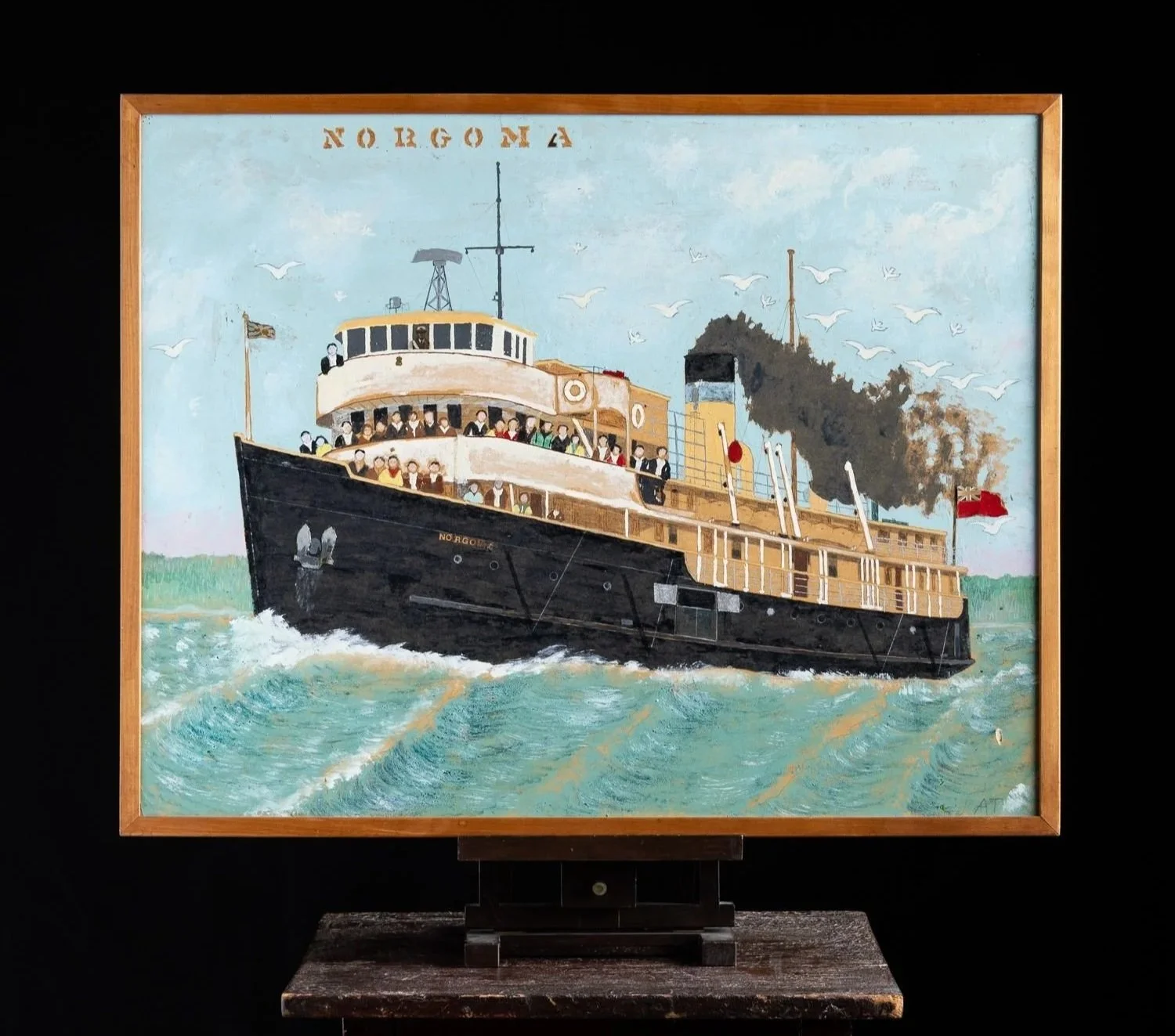
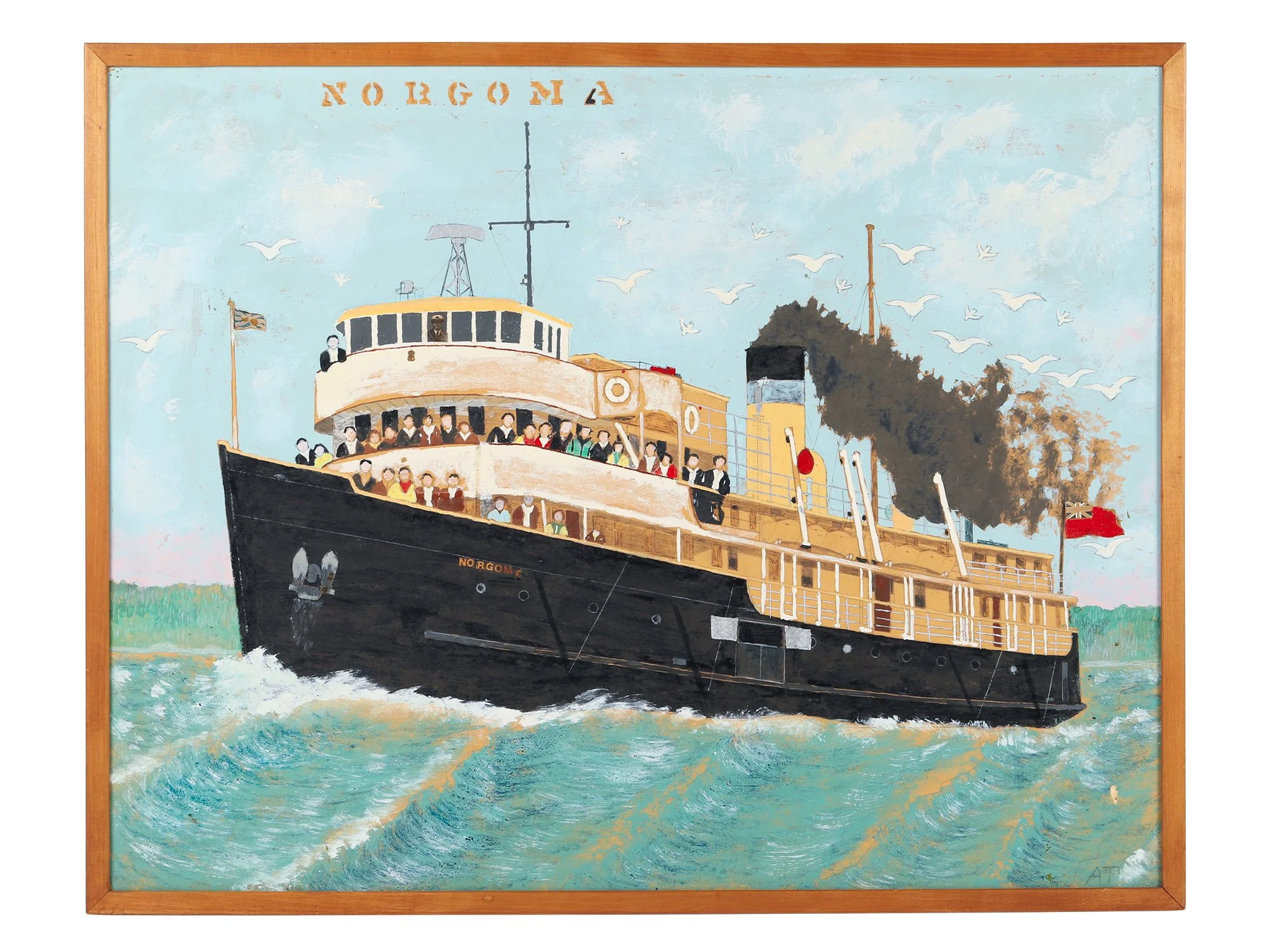
Miller & Miller is pleased to present two works by Angus Trudeau in the June 11 sale of Post-War Canadian Folk Art. Pictured above is “Norgoma”, offered as lot 59.
The late Angus Trudeau‘s work is not like that of his fellow Anishinaabe painters. He deviated from the Woodlands school style, which referenced cultural heritage, opting instead to celebrate his personal history and memories reflecting on his careers as sailor, logger and cook. He spent many years working on the Great Lakes.
Angus Trudeau (1908 – 1984) was born and raised on Wiikwemkoong Unceded Territory, Manitoulin Island, thrust into a thriving, century-old maritime tradition. At the age of 12, he began working on freighters and ferry boats. He worked as a pulpwood cutter at lumber camps and as a cook aboard commercial ships. He spent nearly his entire life on Manitoulin Island and had a passion for its lifestyle, culture, and history. He preferred to speak Anishinaabemowin over the dominant English language. Even when he was working, he always found time to create art. In retirement he spent his days painting and building models, drawing inspiration from his Manitoulin Island home and from personal memories.
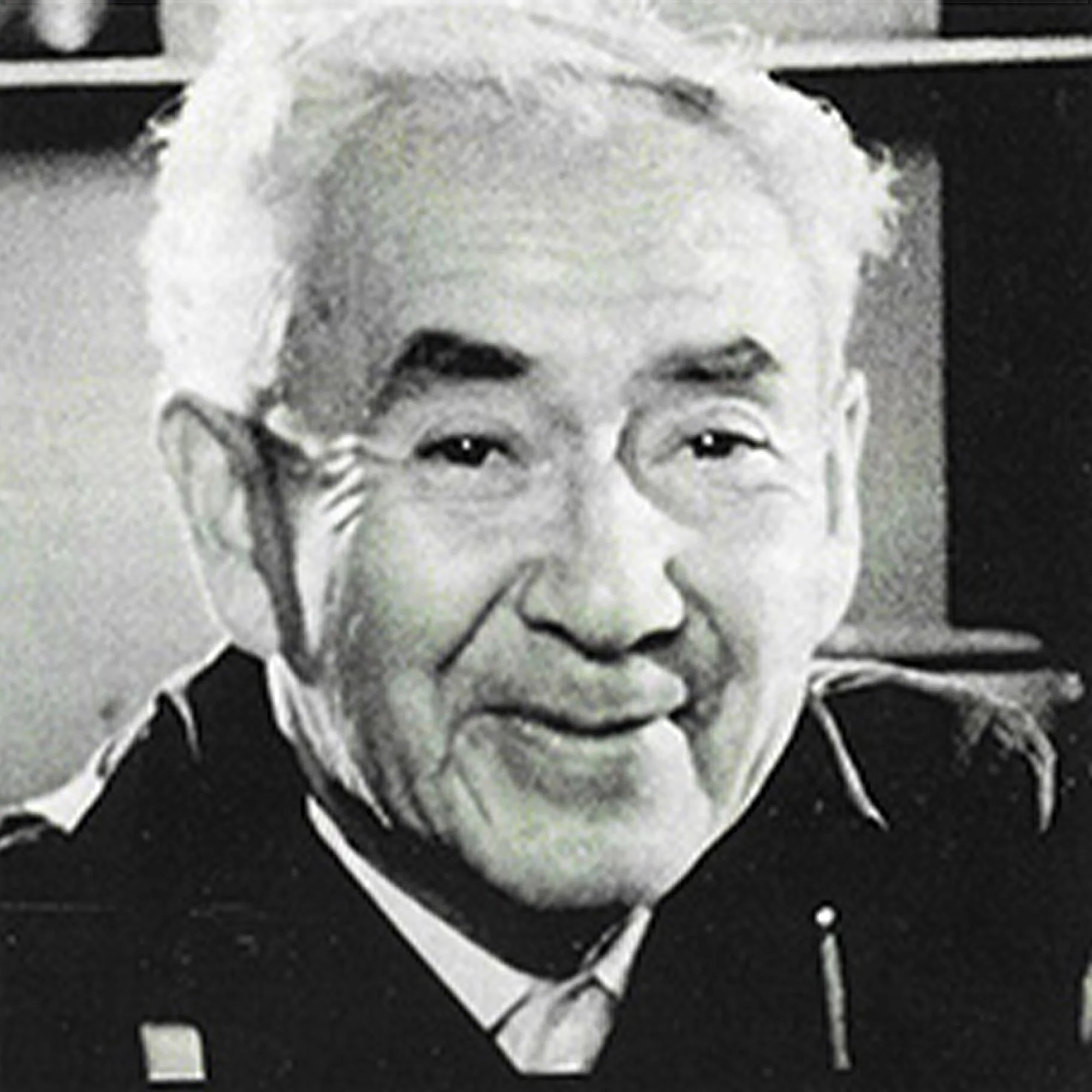
Angus Trudeau (1908 – 1984)
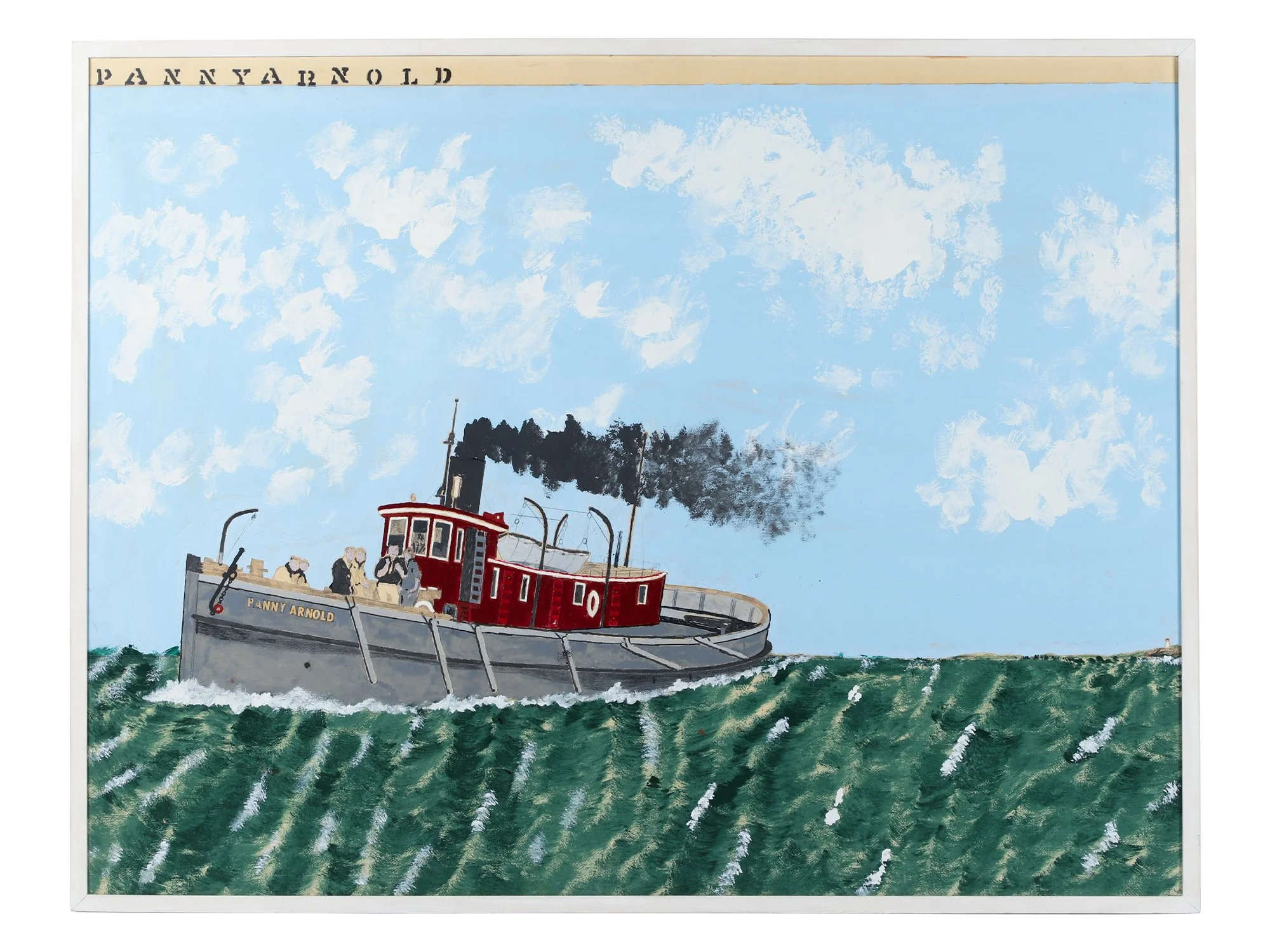
Two of Trudeau’s ship portraits will be offered June 11, 2026 at Miller & Miller’s sale, Post-War Canadian Folk Art. Lot 60, “Panny Arnold” is estimated at CA$6,000 to $9,000. Lot 59, “Norgoma”, is estimated at CA$9,000 to $12,000.
Trudeau painted what he loved: the lake freighters, ferry boats, logging camps and the communities these boats supplied. They’re portrayed from his memories as a deck hand, or from his collection of old post cards, clippings, and black and white photographs of old ships. He occasionally painted local scenes, including churches, grocery stores, farms, and family gatherings, but he largely painted boats, many of them in his distinctive flat style and unique perspective. He was a self-taught artist who developed a vibrant, unique style. He had a strong sense of decoration and he could accurately recreate the small details of the boats' mechanics.
The late Canadian art dealer, Avrom Isaacs, wrote in the 1986 McMichael Canadian Art Collection ‘Angus Trudeau’s Manitoulin’ retrospective catalogue:
“Many ‘naïve’ artists, once discovered, and once realizing what will sell, proceed to repeat themselves endlessly. Angus, on the other hand, was constantly evolving and improving. He developed an ability to paint the various moods of the sky and water that was quite exceptional. If you came across a painting by Angus in the art gallery you would probably not suspect that he was a native. His tradition of painting preceded the contemporary Indian traditions depicted by artists such as Morrisseau, Odjig, Ray and others…. He knew nothing about the rules and as a result, regularly and very successfully broke them.”
Trudeau’s paintings typically contain remarkable patterns and colours in the waves and clouds. He employed elements of collage and tracing. The ship names and some details were applied from letters he clipped from the newspaper. He also incorporated felt pen, oil paint, acrylic, glitter and newspaper photographs. The overall effect is evocative, otherworldly and personal and somehow crosses into the realm of modern art.
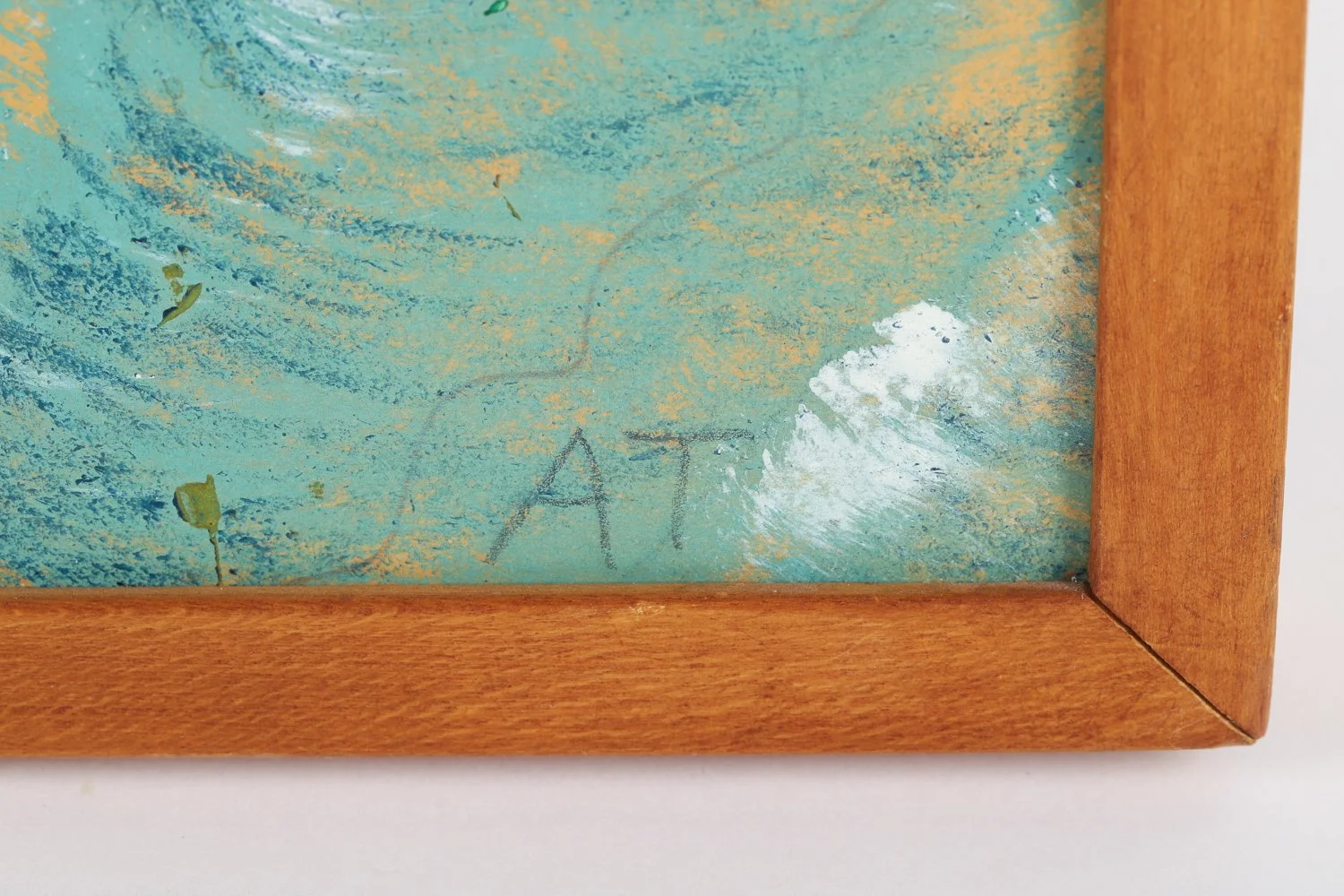
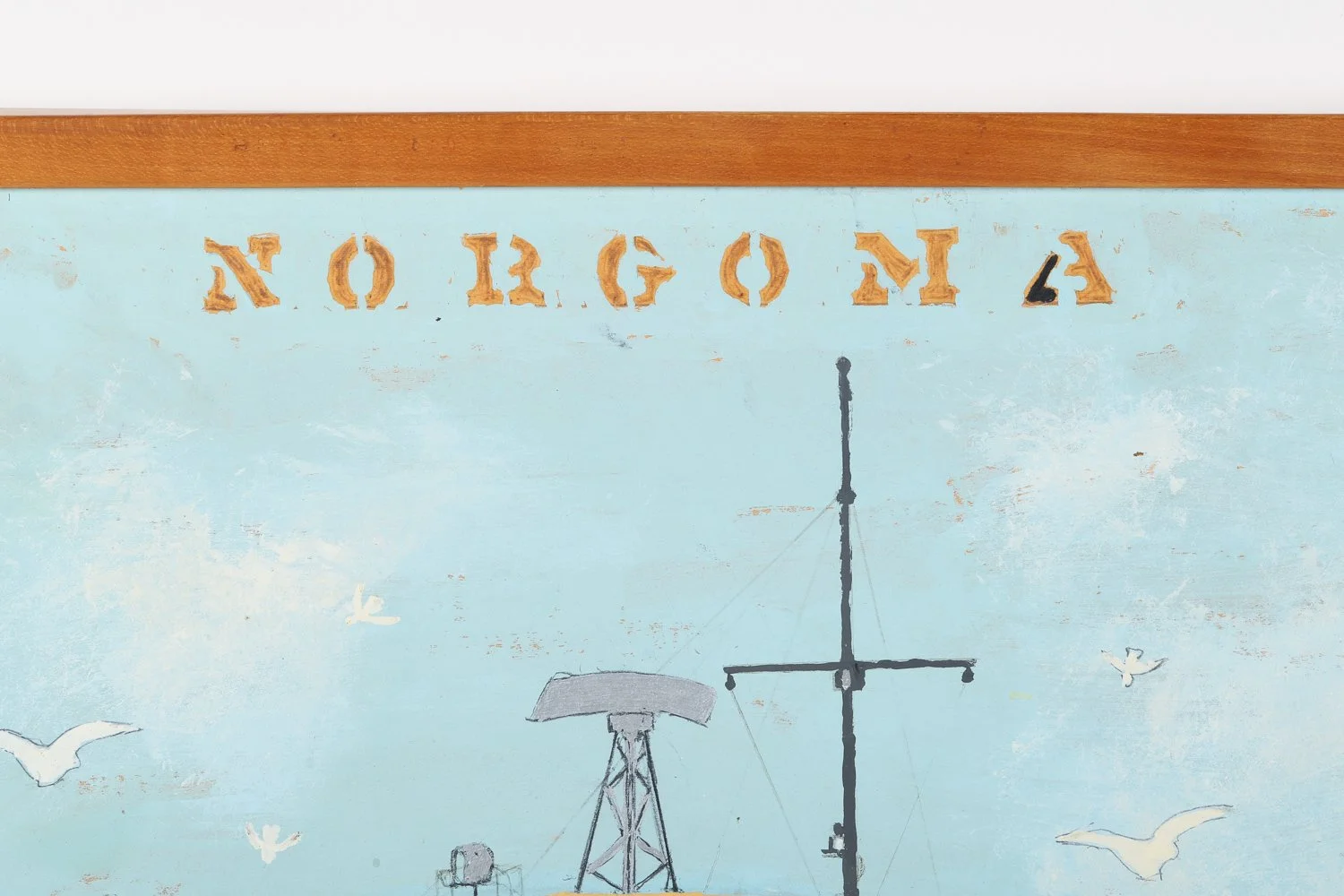
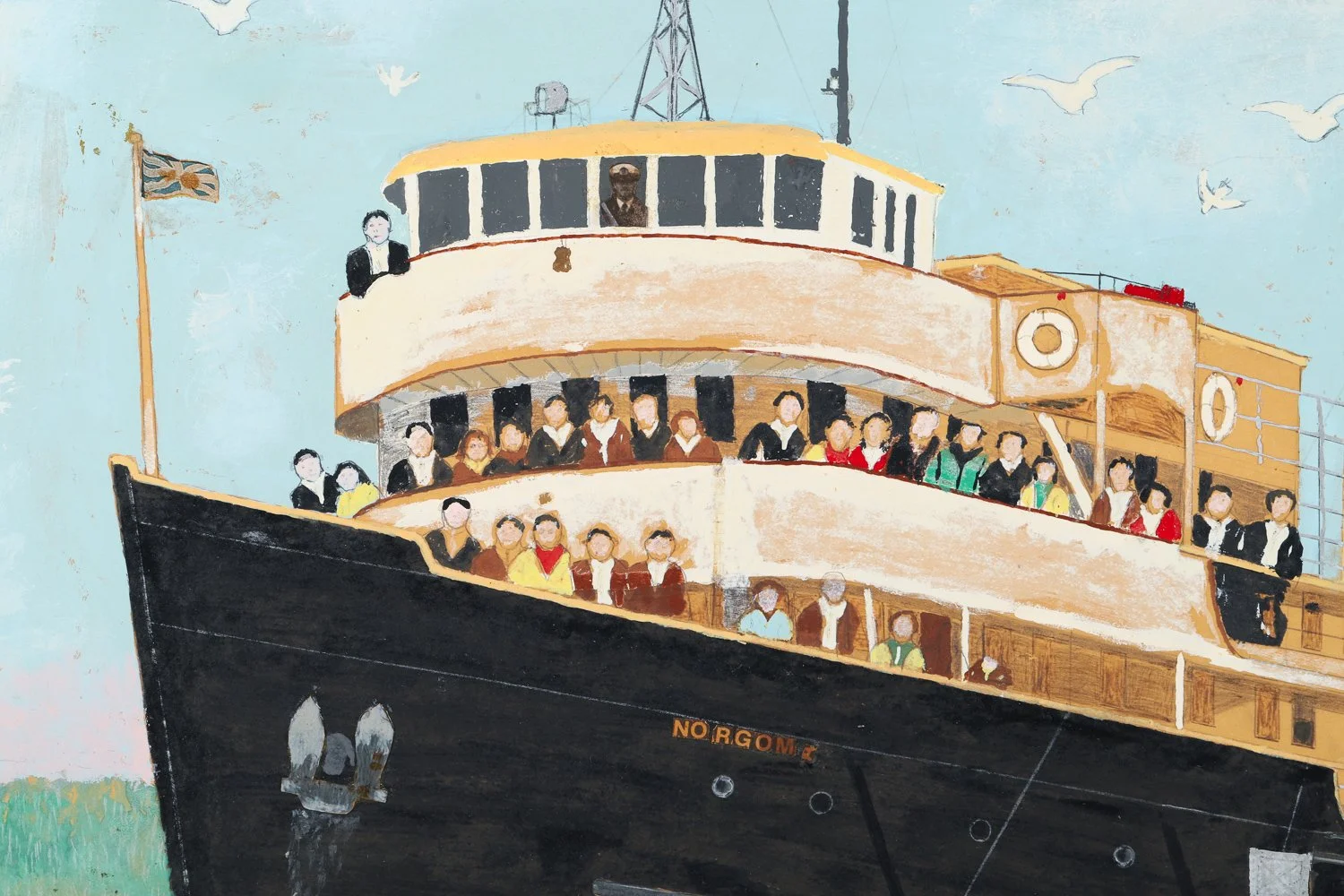
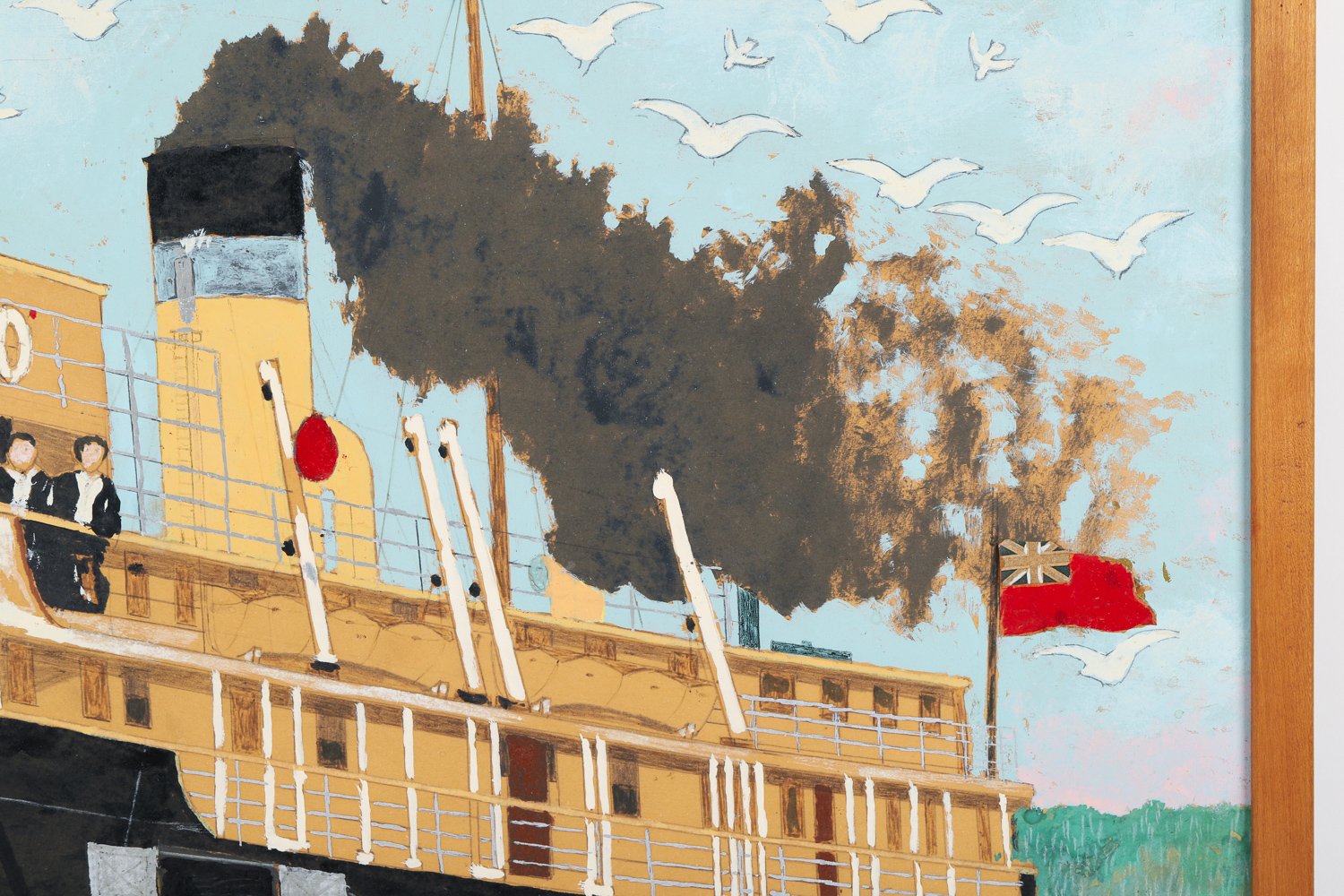
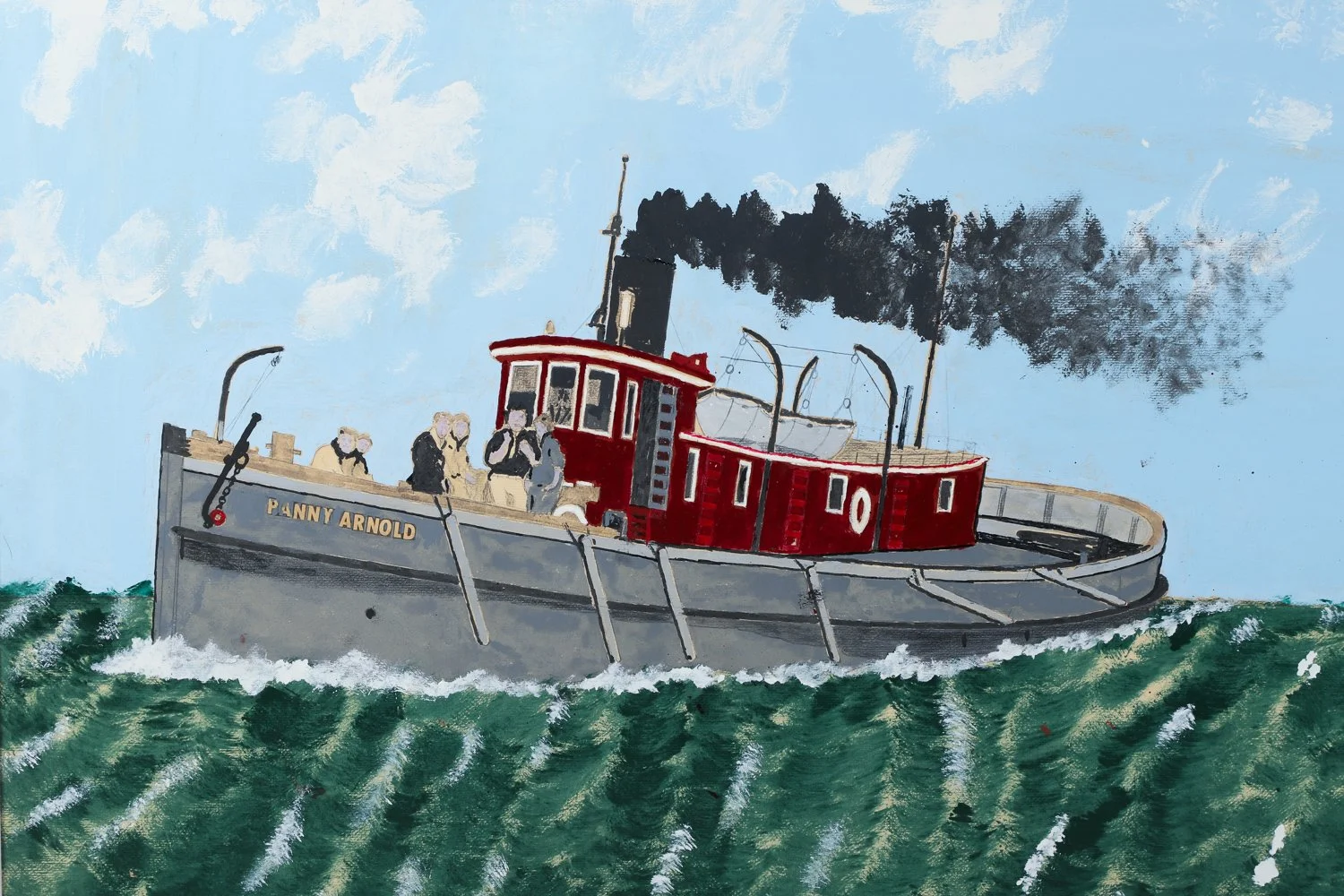
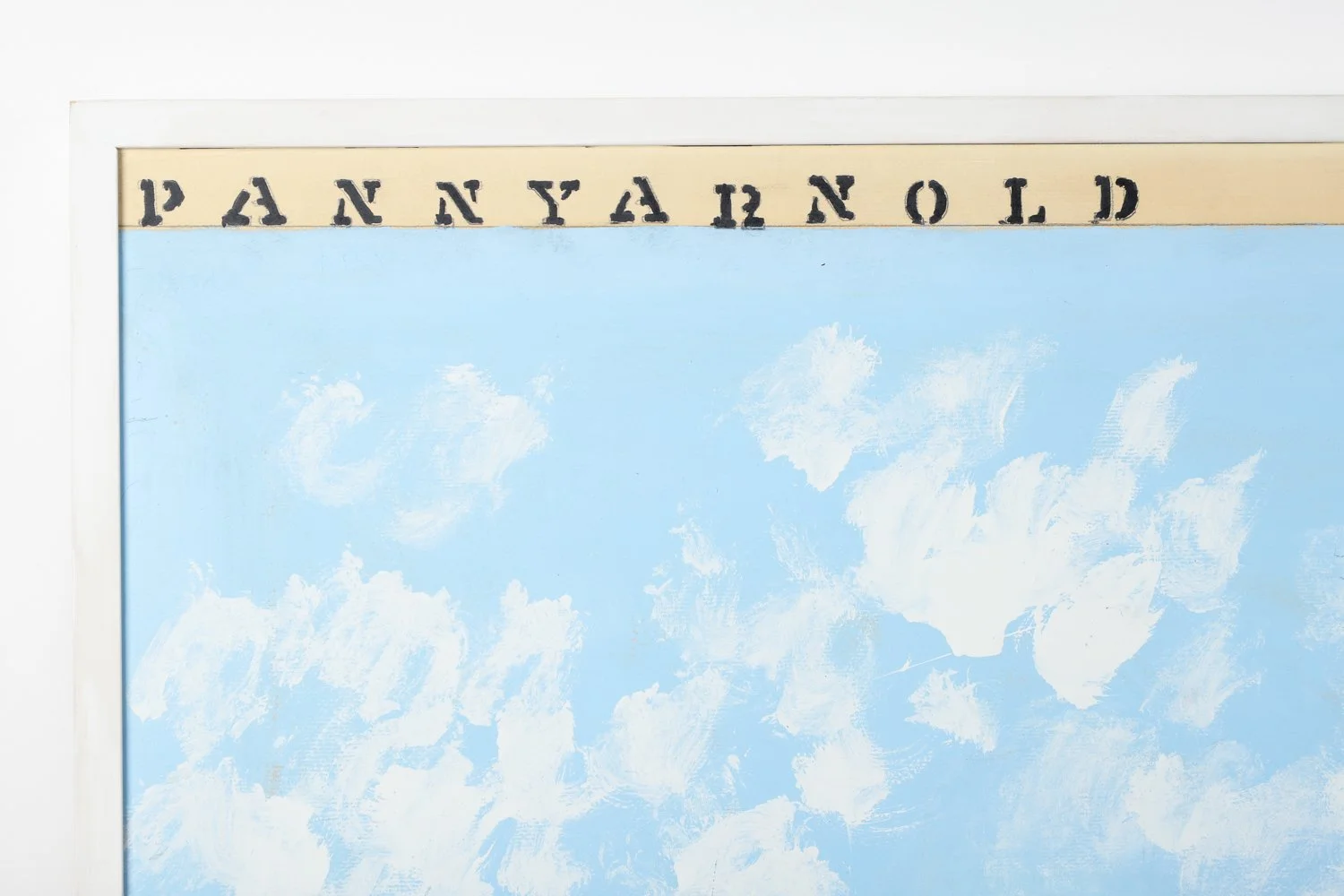
Trudeau's paintings combine vivid colours, intricate wave and cloud patterns, and mixed-media elements such as collage, newspaper clippings, paint, felt pen, glitter, and photographs to create highly personal, imaginative works that cross into the realm of modern art.
Very few folk artists accomplished this. Among those who did was Edmond Chatigny whose concept of movable components working together, assembled in different ways to create sculptural forms that function as a single system, was a genuine invention. Philippe Roy, with his stone-white religious figures, contained such serenity and depth. Joe Norris had his glossy pop visions of Nova Scotia and then there’s Maud Lewis. They all had something strong and elemental that elevated their work into a special status. Angus Trudeau had it too.
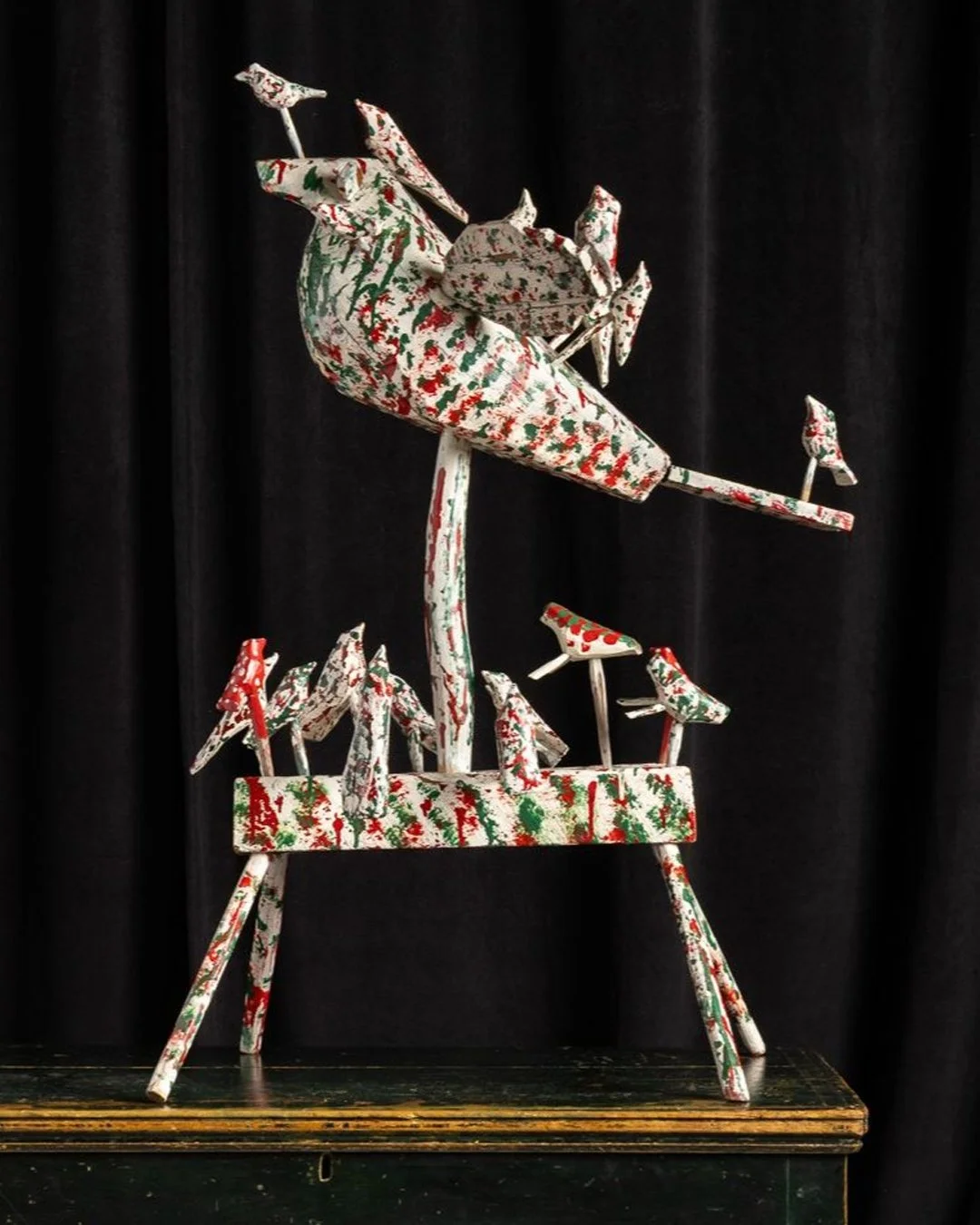
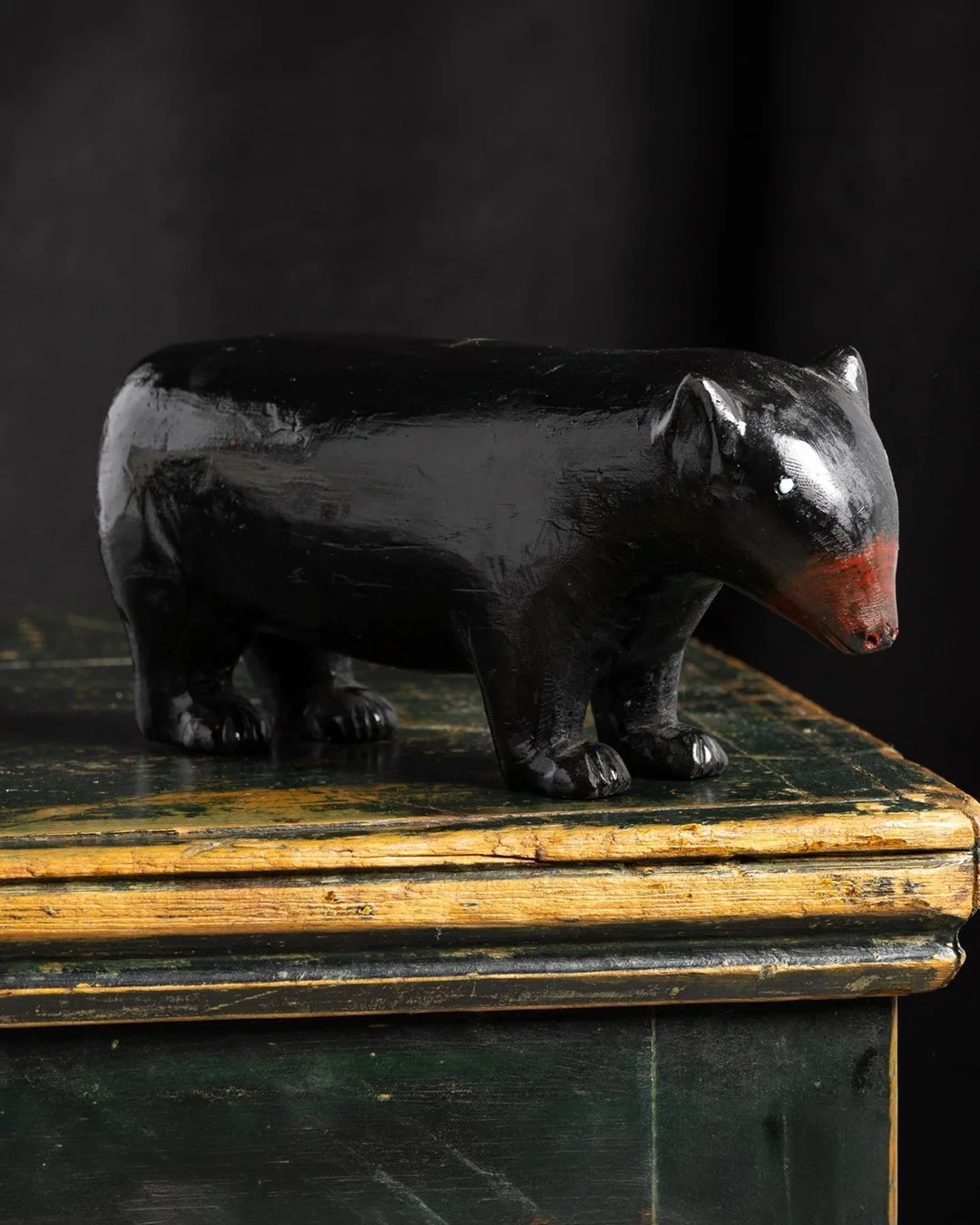
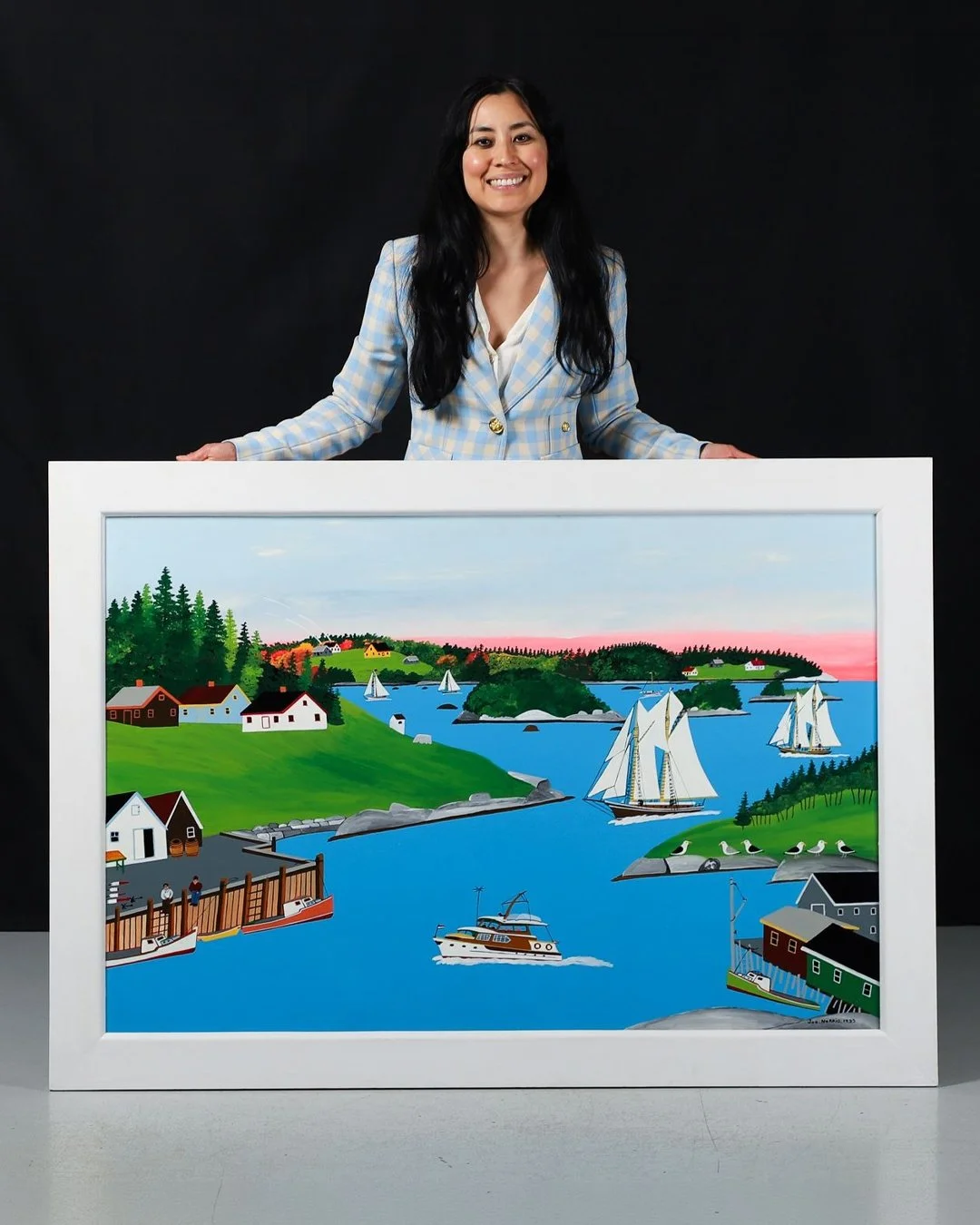
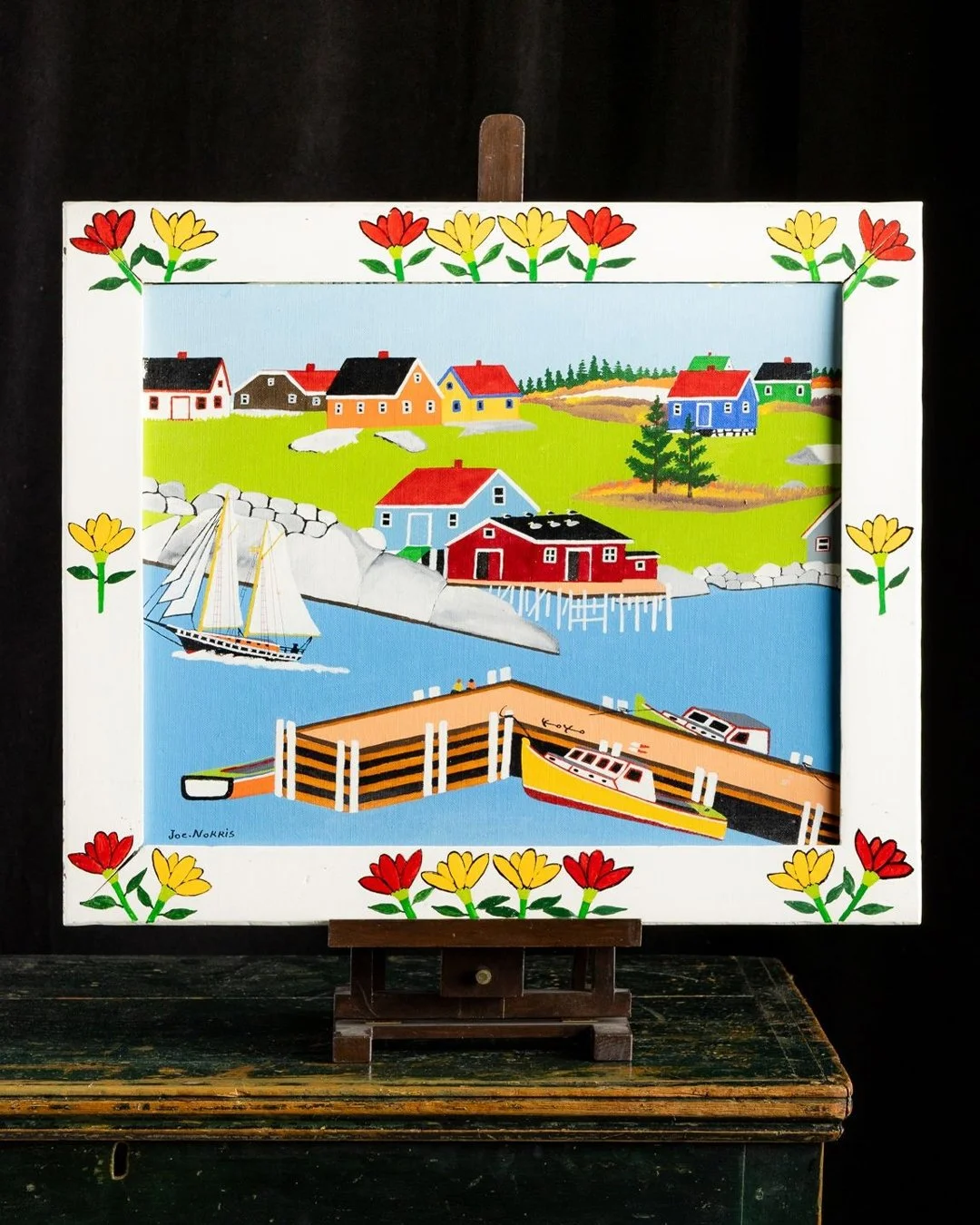
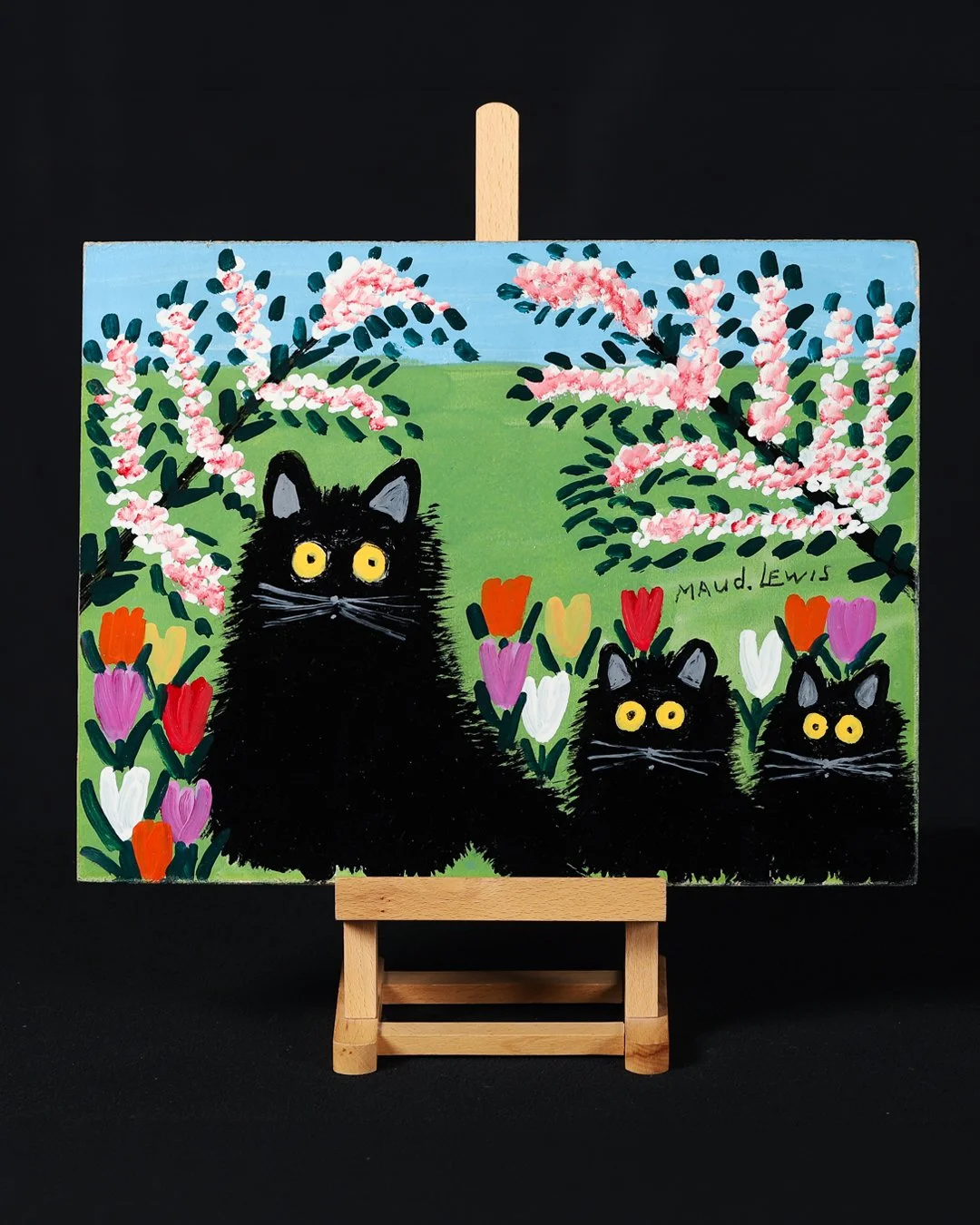
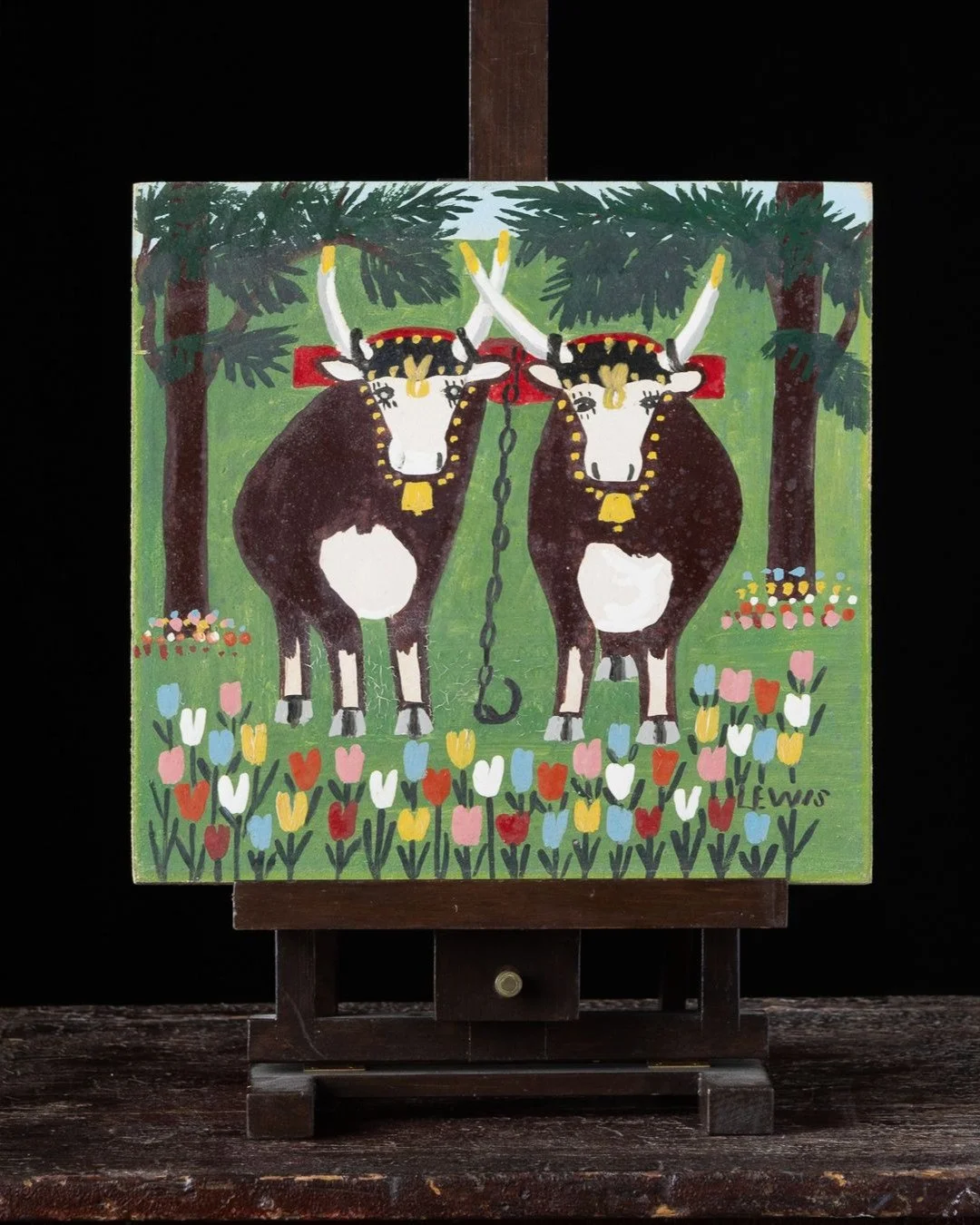
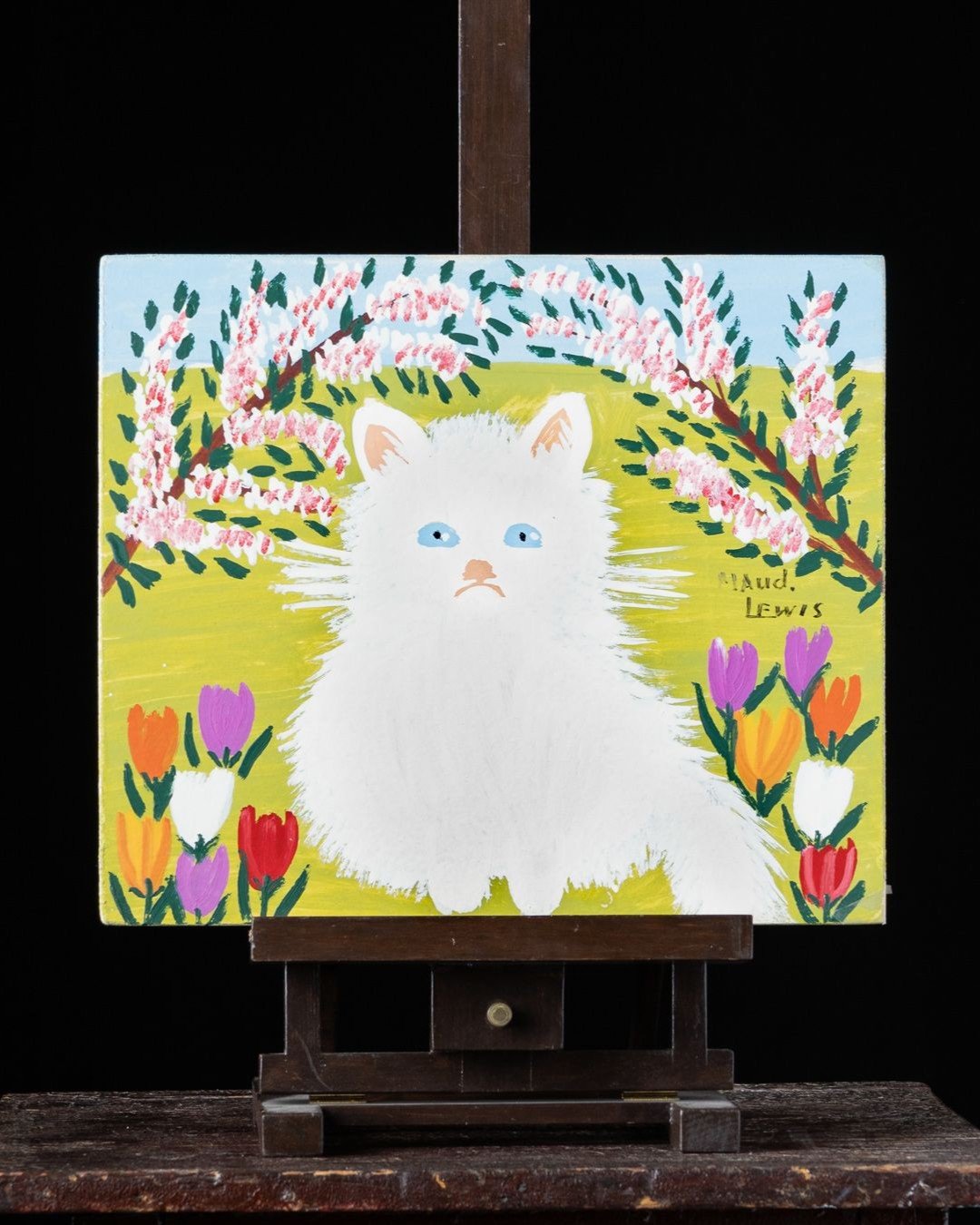
The above works by Edmond Chatigny, Philippe Roy, Joe Norris and Maud Lewis are all included in the June 11th sale. Click to view each in the online catalogue.
That’s what the late Av Isaacs recognized back in 1973, when he included Trudeau in a group show, then followed with shows in 1976, 1978, 1980 and 1982.
Other major exhibitions followed in subsequent years, taking Trudeau’s work across the country and into the United States.
Today, his paintings and models are in many private collections around the world. They are in the public collections of the Canadian Museum of History and the Canada Council Art Bank in Ottawa, the Laurentian University Museum in Sudbury, the Beaverbrook Art Gallery in Fredericton, N.B., the McMichael Canadian Art Collection in Kleinberg, Ont. and in the Art Gallery of Windsor.
The upcoming auction represents a rare opportunity to own a masterwork by this important Canadian folk artist.
By Phillip Ross
Phillip Ross became fascinated with Canadian folk art in 1982 when he started making bi-weekly trips to Quebec to purchase folk art and antiques. He brought them to markets and exhibitions, mostly in Ontario and Quebec. With his wife Jeanine, they also had a shop named Old Church Trading in their century-old church in Norfolk County, Ontario, and later, after moving to nearby Port Dover, they ran a shop named Shadfly Antiques. Since December 2011, he has written multiple blog entries chronicling his collecting experiences on his site shadflyguy.com.
SALE INFORMATION:
Post-War Canadian Folk Art
June 11, 2026, 5pm EST
Live Webcast Auction
Did you enjoy this story? Feel free to share it using the links below: