
The subliminal elements of great advertising: Don Titherington’s method
Renowned advertising collection comes to market September 14th

On September 14, Miller & Miller Auctions is bringing to market the Don Titherington Collection of General Store Advertising.
We asked advertising collector Don Titherington what he spent a good chunk of his life amassing and he responded, “I was searching for advertising with great graphics [i.e. pictorial]”. Many collectors of advertising signs chase brand-specific advertising such as Coca-Cola. Others are category builders who collect within the boundaries of soda, petroliana, or tobacco. Some care deeply about country of origin. But if Don considered adding a piece to his collection, only one thing mattered: it had to be “great”.
On September 14, Miller & Miller Auctions is bringing to market the Don Titherington Collection of General Store Advertising. Most collectors would agree that the majority of Don’s 300-plus sign collection - dazzling with bold colours, iconic brand imagery and largely in remarkable condition - falls into the “great” category. This was no accident. Don curated his collection based on a set of criteria that are not readily apparent to the viewer. After reading this, we hope that you’ll never look at advertising signs the same way again.
1. Form: The Big Three
Don focused on what he called “the big three”: porcelain, tin, and PUG (paper under glass). In Don’s books the material, shape, and the way a sign was made mattered.
While porcelain signs are usually prized by collectors for their luster, Don also looked to their shape. Diecut porcelain signs in his collection include the Helmar Cigarettes flange sign (lot 1313), the Canada Cement bag sign (lot 1265), the Ingersoll Watches flange sign (lot 1172), and the Nectar Tea teacup sign (lot 1082).

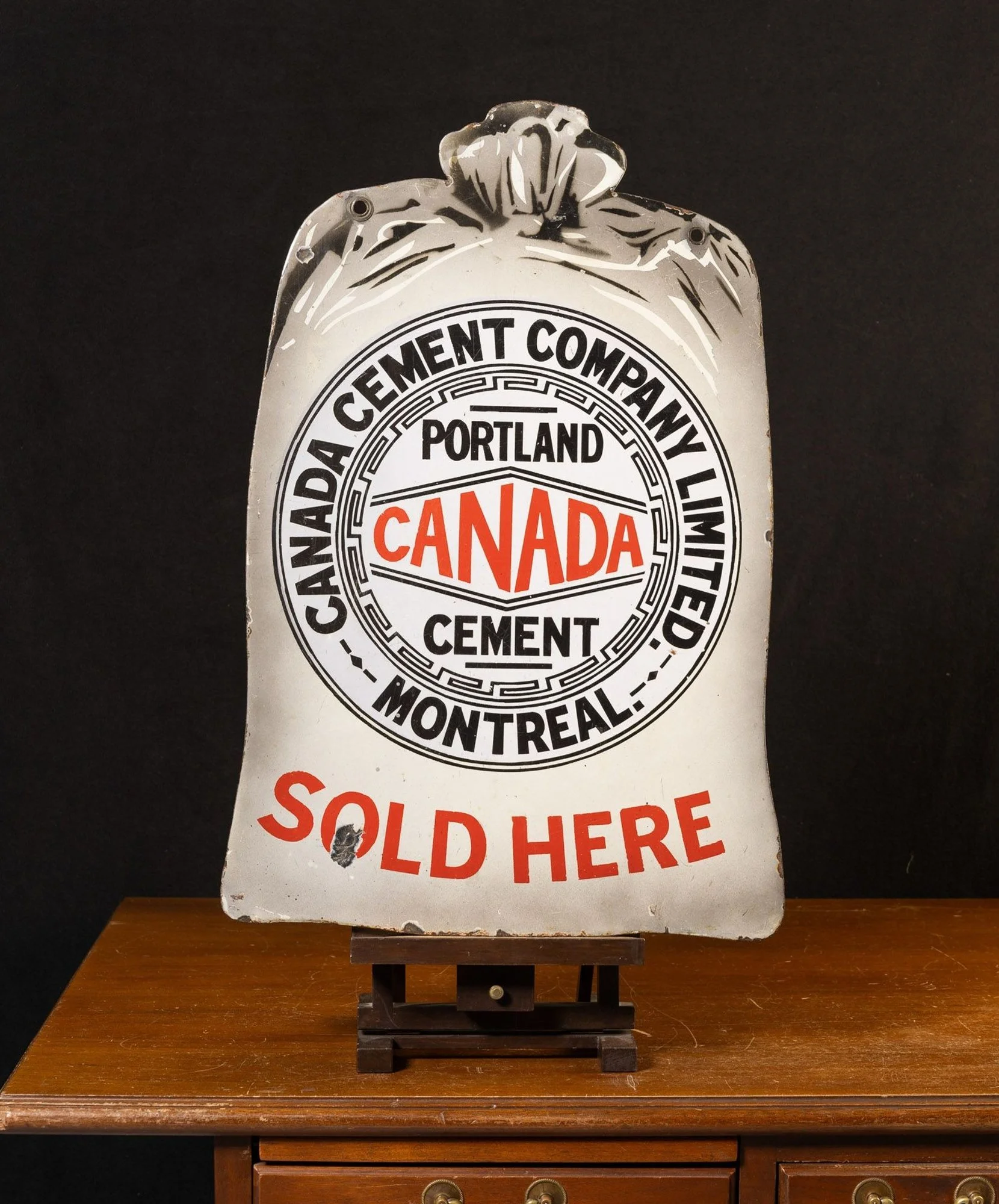
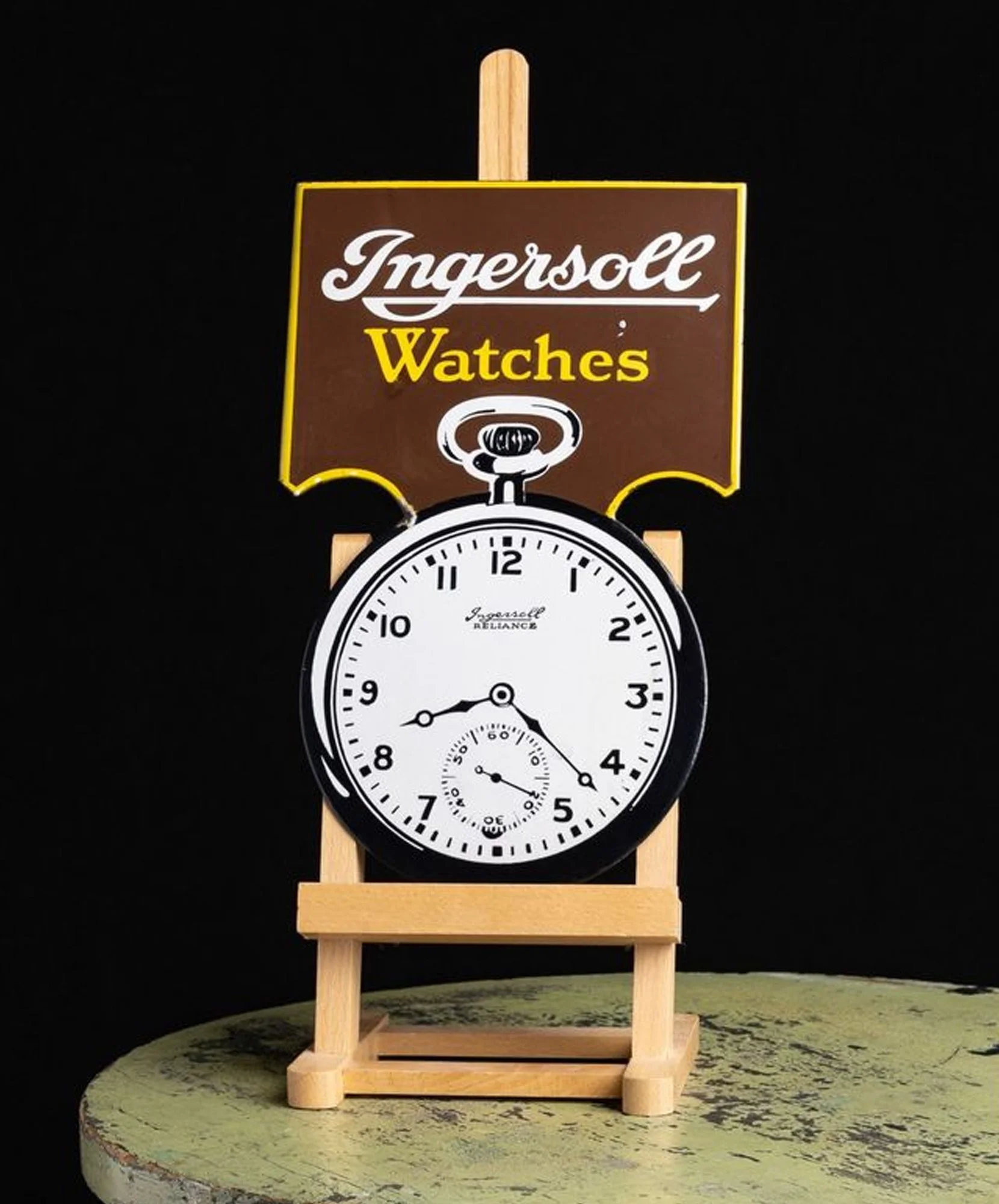
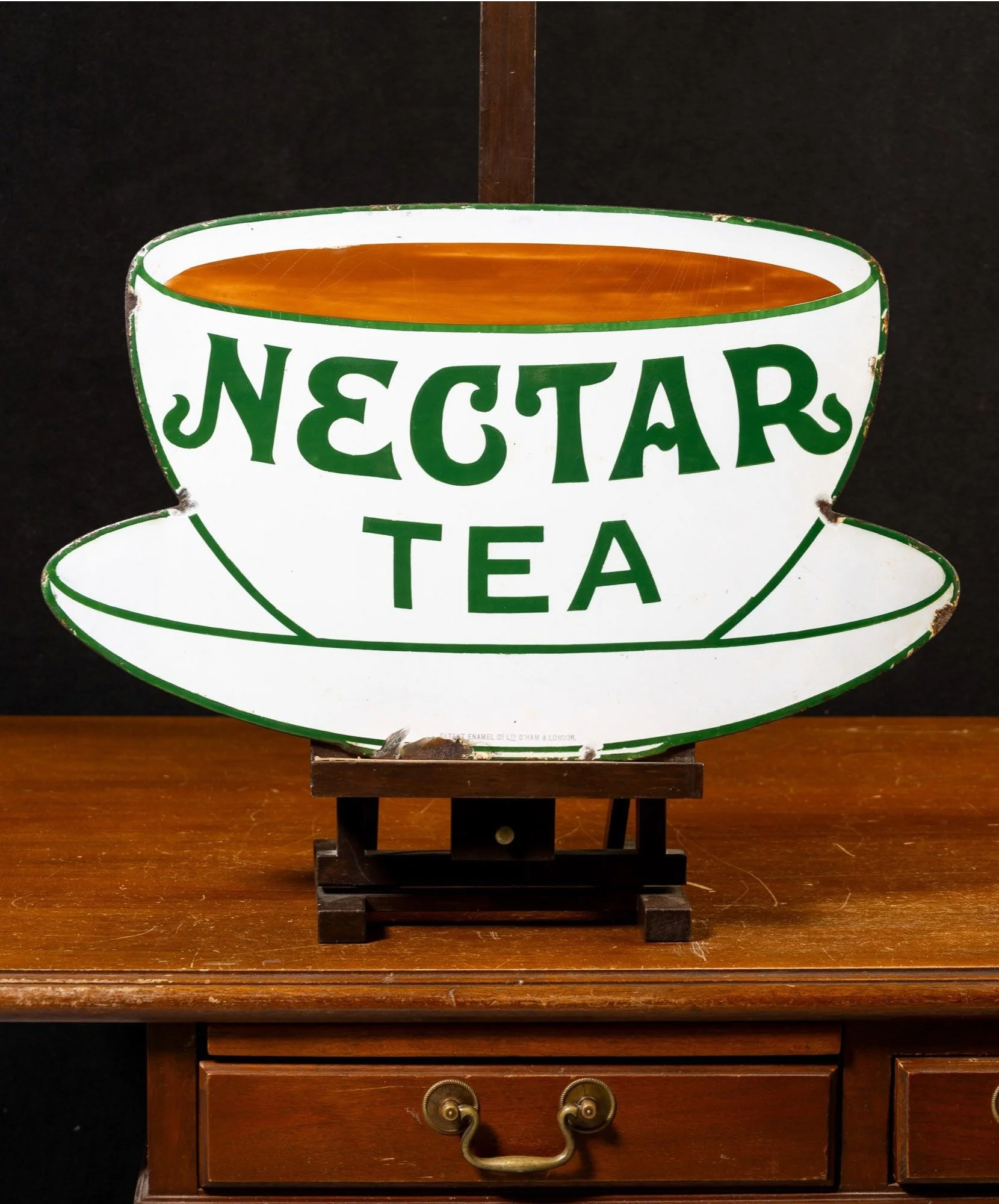
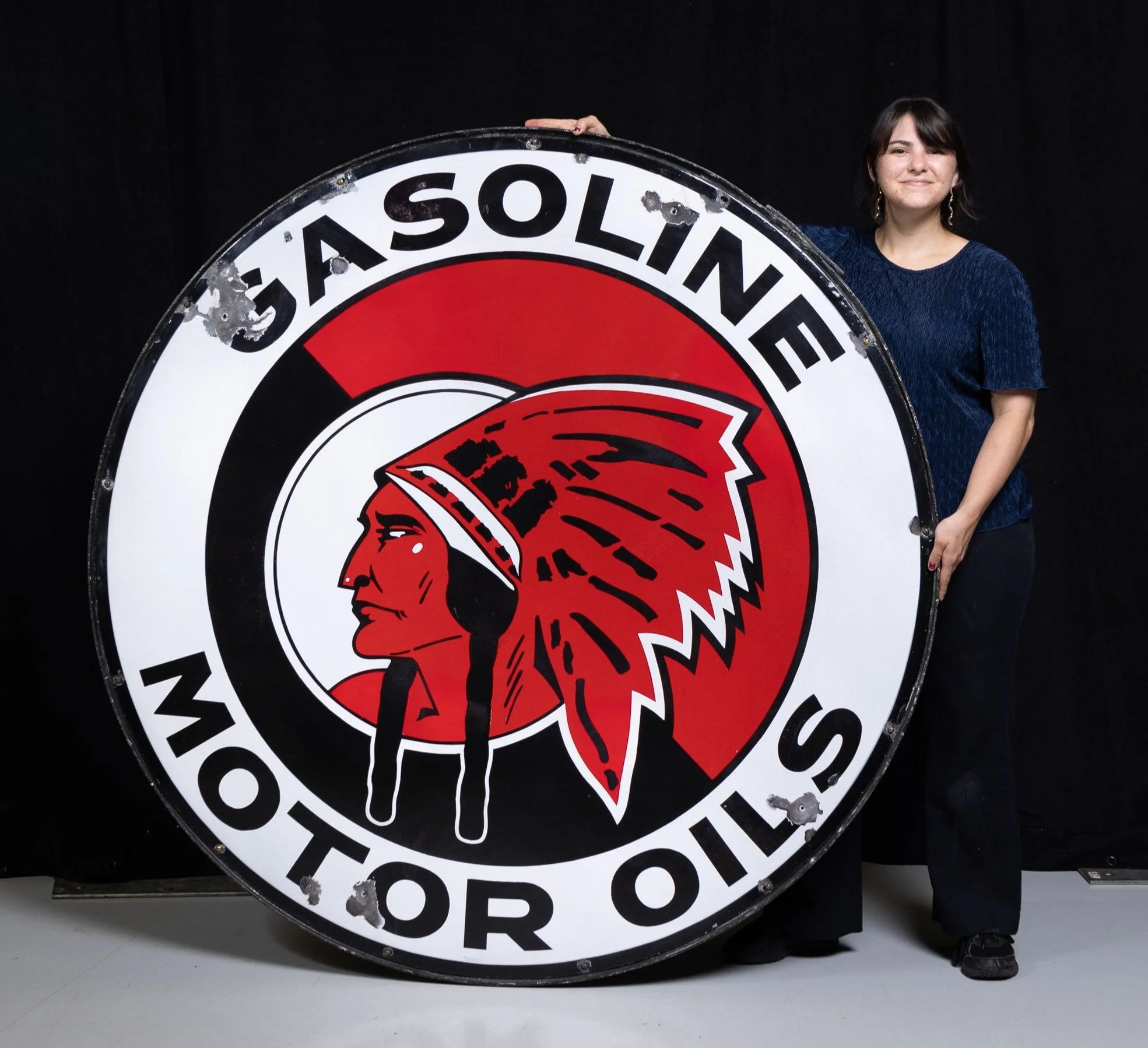
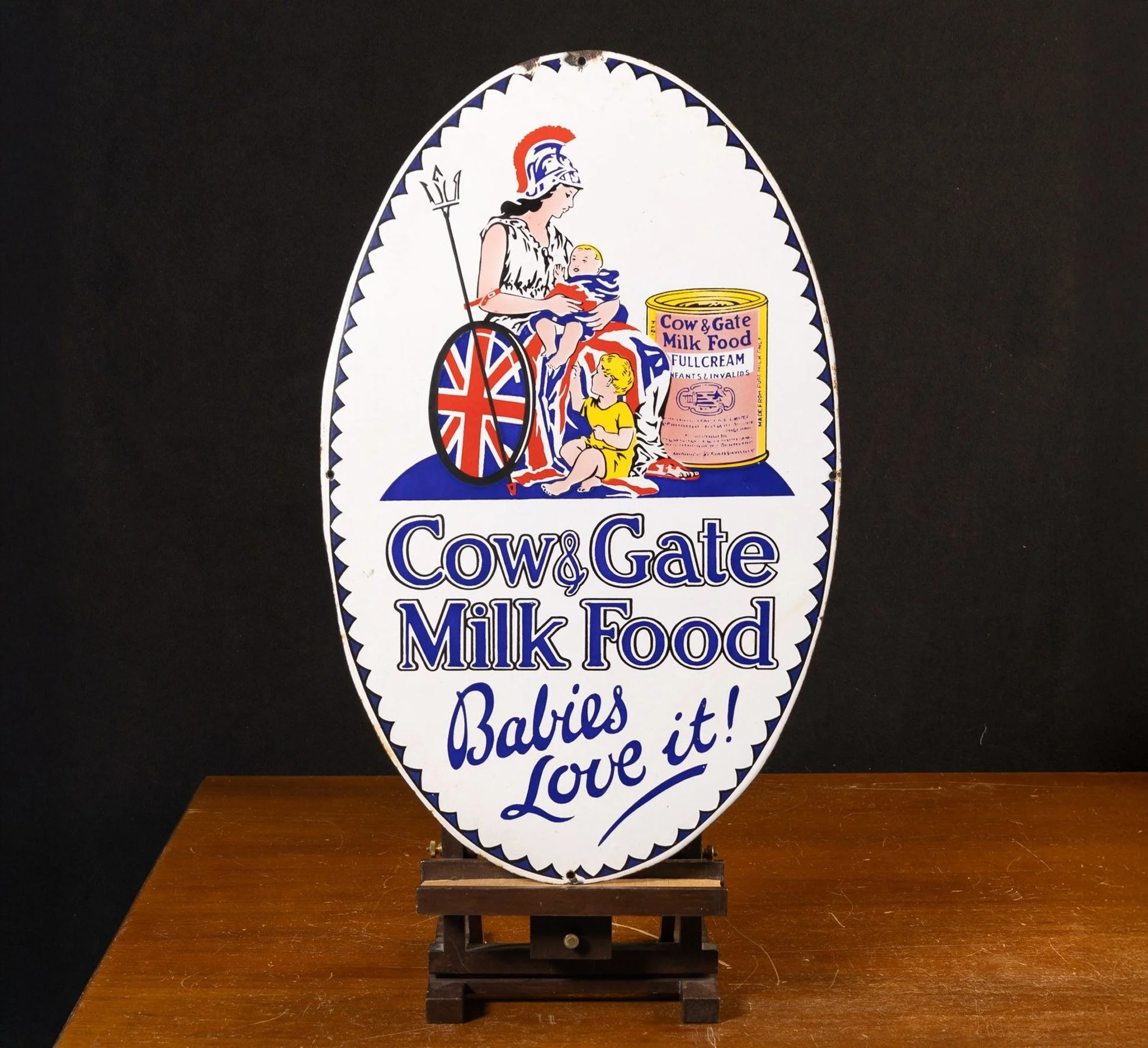
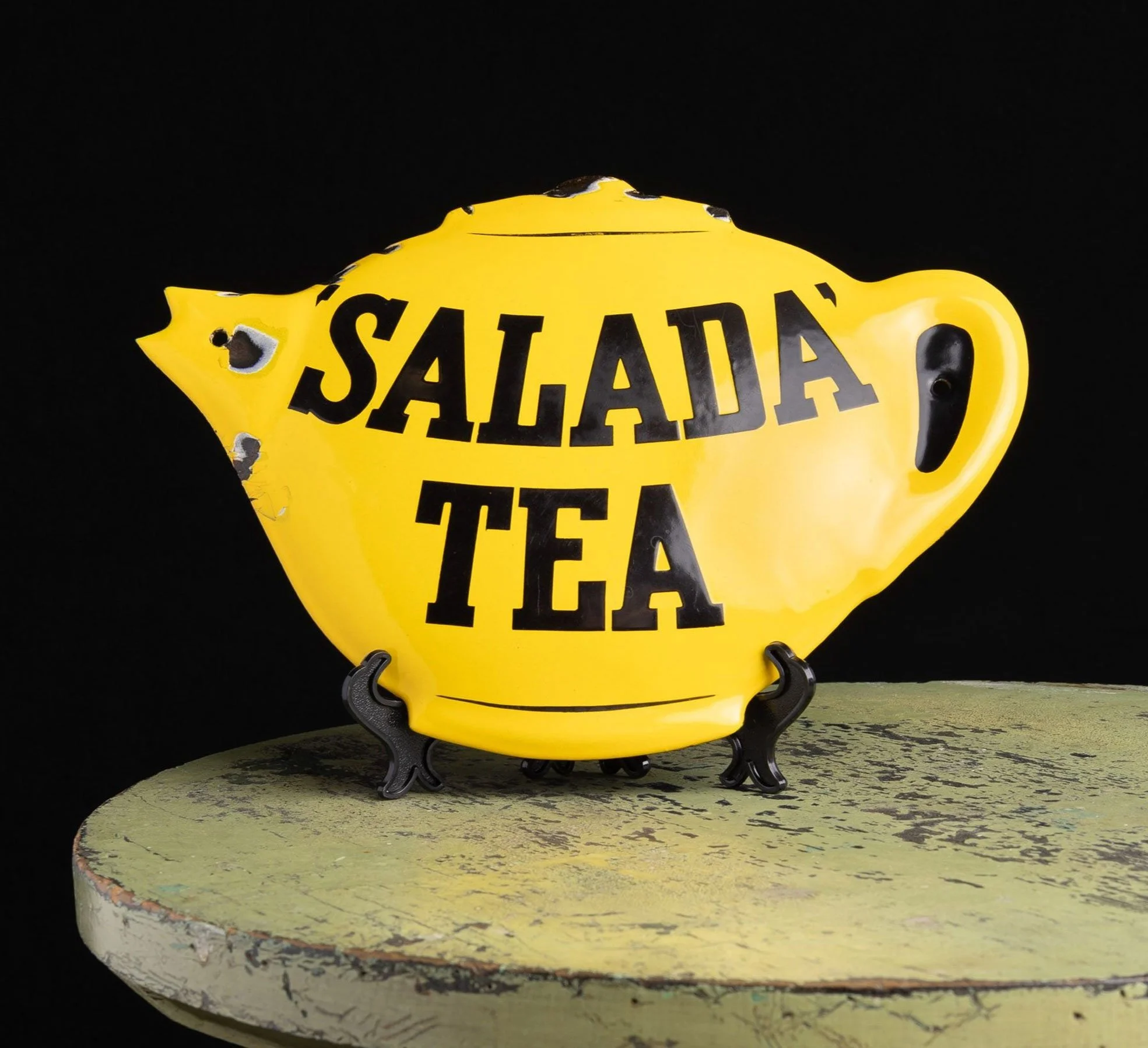
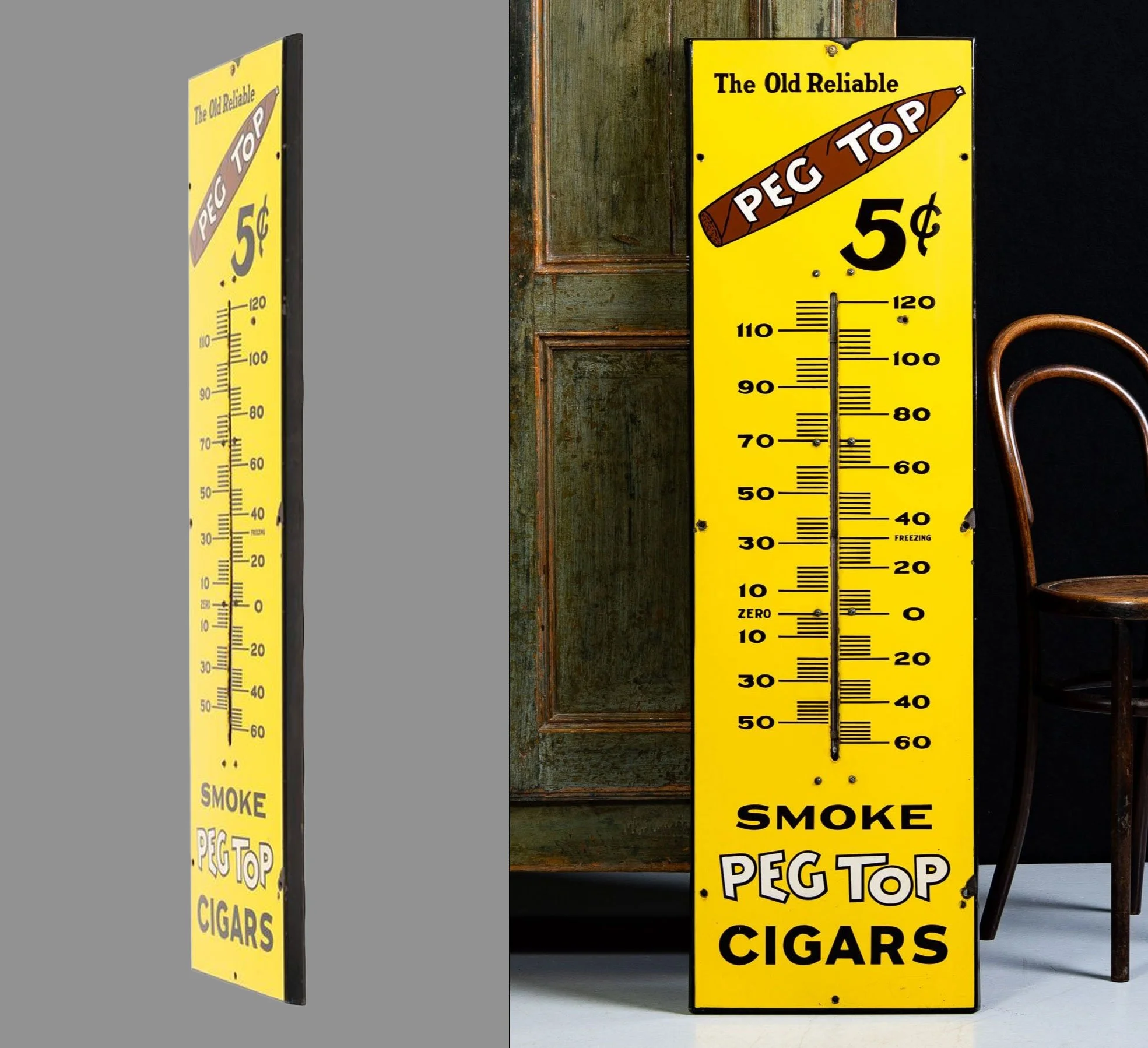
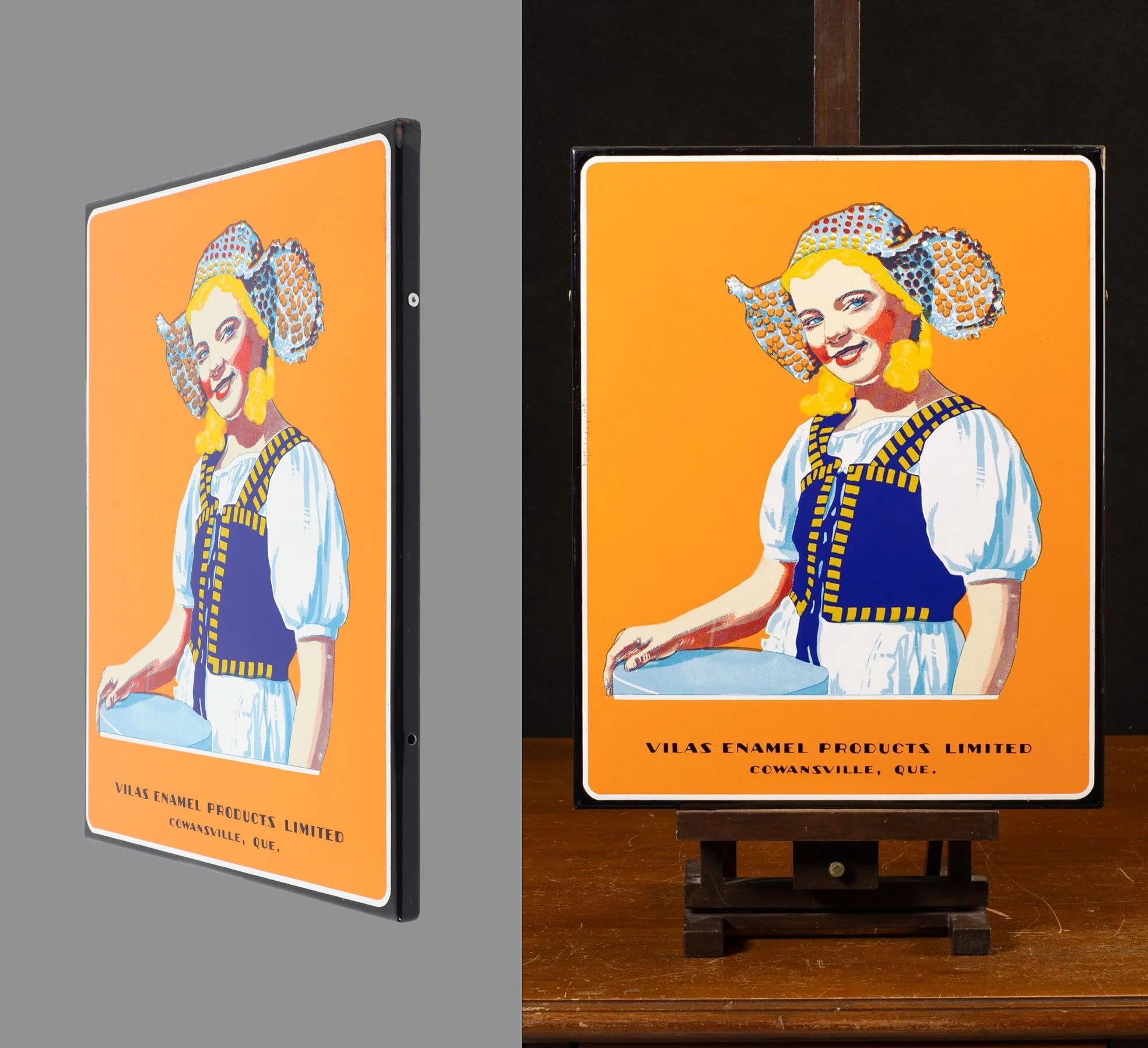
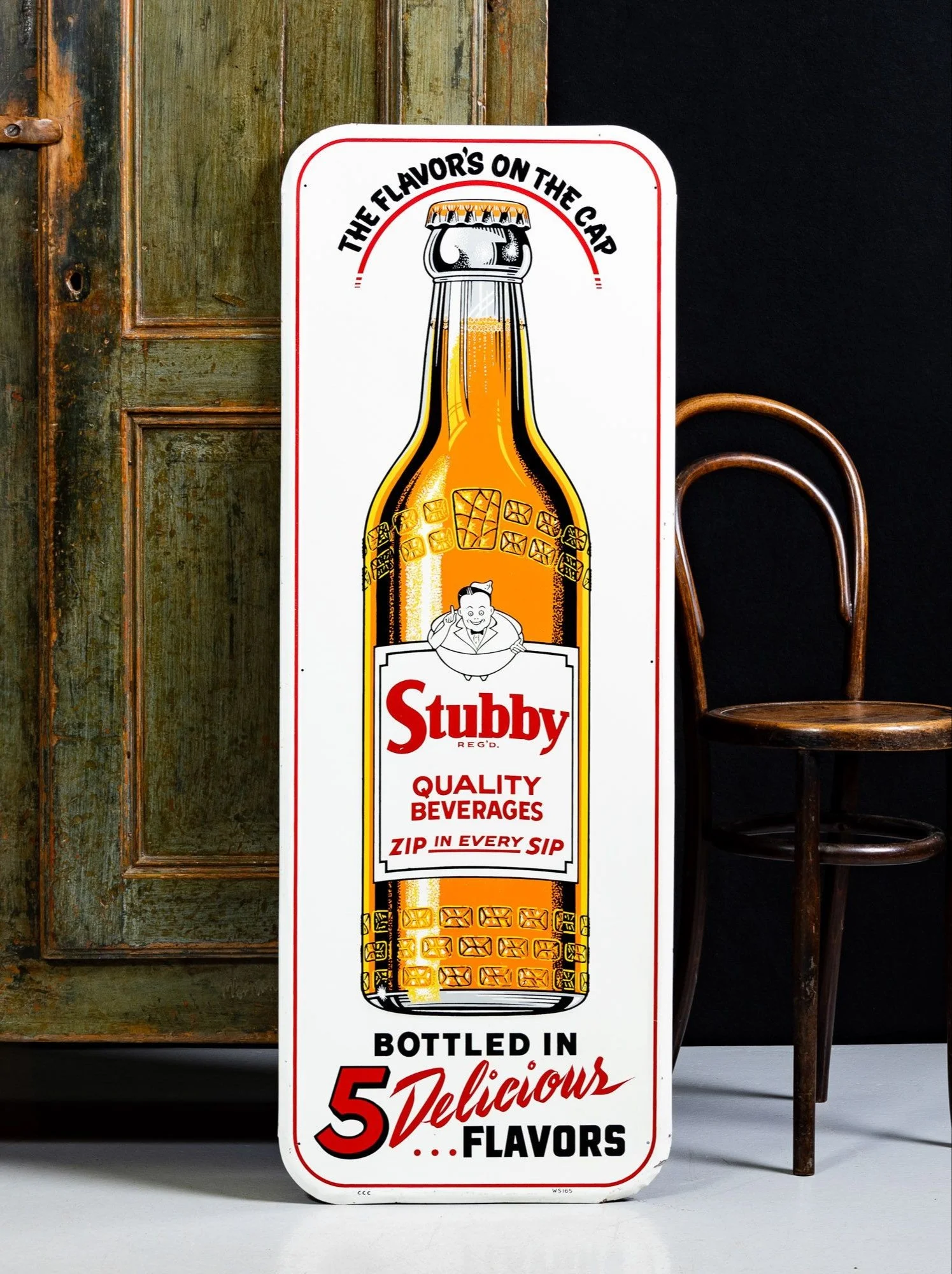
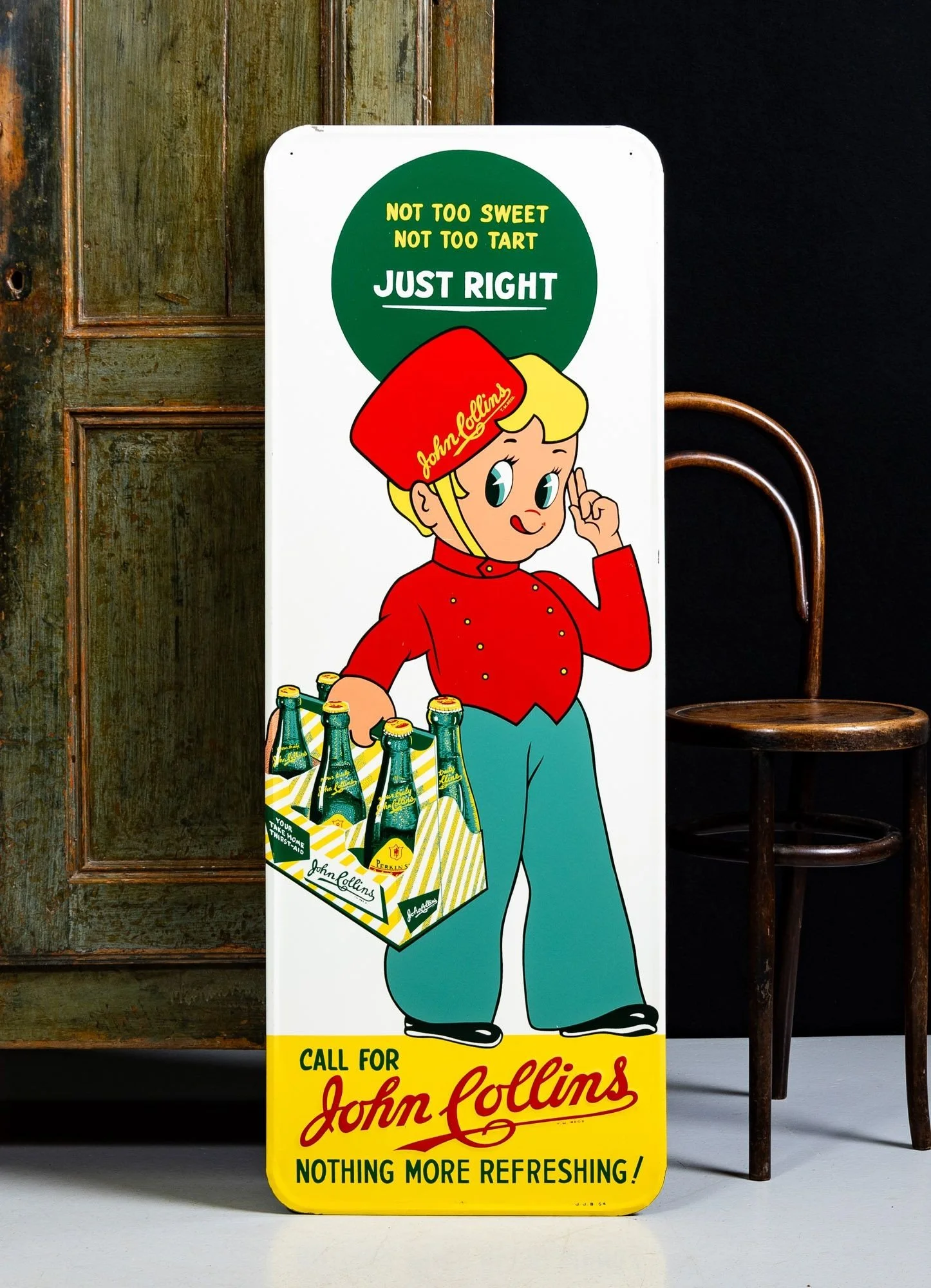
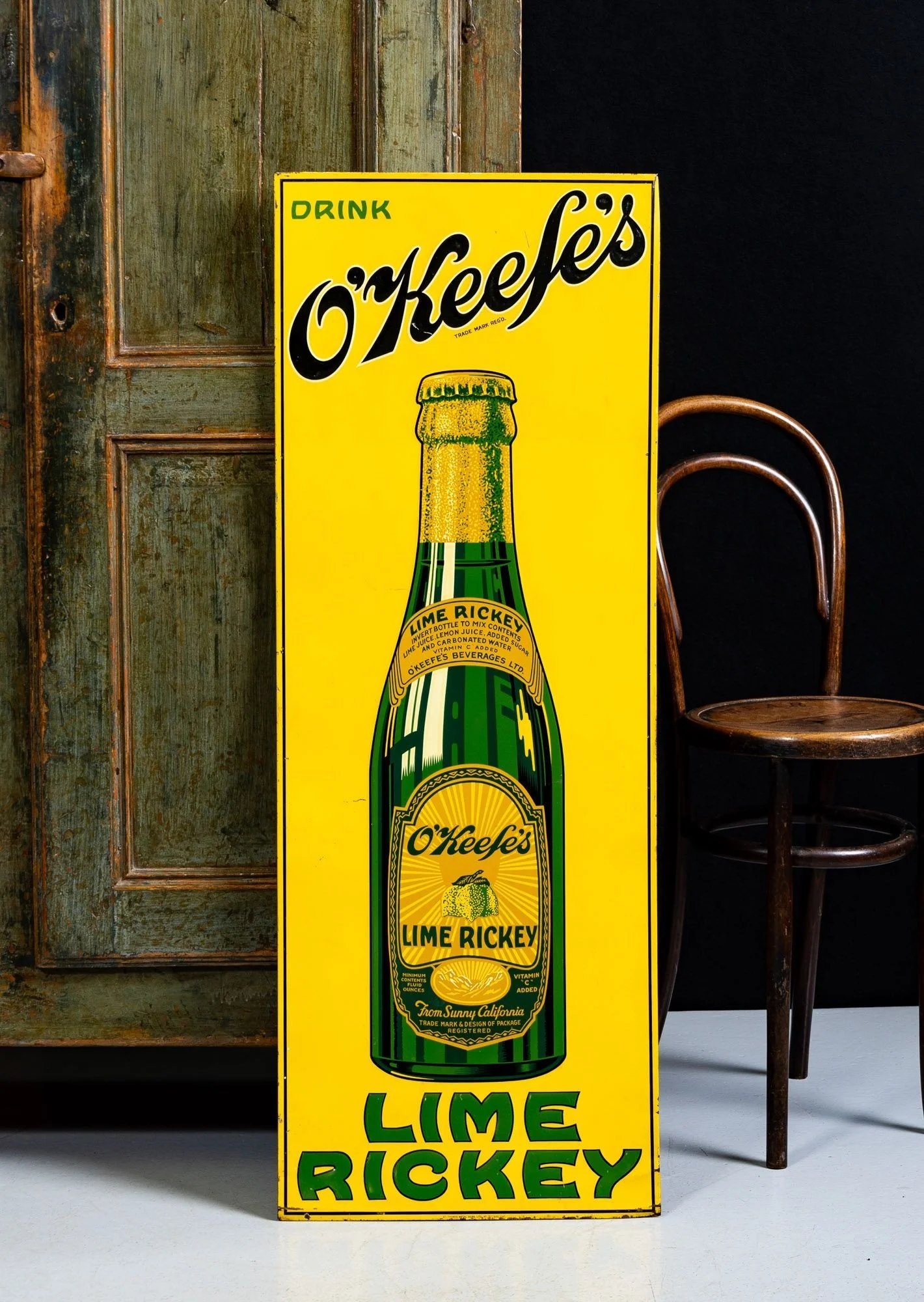
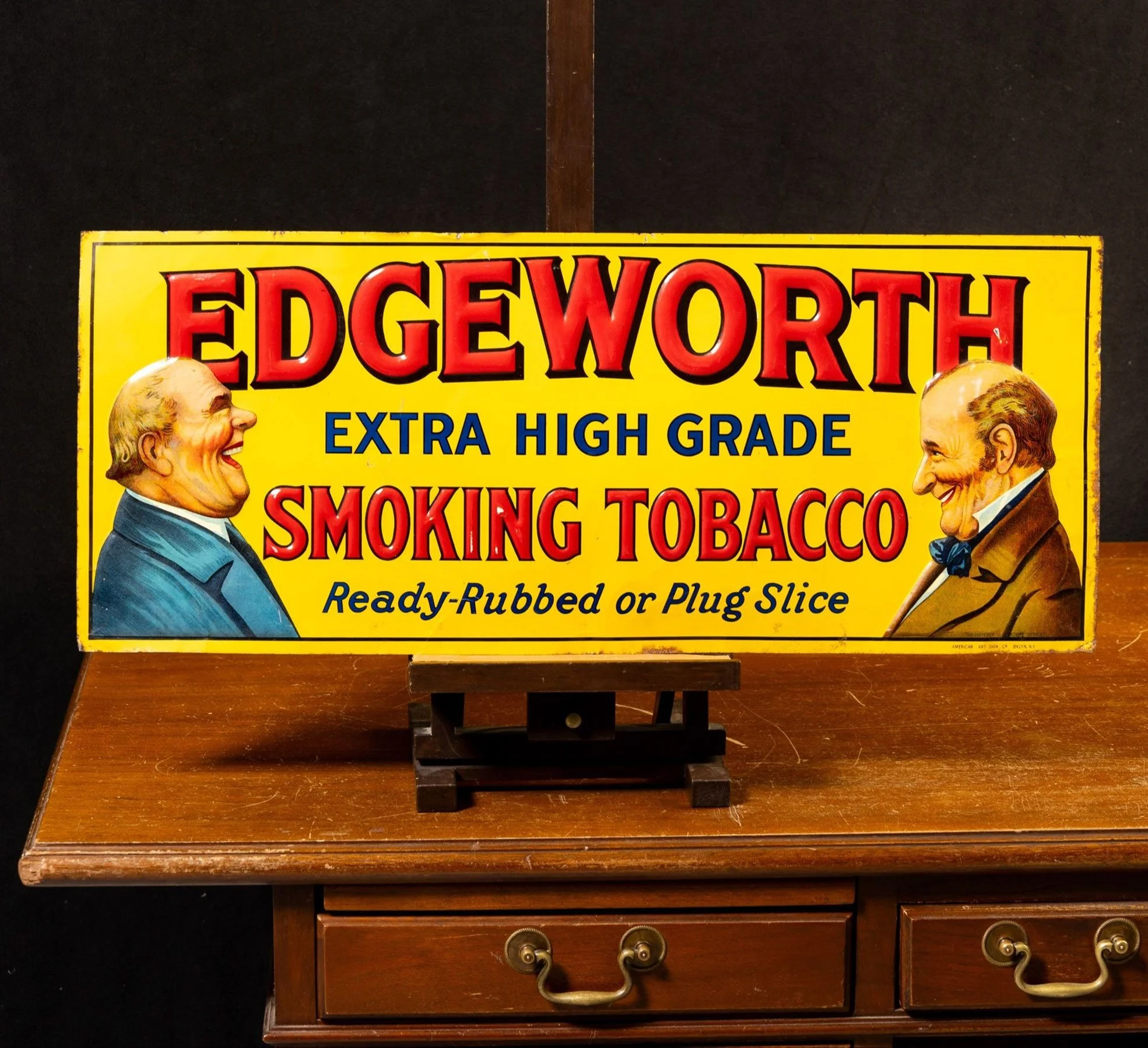
In tin signs, Don looked for subtle distinctions in their manufacture. His notes included edge types such as “round edge”, “return edge”, “raised edge”, “bevelled edge”, “beaded edge”, “rolled edge”, and “knife edge”. He also collected, by product preference (soda, tobacco), what Miller & Miller has dubbed “verticals”: vertically proportioned tin signs, from as early as the 1910s, but typically of the 1950s and 1960s, ranging up to 54” tall. Examples of soda verticals from the collection include the Stubby Orange Soda sign (lot 1109), the Perkins John Collins Soda sign (lot 1107), and the O’Keefe’s Lime Rickey sign (lot 1212).
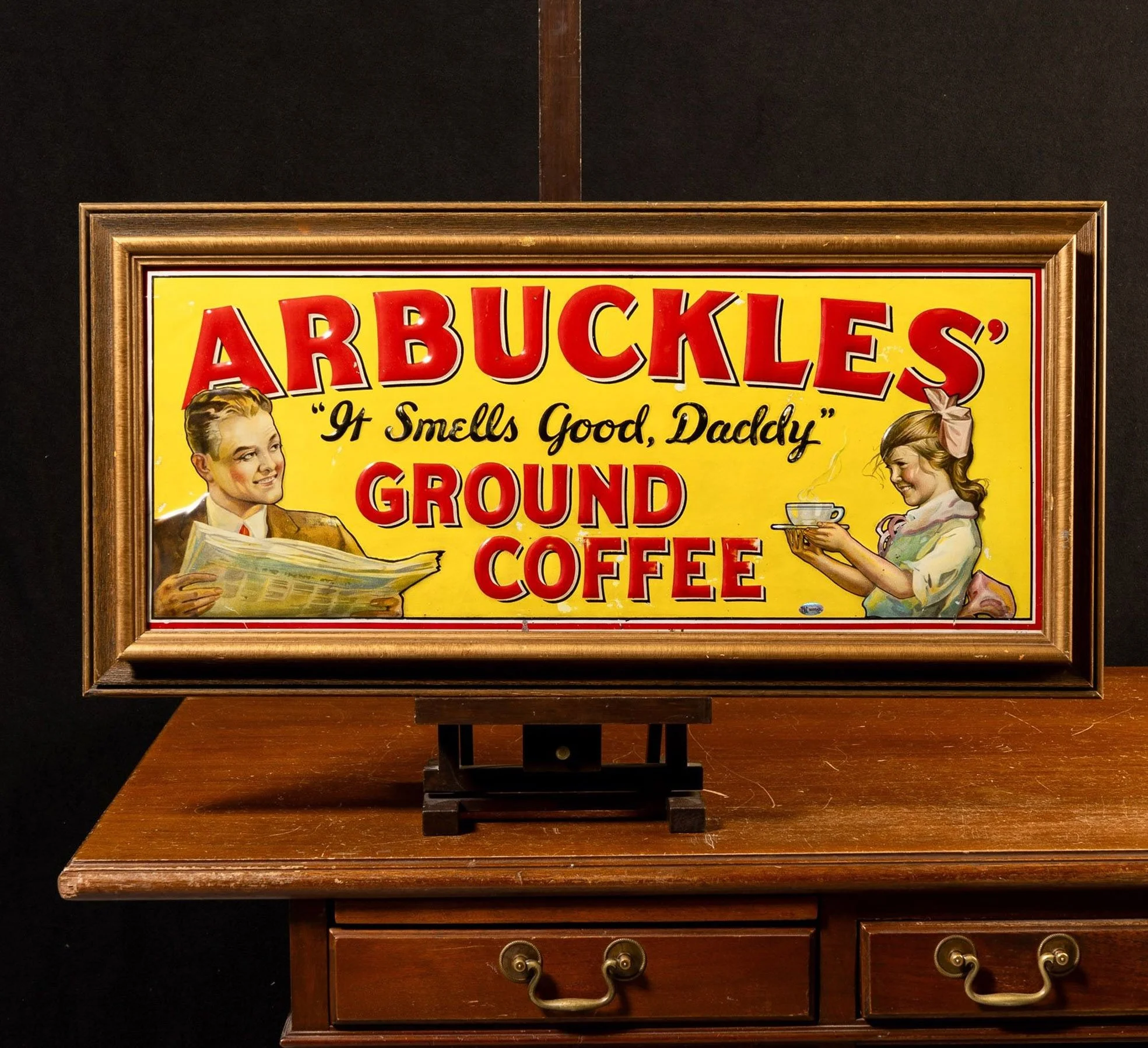
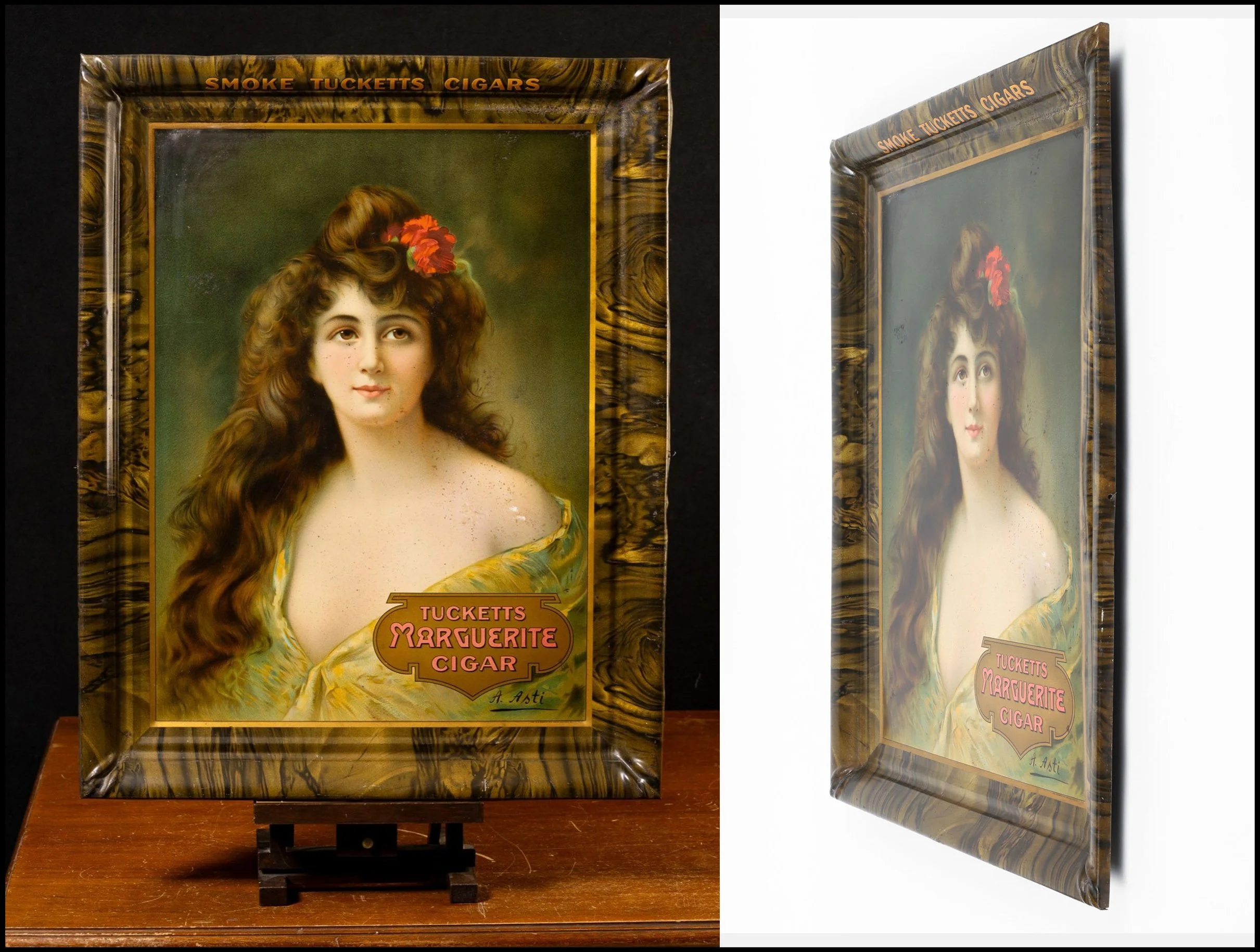
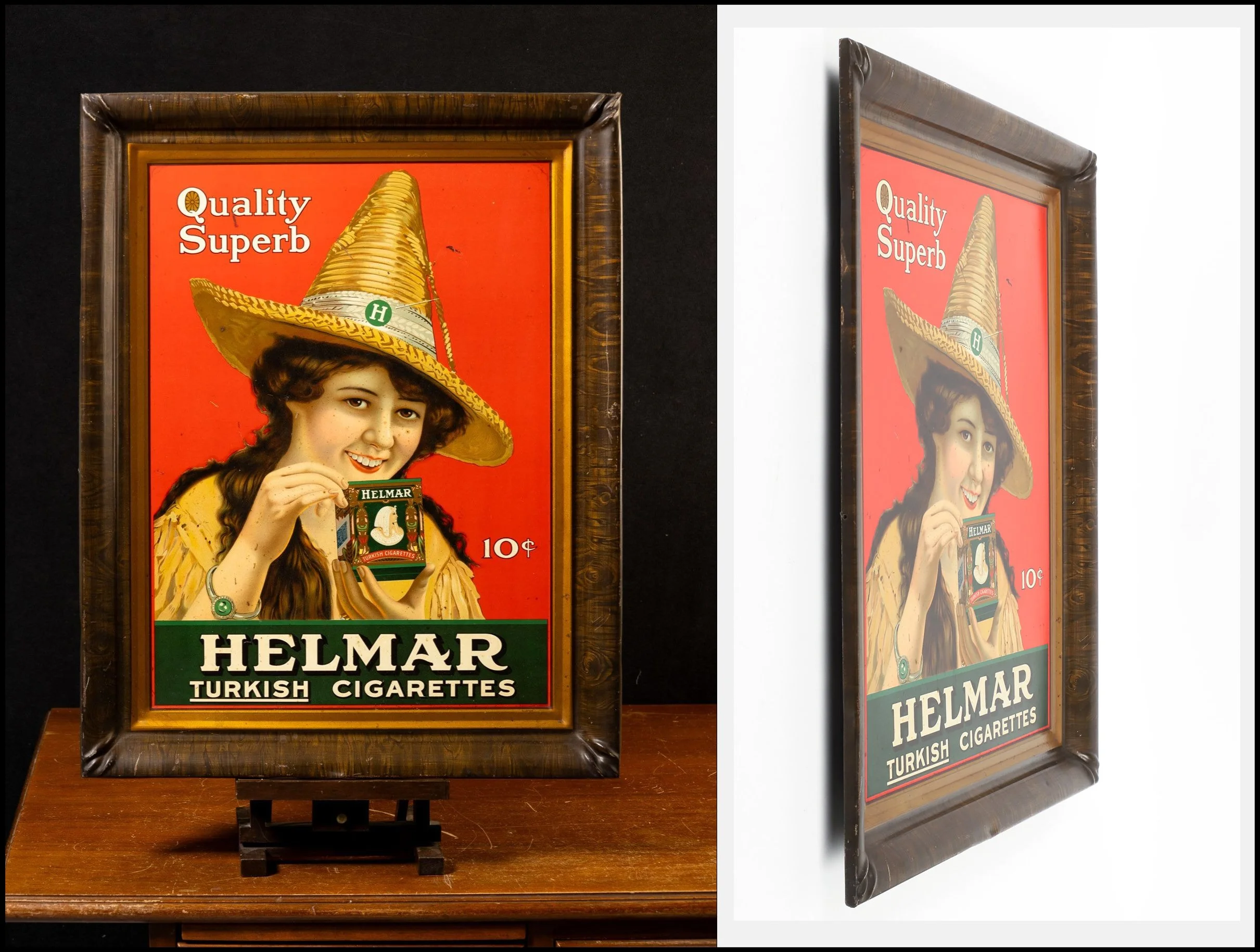
PUG (paper under glass) lithographs of the late 19th and early 20th century represent what Don considers to be the “gold standard” in advertising. PUG lithographs brought together colourful artistic imagery and ad composition unlike anyone in that time period had seen before.
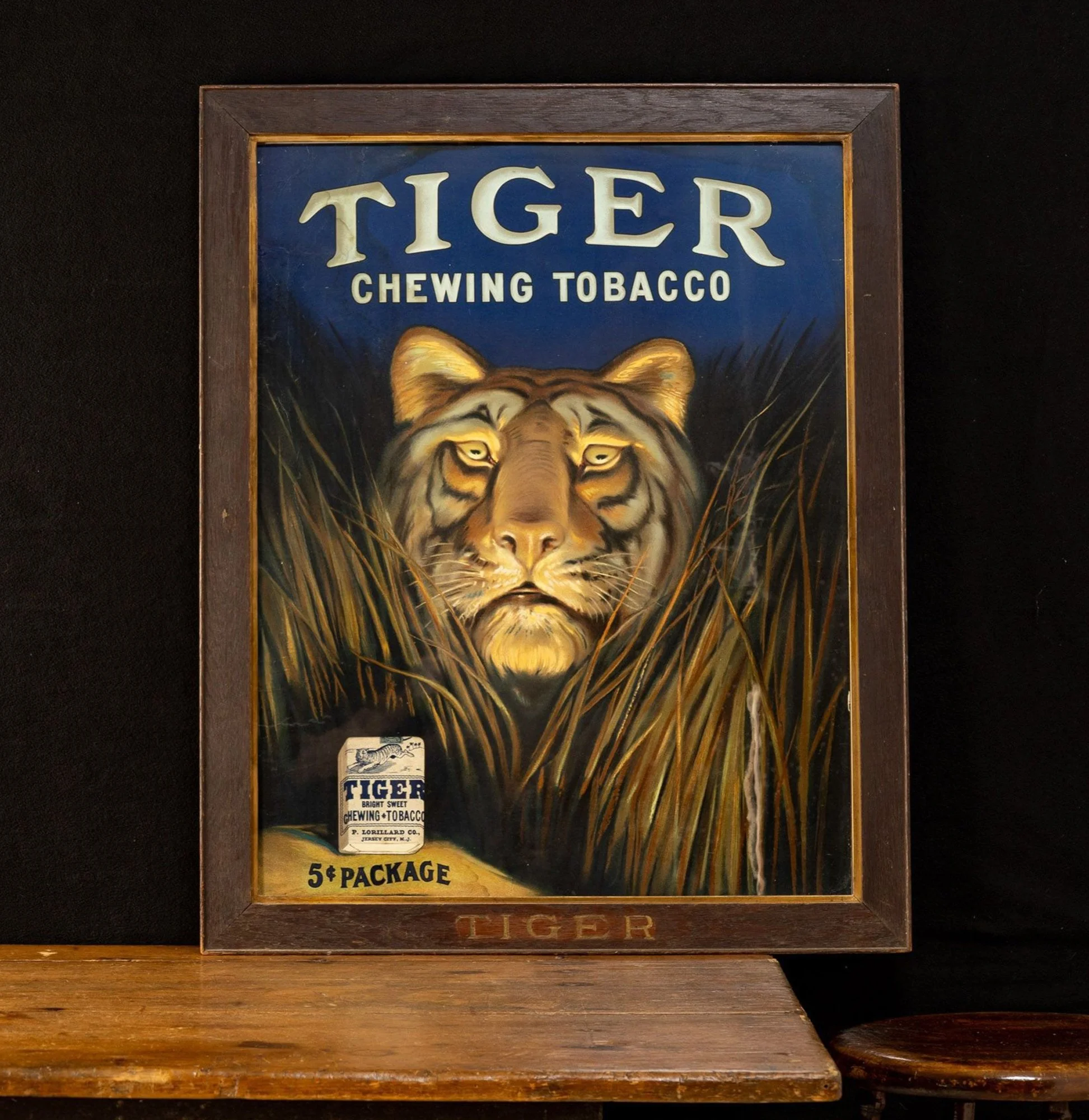
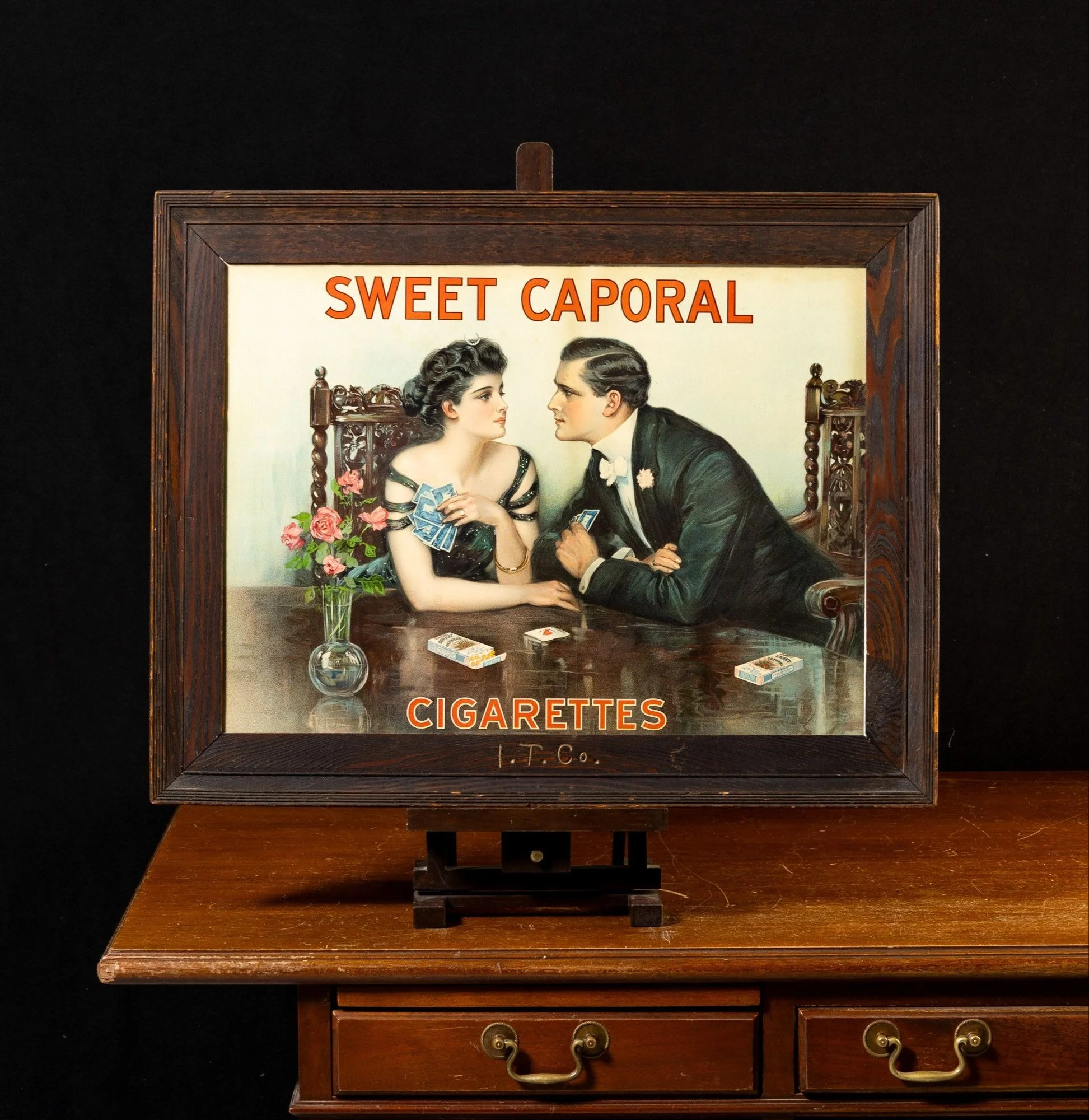
Beyond the lithograph, Don looked for two elements in his PUG advertisements: marked frames and wavy glass. Frames - usually varnished hardwood and sometimes embellished with fancy gesso (plaster) applique - were often incised, stamped or branded with the advertiser’s name. Untouched original PUG advertisements often retain their original wavy glass - a feature that Don felt added depth and shimmer unmatched by modern replacement glass.
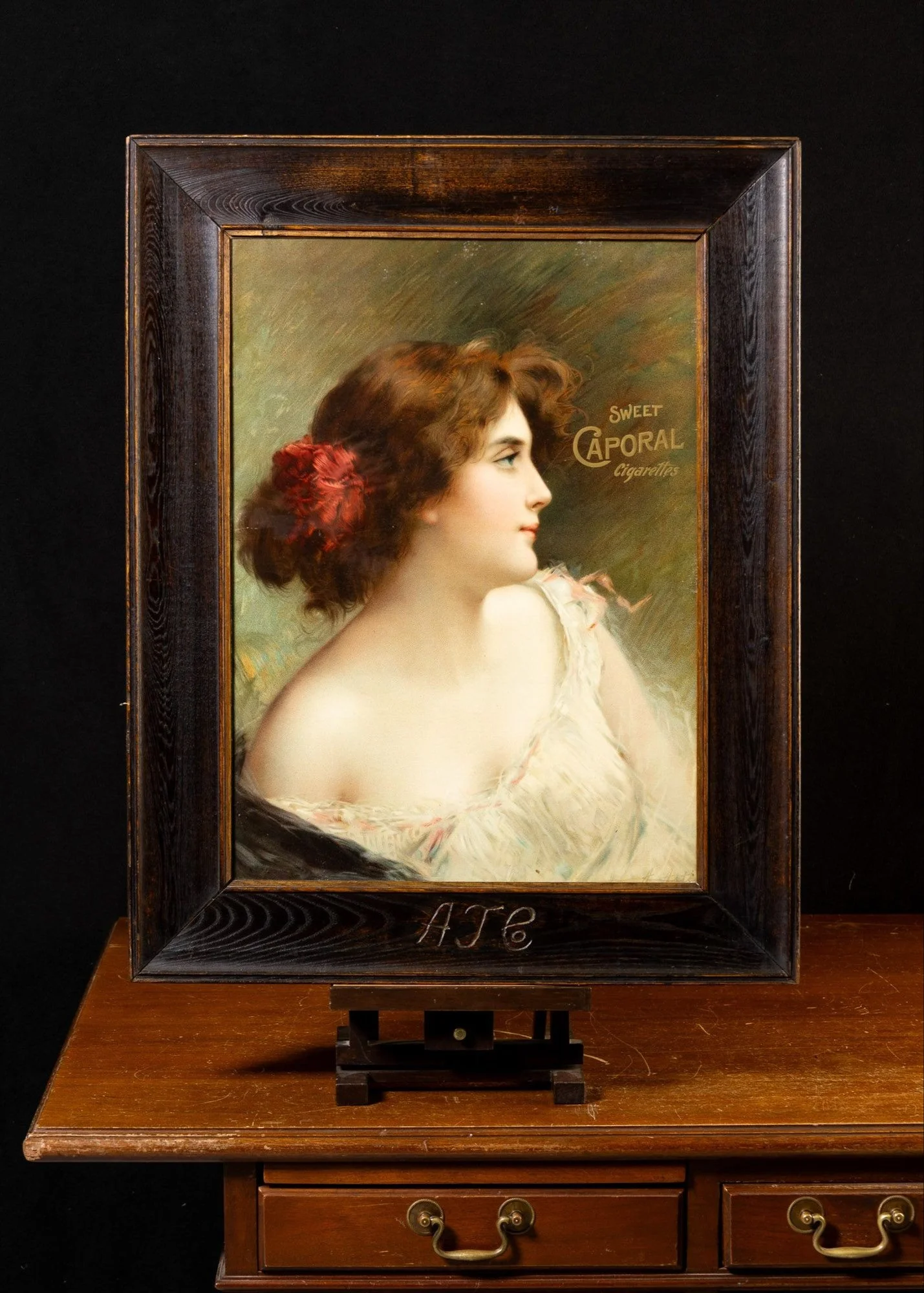
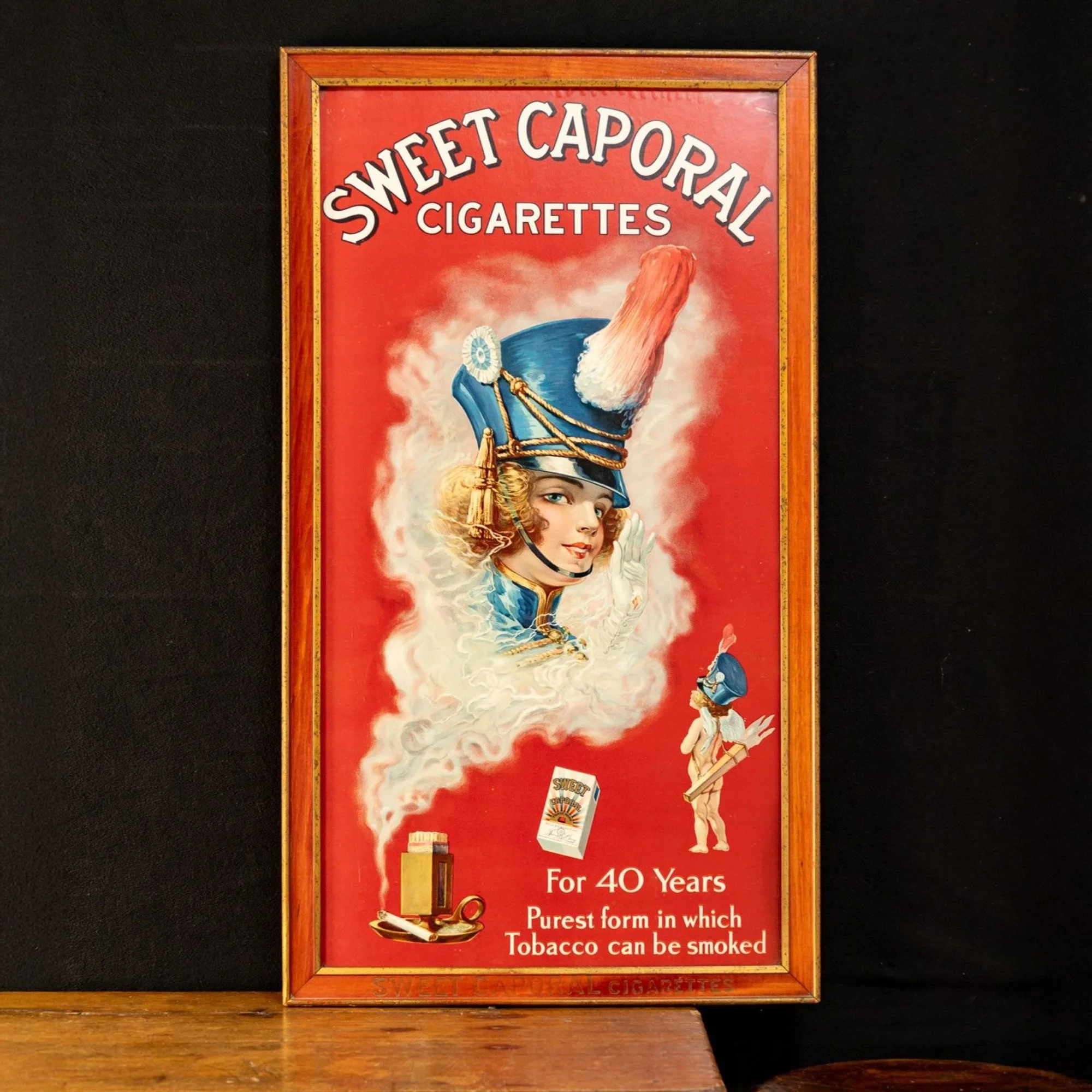
The PUG Tiger Chewing Tobacco advertisement (lot 1291) is a standout example: vivid colour, original marked frame, and even an outmoded price, all preserved under its original wavy glass. The PUG Sweet Caporal Cigarettes advertisment (lot 1163), a rare find, also maintains excellent colour and its original marked frame.
2. Product Shown
One of the most basic ways advertisers create awareness about a product is to show it. Don termed this “product shown”. As opposed to words, ads that show an image of the product are often graphically rich and visually appealing, which is why many of them had their place in Don’s collection.

The Target Cigarette Tobacco Banner (lot 1046) is a perfect example of “product shown”: a Target brand cigarette pack super-imposed in the left quarter of the field. Note that the cigarette pack shown is entirely independent; it has no interaction with the surrounding scene.
3. Product In Use
Don considers advertisements showing the product “in use” to be superior to advertisements with “product shown”. Advertisements featuring “product in use” are designed to motivate the consumer to buy the product and often demonstrate the product’s pleasurable effect on the user.
One of Don’s most notable (and infamous) “product in use” examples is the Drewry’s Beverages “Mountie” vertical sign (lot 1213). It depicts an RCMP officer, uniformed and authoritative, casually drinking Drewry’s soda during the prohibition era. To many viewers of the era the image suggested an officer drinking alcohol on duty. The implication proved so provocative that, according to company lore, the RCMP demanded the campaign be discontinued.
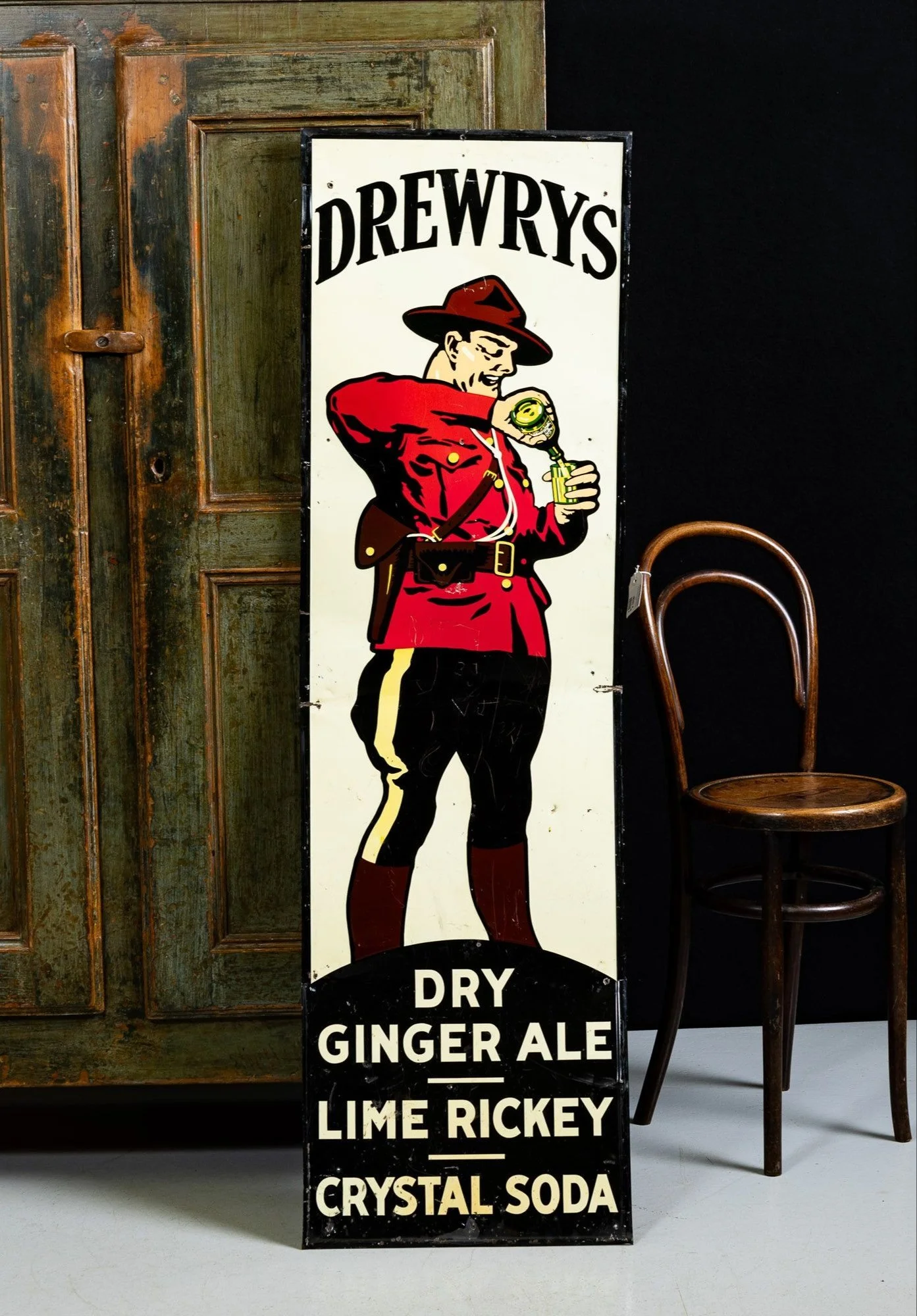
An RCMP officer pours himself a serving of Drewry’s Prohibition-era soda in this controversial “product in use” example. Lot 1213.
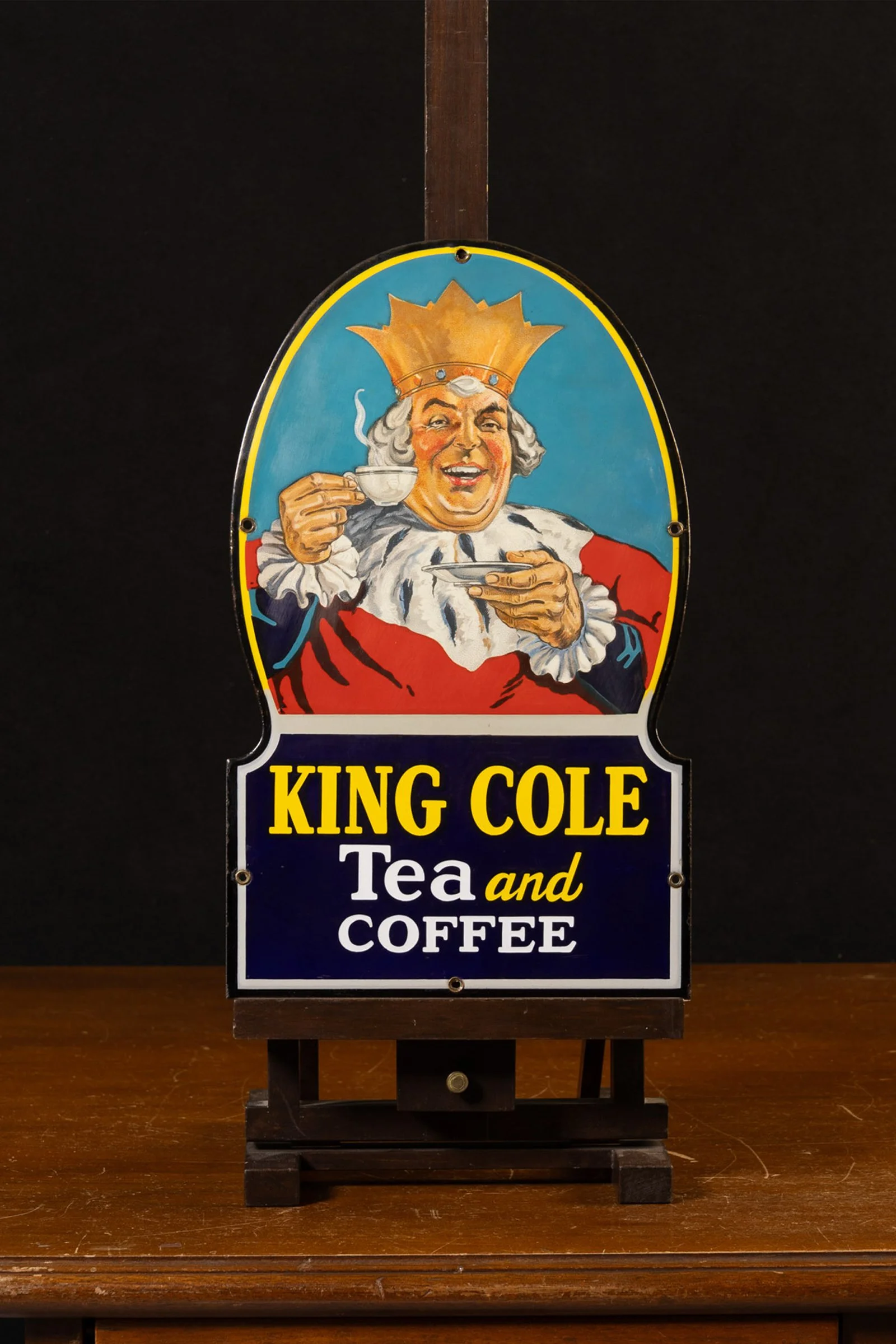
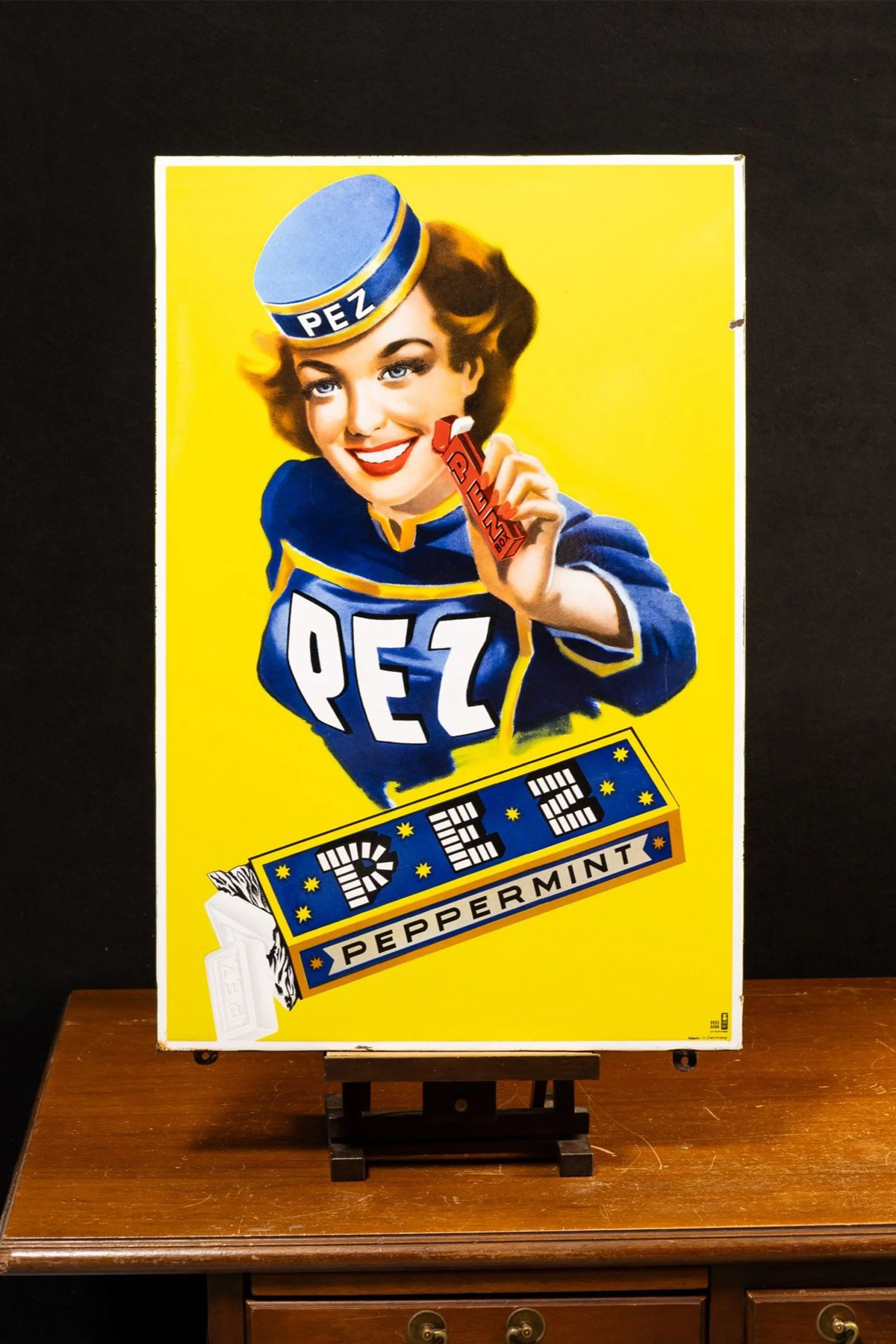
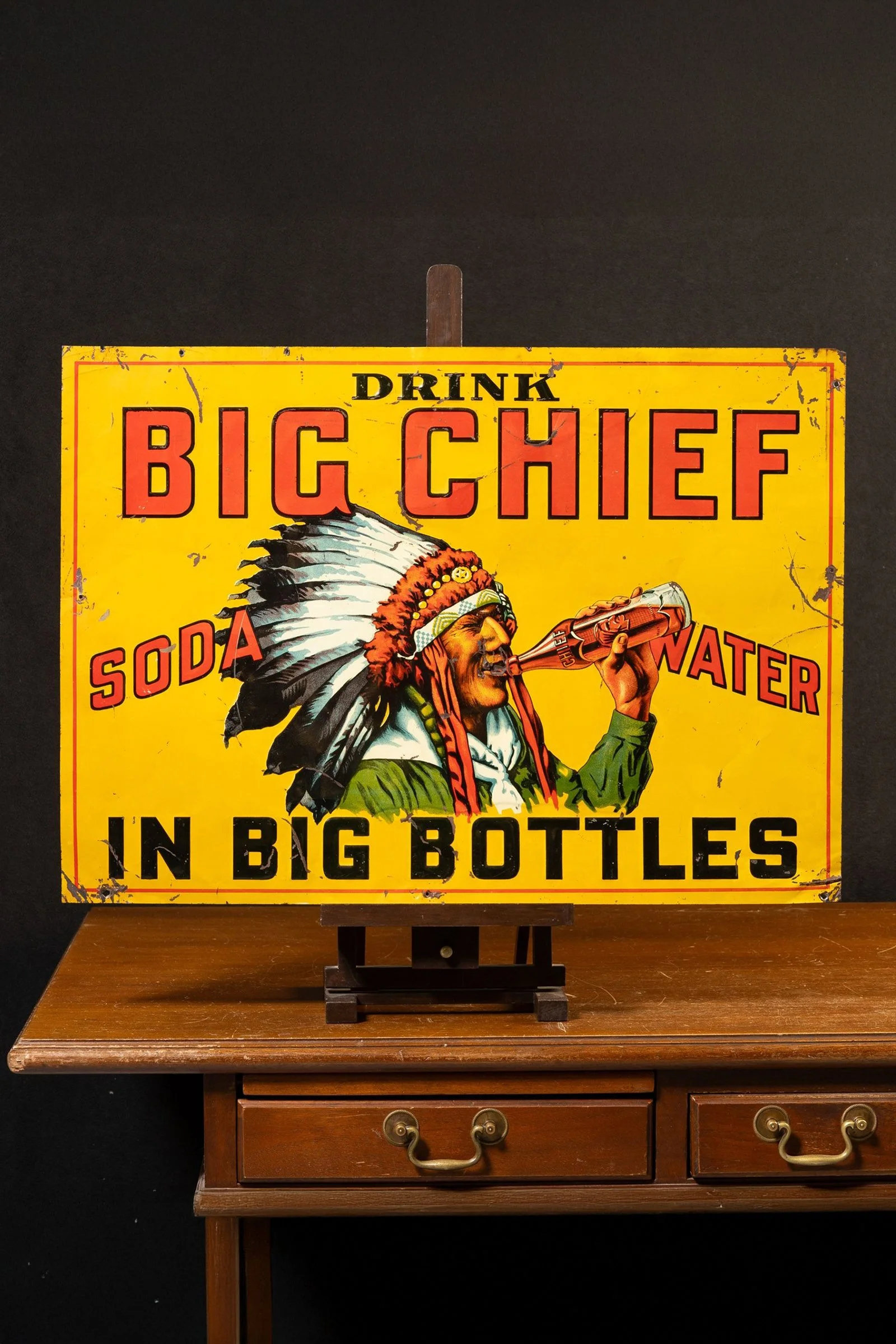
Other examples of “product in use” rely on subtle cues. The King Cole Tea & Coffee “keyhole” sign (lot 1084) situates the brand’s cheery, regal mascot holding a steaming cup of the hot beverage in hand, suggesting not just satisfaction with the product, but its fitness for royalty. The dazzling Pez Peppermint Candy sign (lot 1298) also shows “product in use”, depicting a pin-up style model gleefully popping a piece of the candy (note that the word PEZ appears five times in this image). The Big Chief Soda Water sign (lot 1153) features the candid portrait of the chief caught in mid-swig.
4. Oversized Product In Use
Don considered ads showing “oversized products in use” to be a big step up from signs showing normal sized products in use. Packaging is often small and easily lost in the composition of an advertisement. Oversizing products is a designer’s way of making the product more visible in the advertisement.
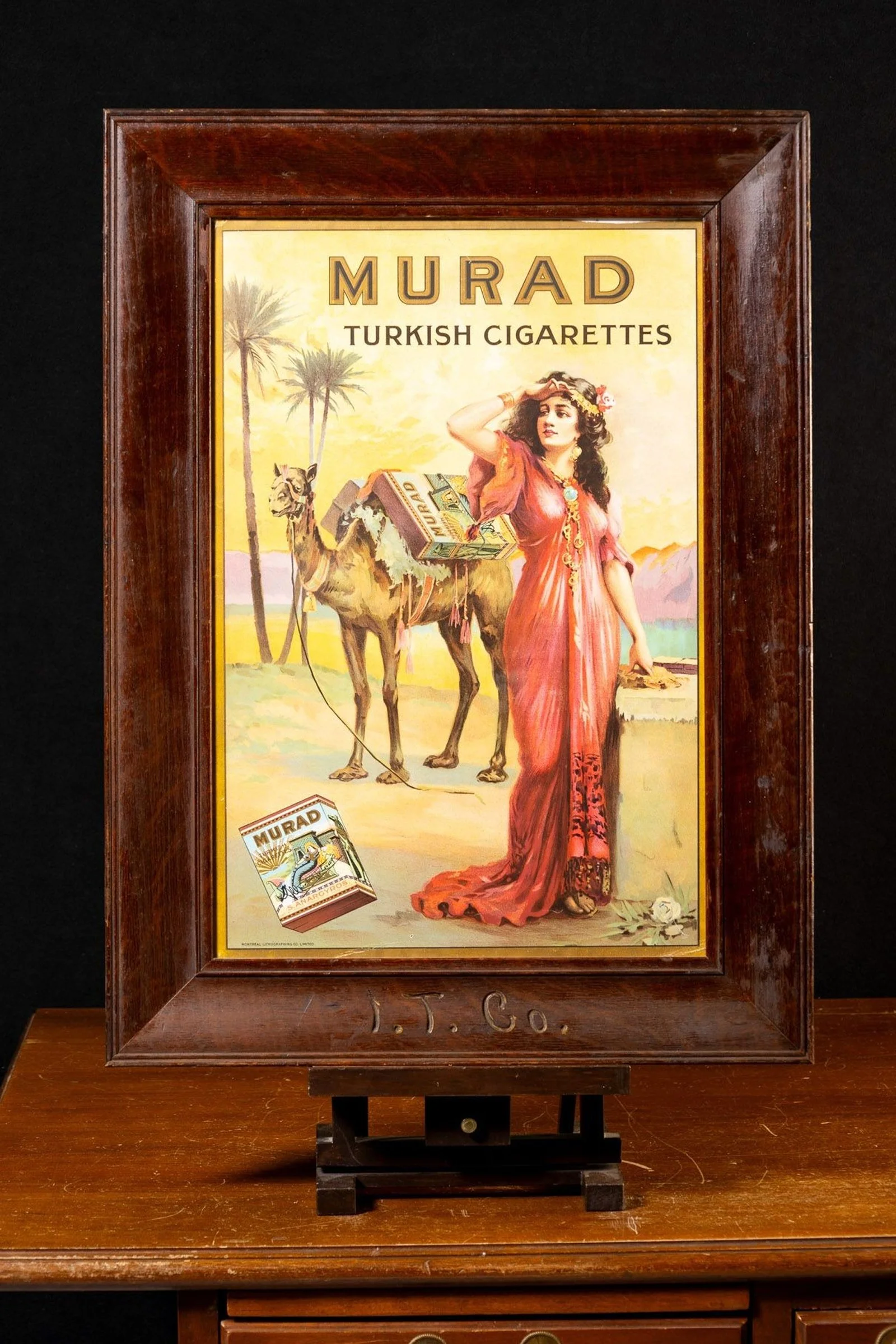
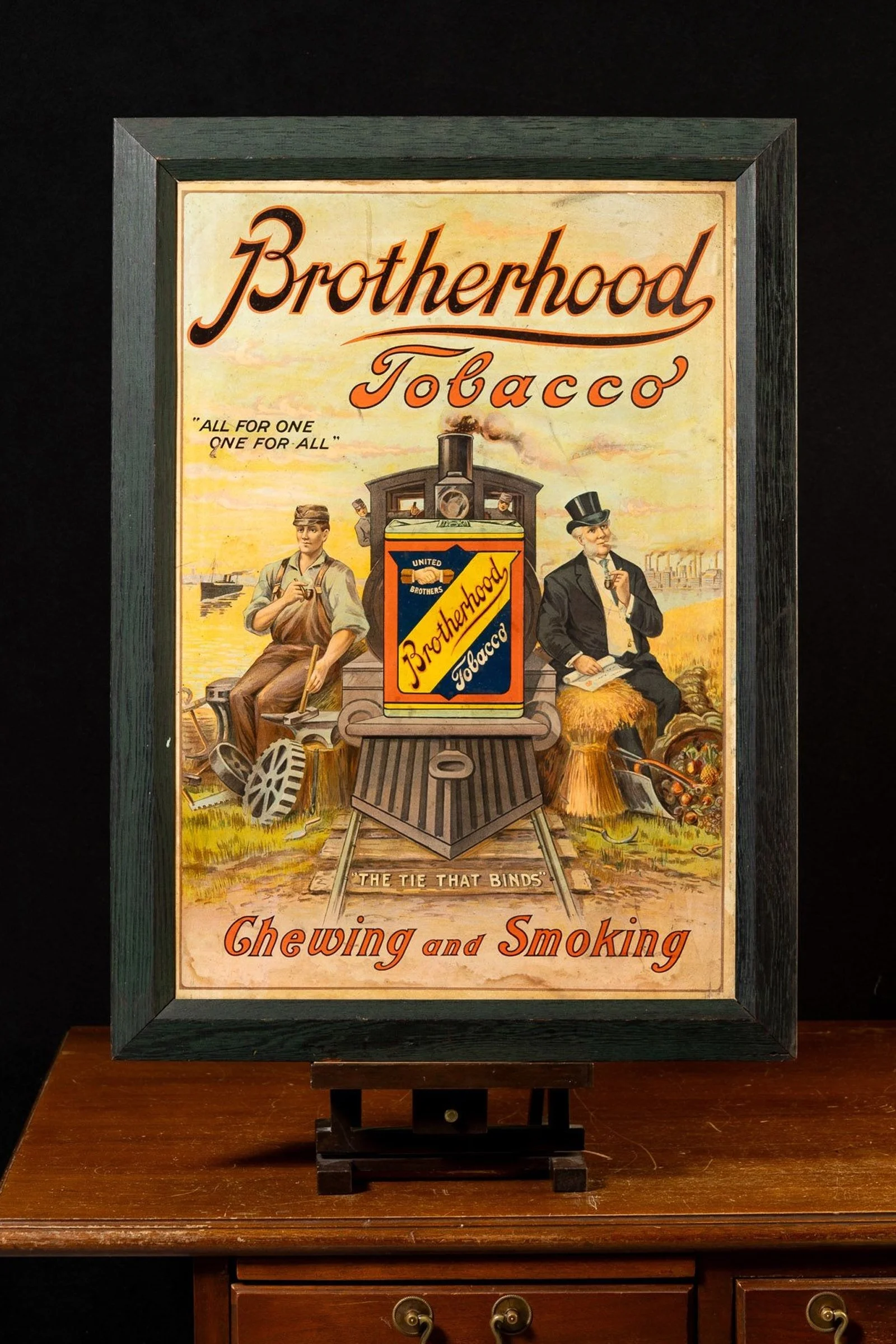
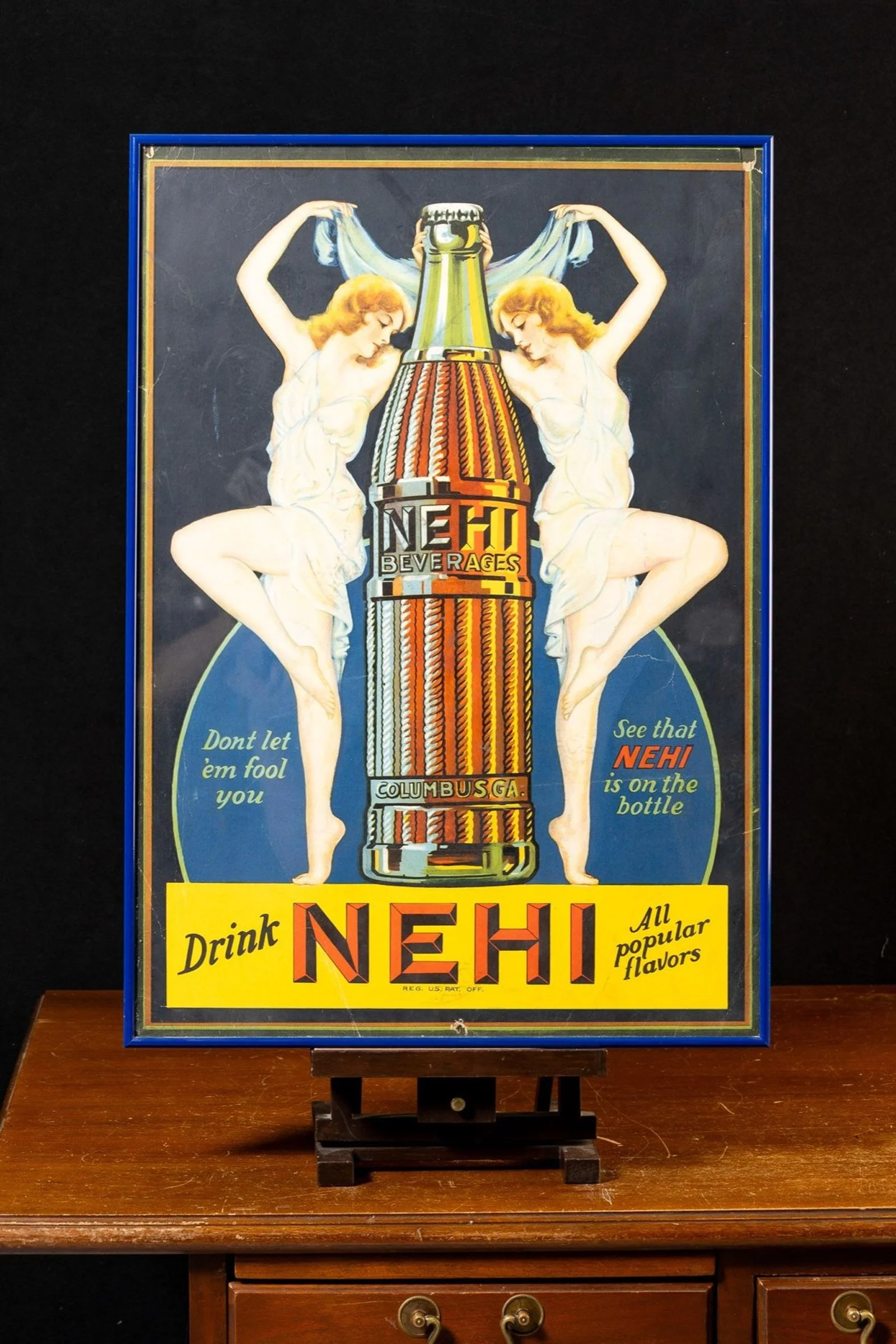
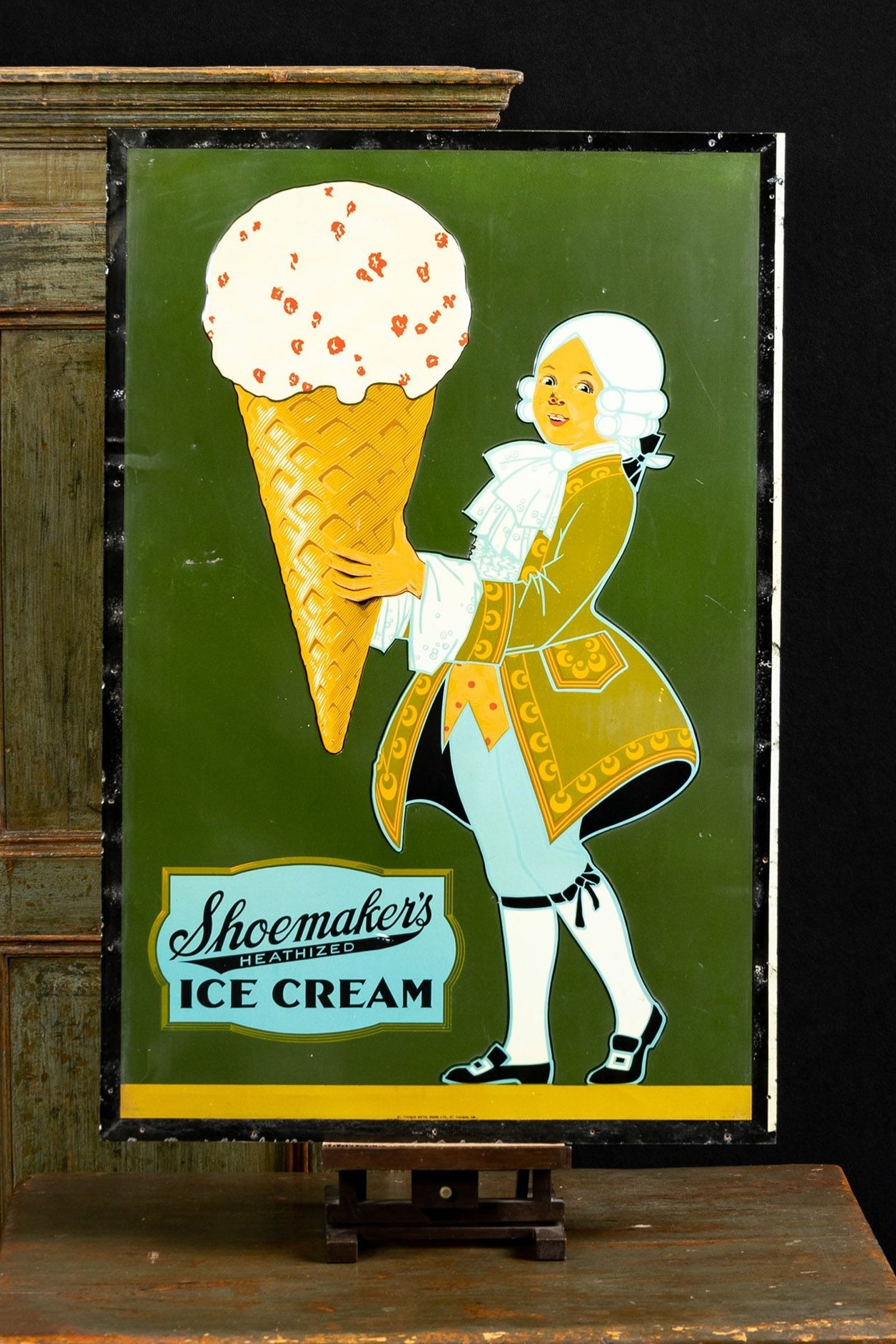
The Murad Cigarettes (lot 1288) and Brotherhood Tobacco (lot 1052) lithographs creatively integrate oversized packages of tobacco into their ads. The Nehi Beverages lithograph (lot 1018) features a bottle so large that it dominates the two women models flanking it. The ice cream cone in the Shoemaker’s Dairy Ice Cream sign (lot 1041), looms absurdly large in a man’s hand, relative to the man. These pointed exaggerations make the product more indulgent and more memorable than the effect of normal sized products in use.
5. Captions
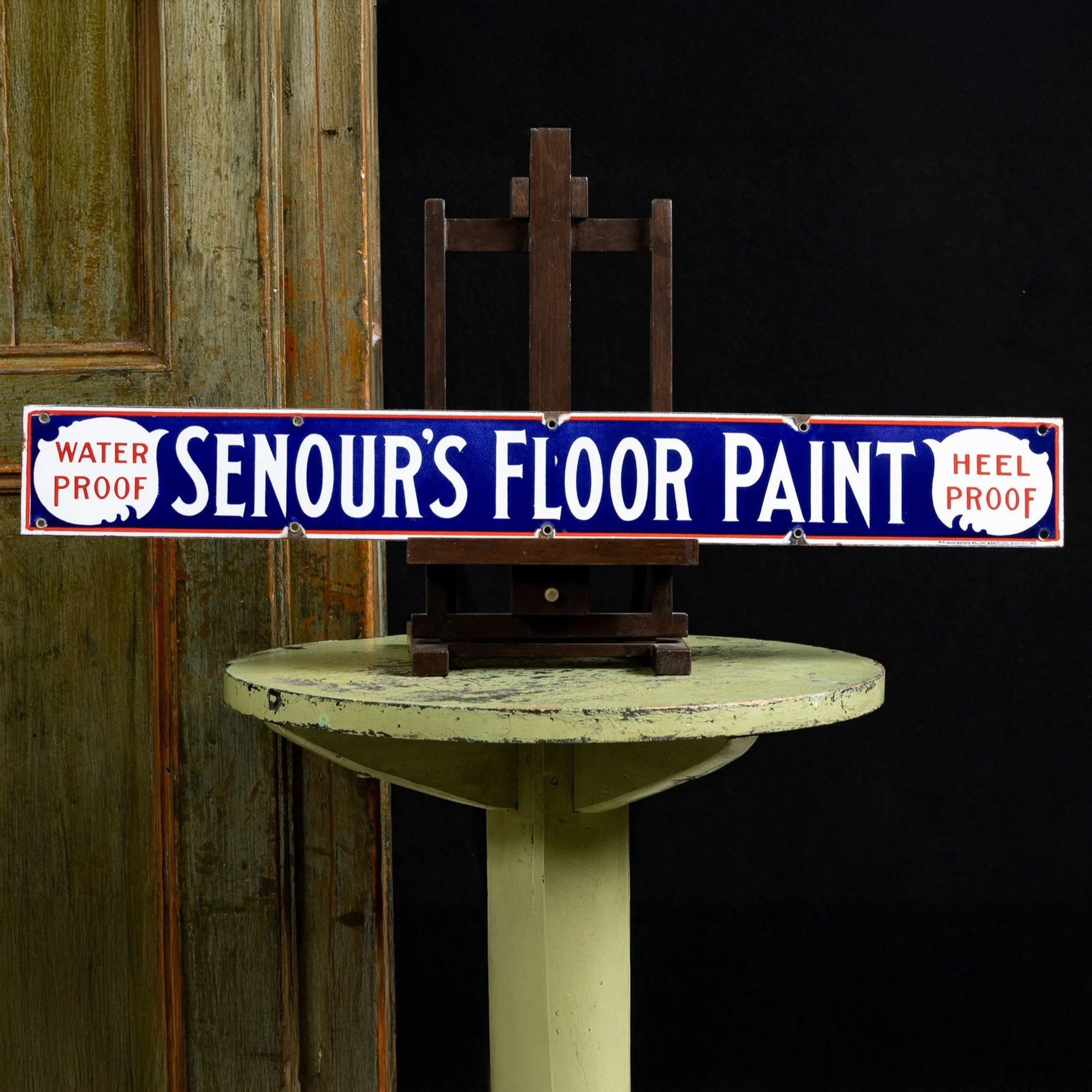
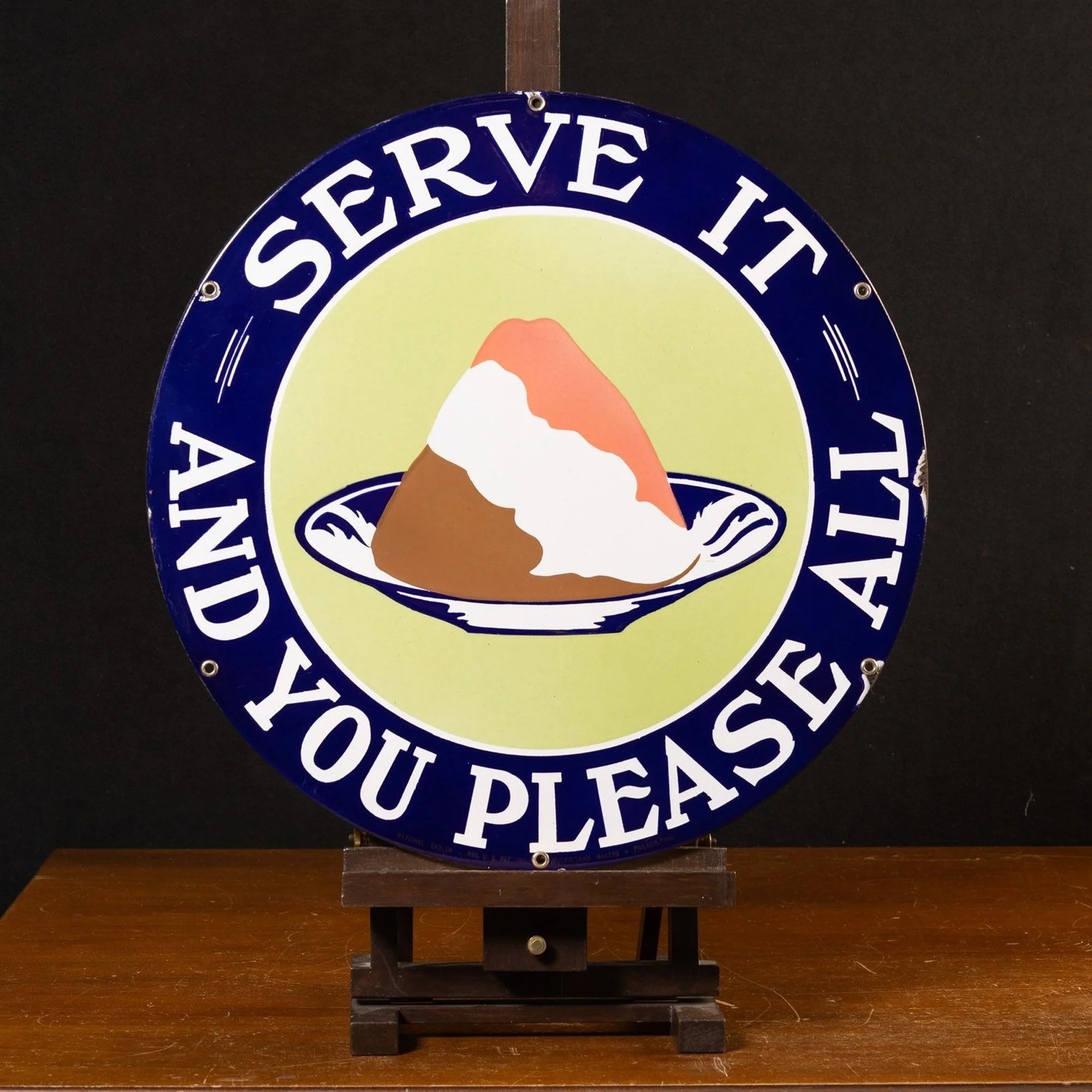
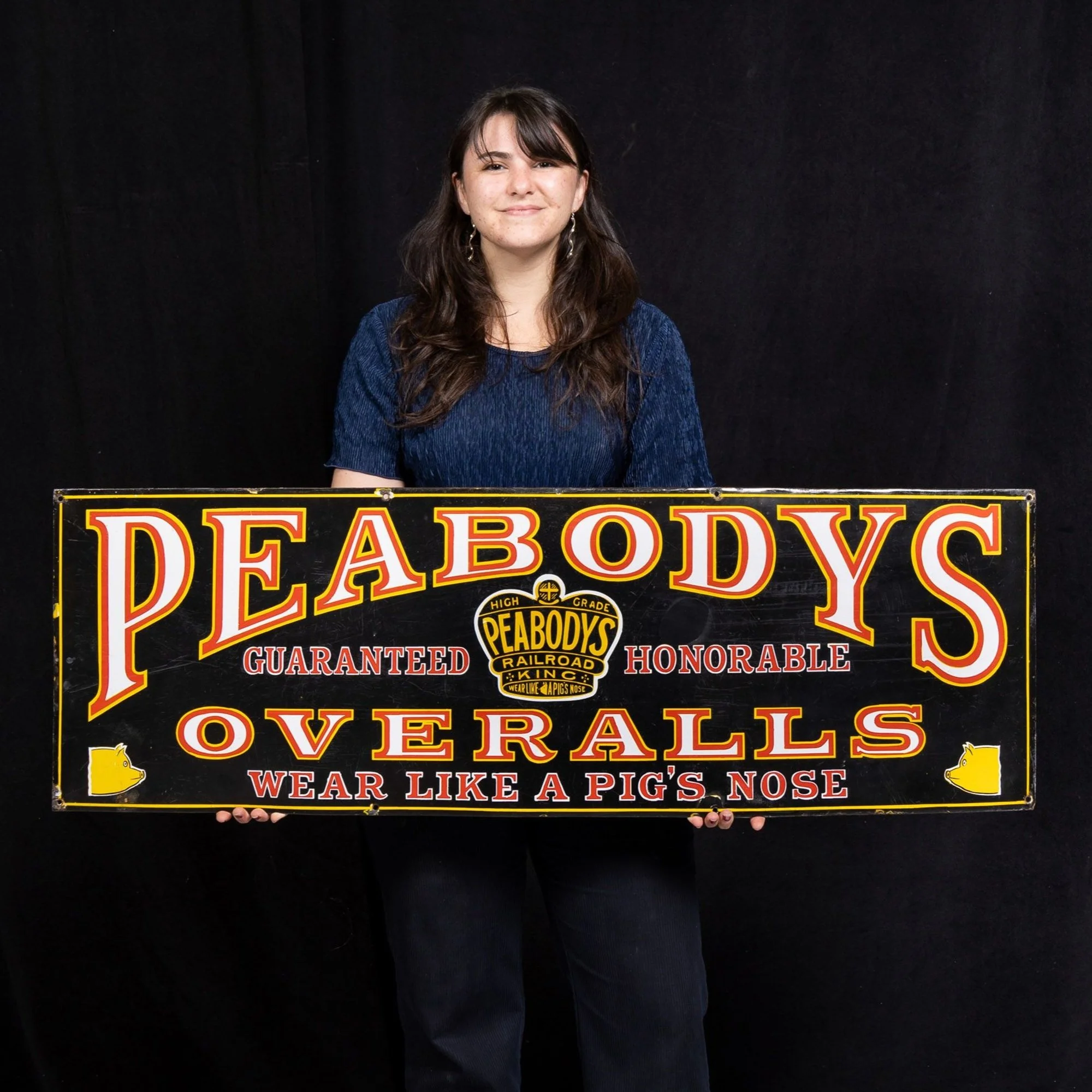
Don considered captions on an advertisement desirable. Captions are promises, slogans, and statements that often overstate the merit of the product. The Senour’s Floor Paint strip sign (lot 1118) declares the product “waterproof” and “heel proof”. Others make broader promises such as the “Serve It and You Please All” ice cream sign (lot 1243) and the Peabody’s Overalls sign (lot 1017), claiming the garment “wears like a pig’s nose.”
6. Plays on Words
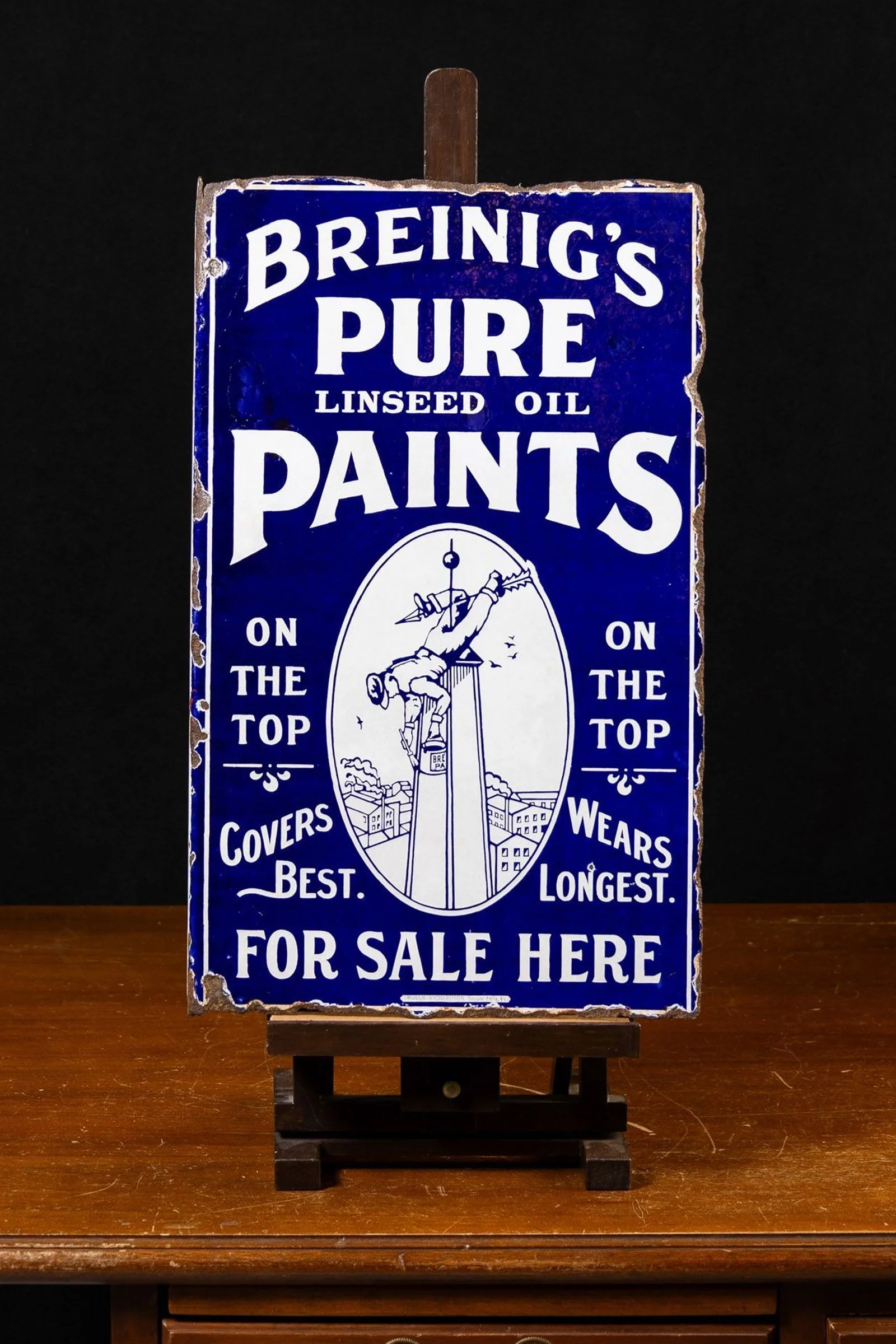
Wordplay was another feature that Don looked for in his advertisements. The Breinig’s Pure Paints sign (lot 1126) shows a painter teetering precariously at the top of a tower, having literally painted himself into the ultimate corner. The slogan “On the Top” has a double meaning – describing his precarious perch while also implying the brand’s superior quality.
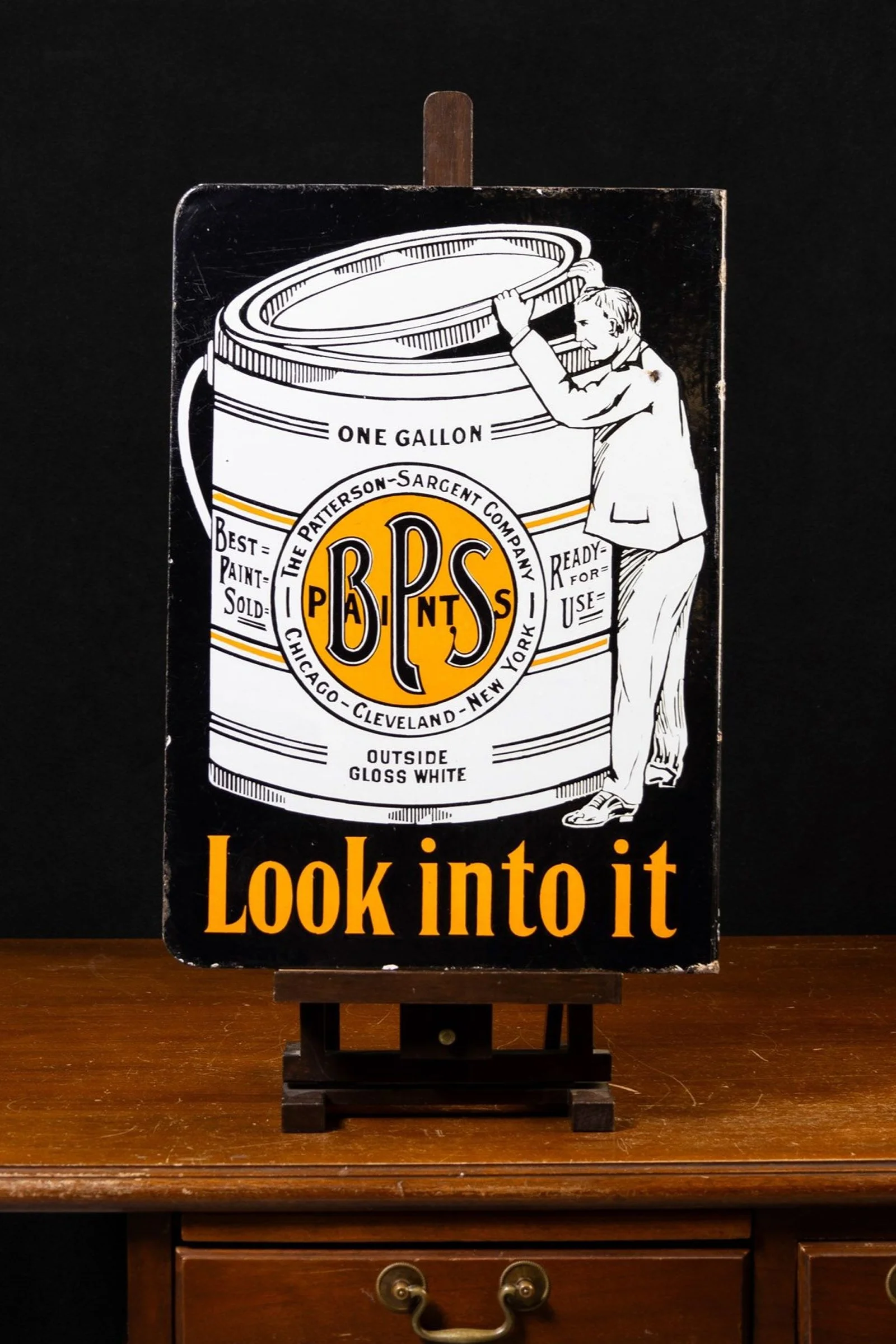
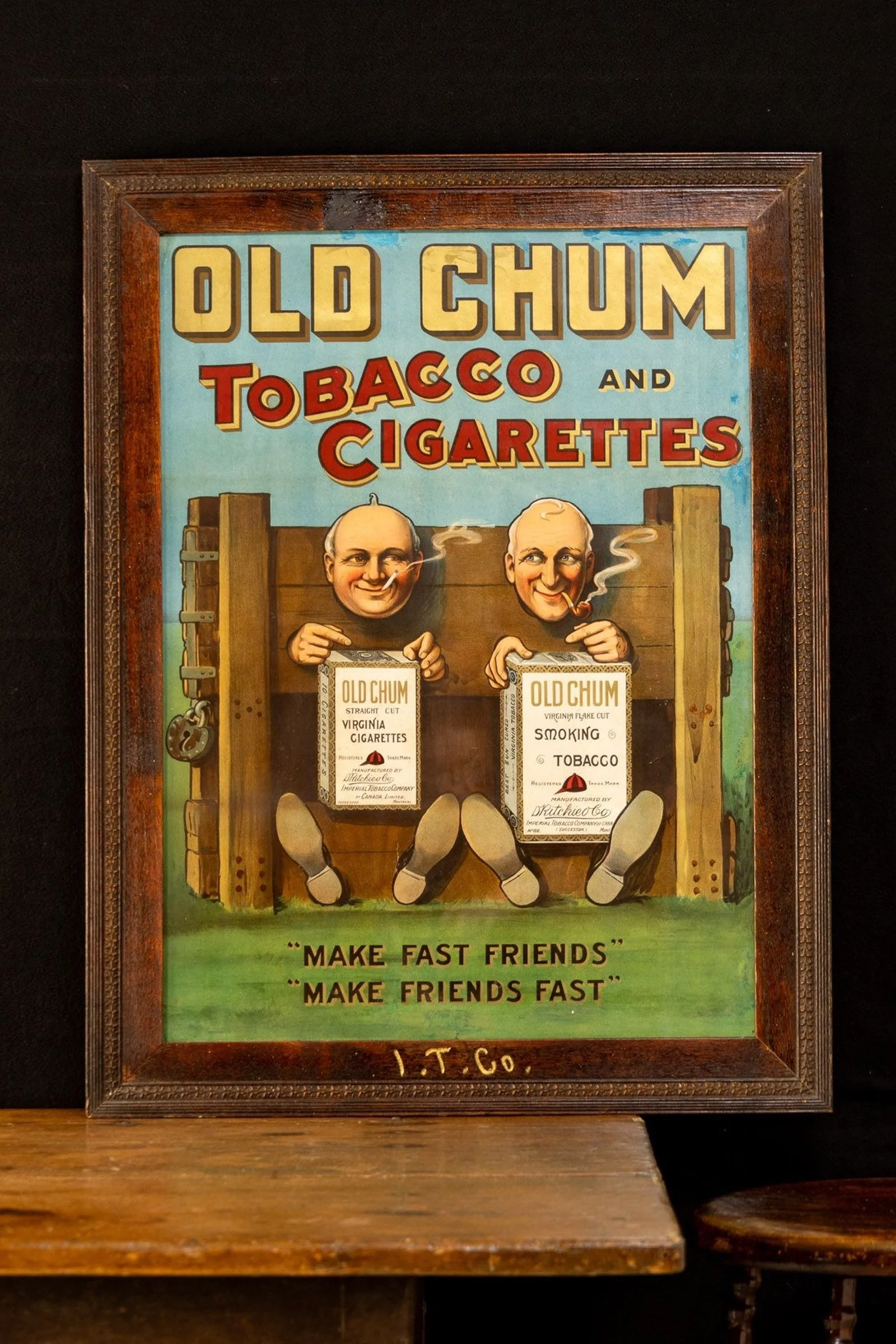
The BPS Paints flange sign (lot 1121) urges the consumer to “Look into it,” with a figure literally peering into an oversized paint can. The Old Chum Tobacco and Cigarettes lithograph (lot 1116) centers on the slogan “Make fast friends, make friends fast.” Its wordplay carried a double promise: Old Chum would help you form new friendships quickly, and keep them loyal through thick and thin. The image of two men locked together in a pillory drives the point home – enduring hardship side by side, yet still ‘chums’ thanks to the product.
7. Mascots
Brand mascots instantly distinguish the products they represent. Like “oversized products in use” these figures are often cartoonish exaggerations. Don found these images graphically appealing in advertisements. Mascots can give ordinary products extraordinary appeal.
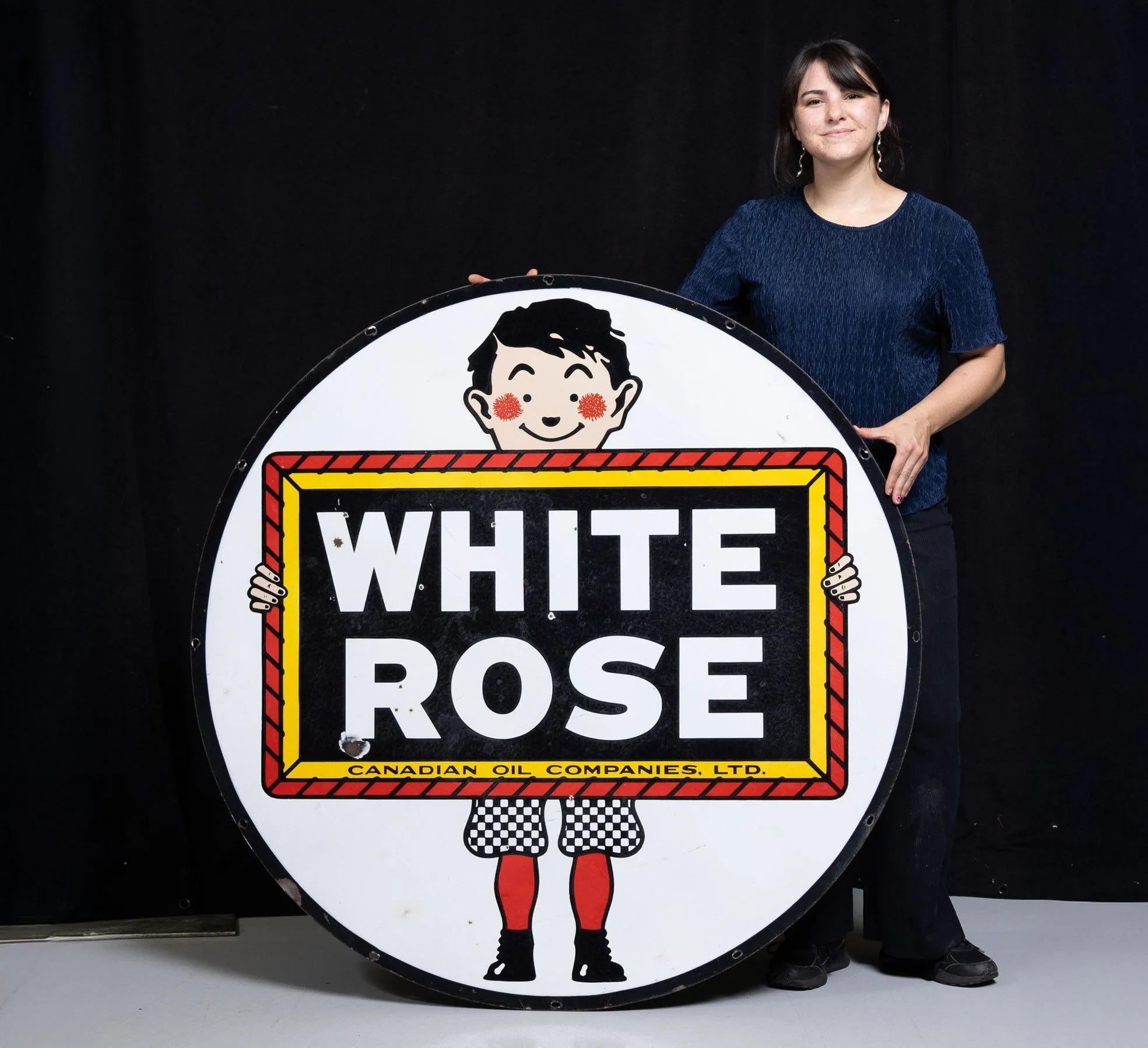
The White Rose Gasoline 4-foot dealer sign (lot 1254), for example, features the brand’s iconic “Slate Boy” mascot, while the Hires Root Beer sign (lot 1179) introduces Hires’ crazy soda jerk mascot “Josh Slinger,” raising a bottle high. Other mascots featured on Don’s signs include the mischievous Brownie on the Brownie Chocolate Soda sign (lot 1214), the dapper smoker in the Odin 5-Cent Cigar sign (lot 1345), the friendly bear in the Bear Wheel Alinement sign (lot 1100), and the always-on-duty “quality guard” on the Crescent Ice Cream sign (lot 1134).
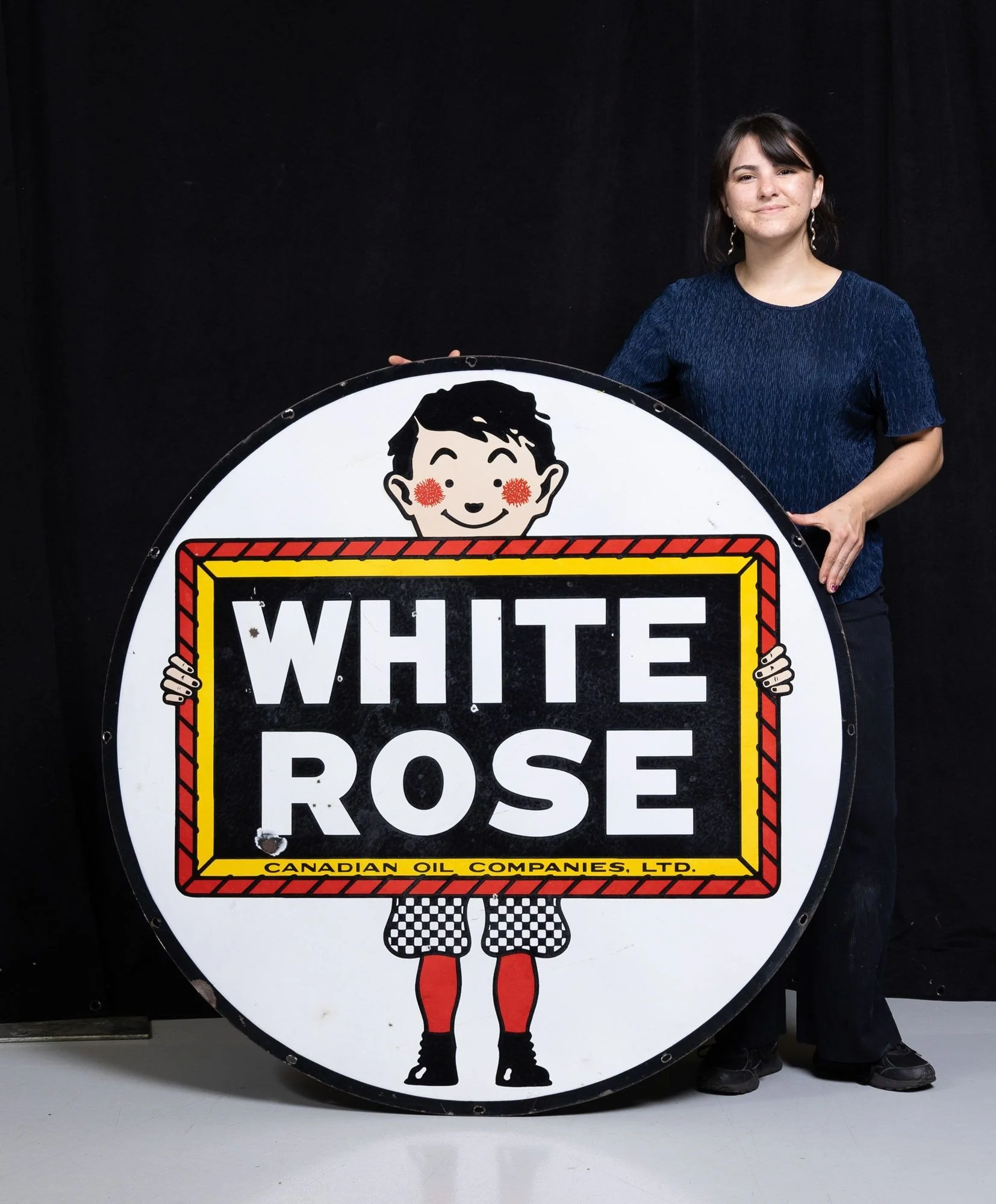
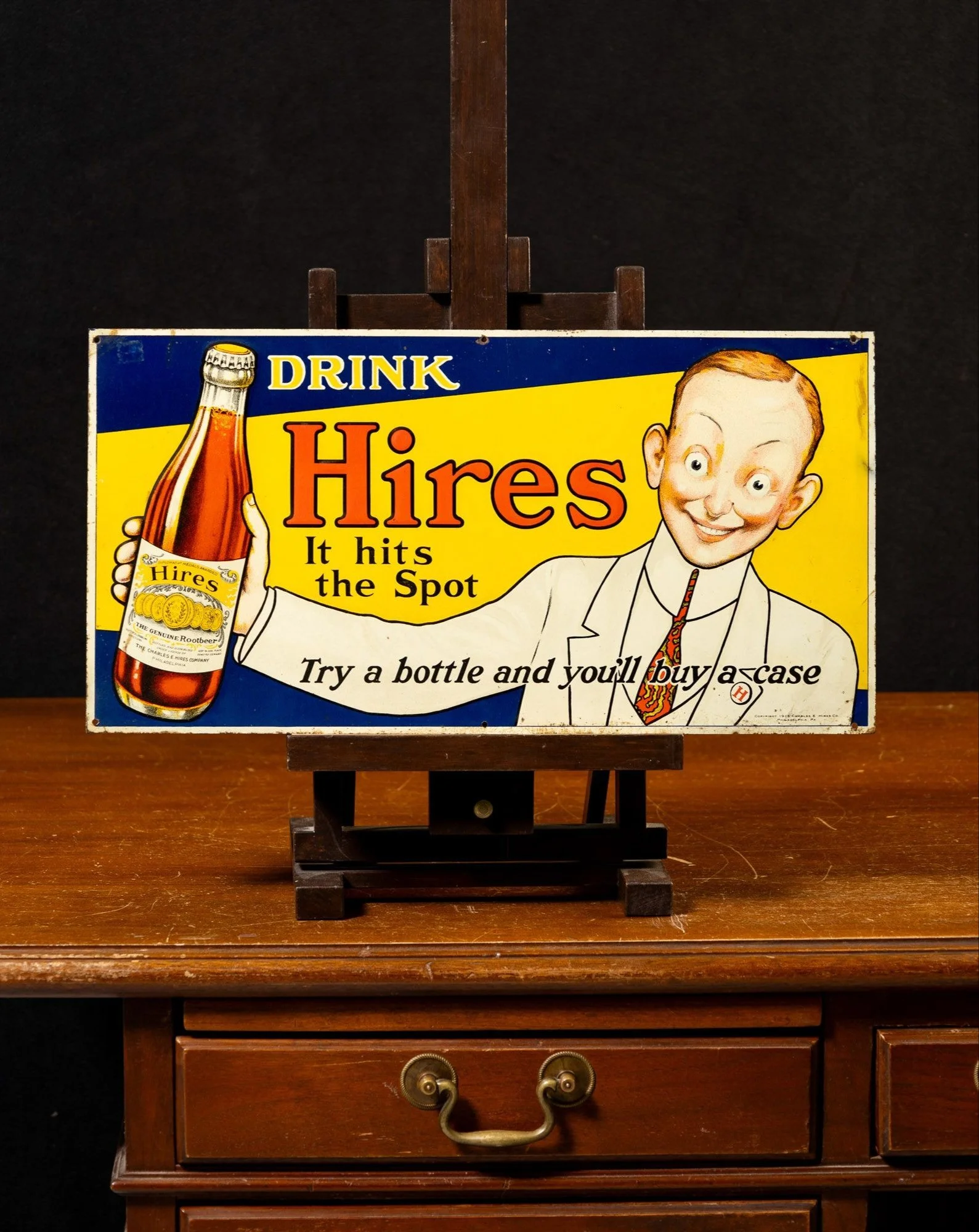
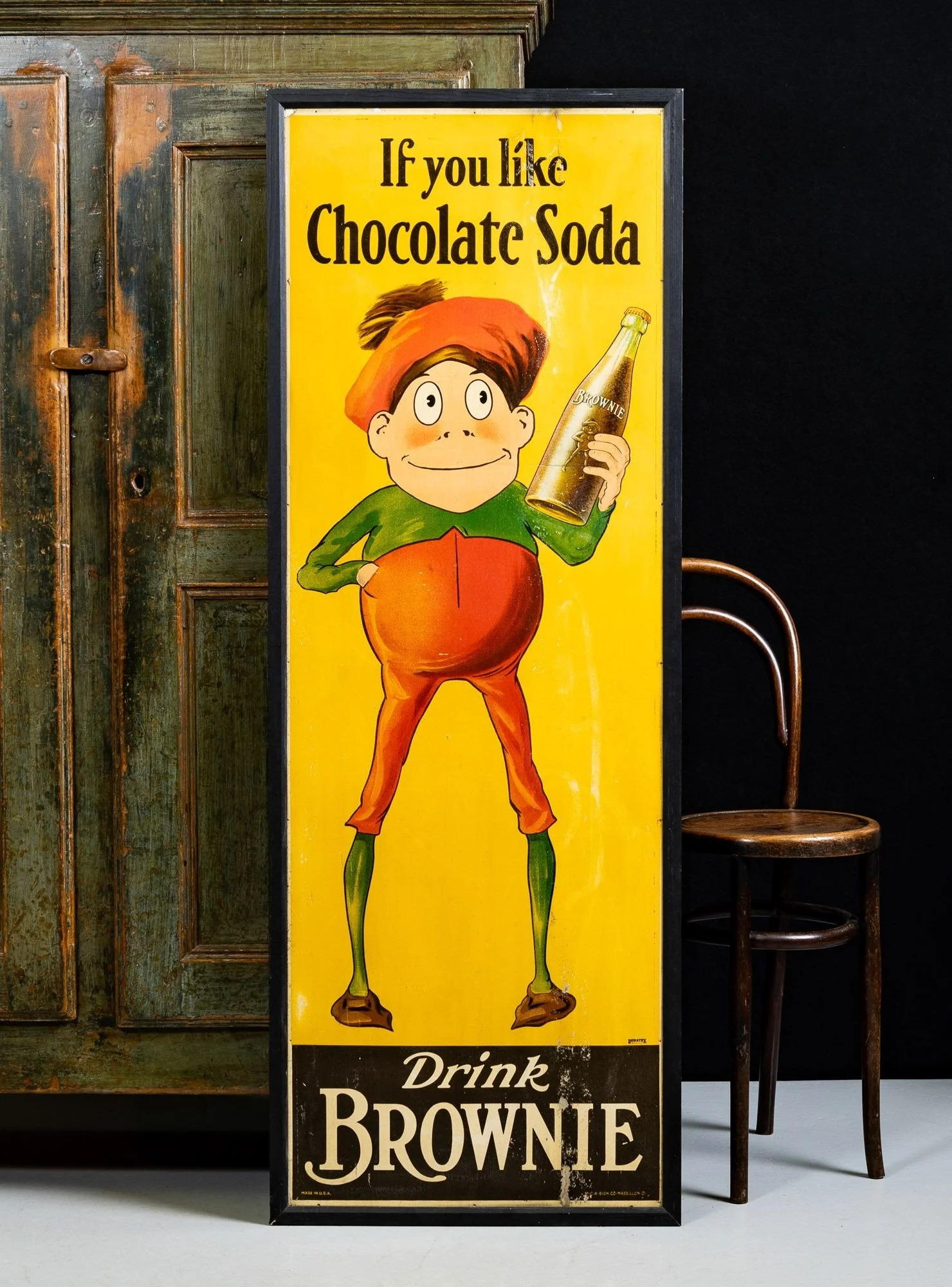
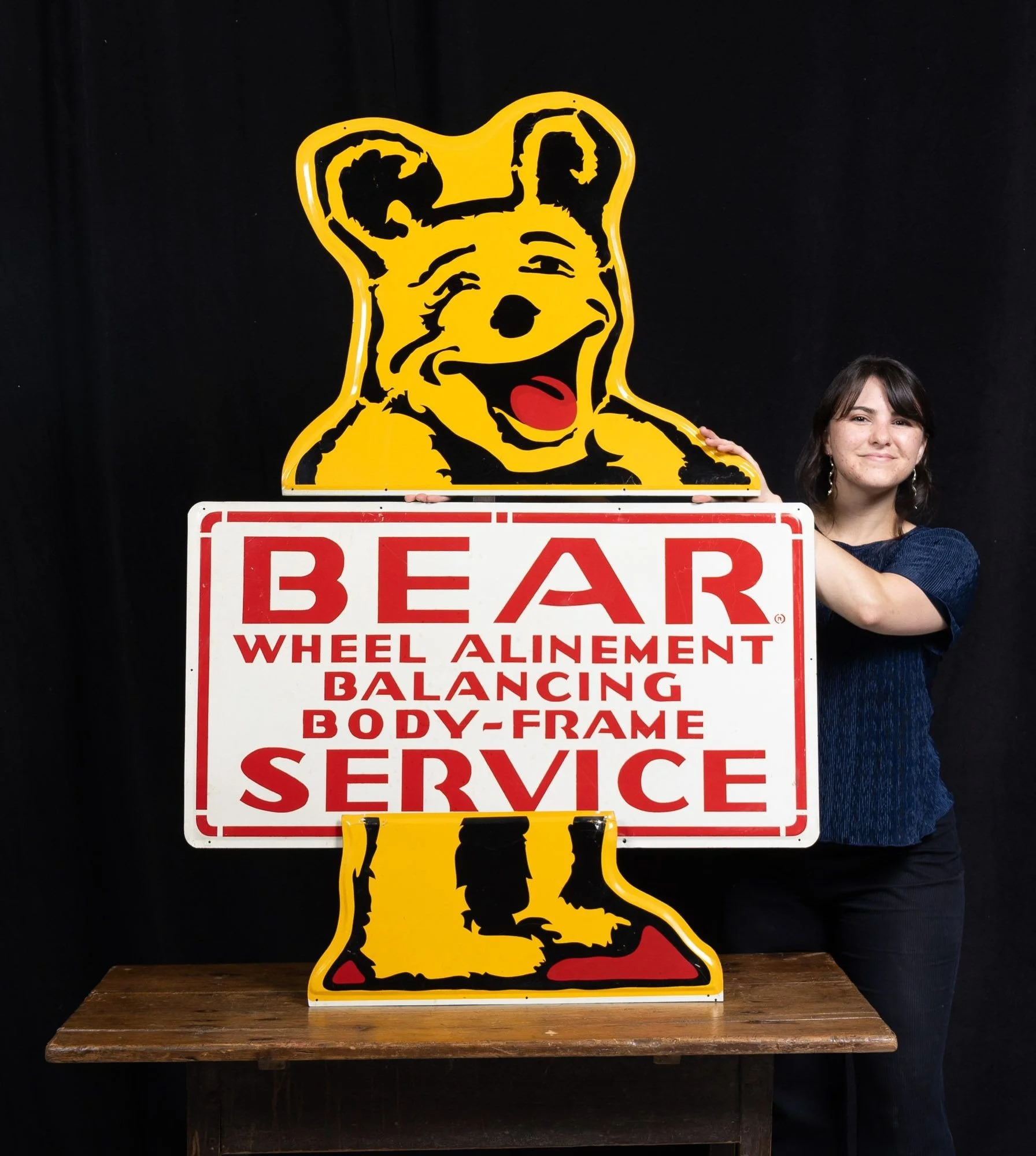
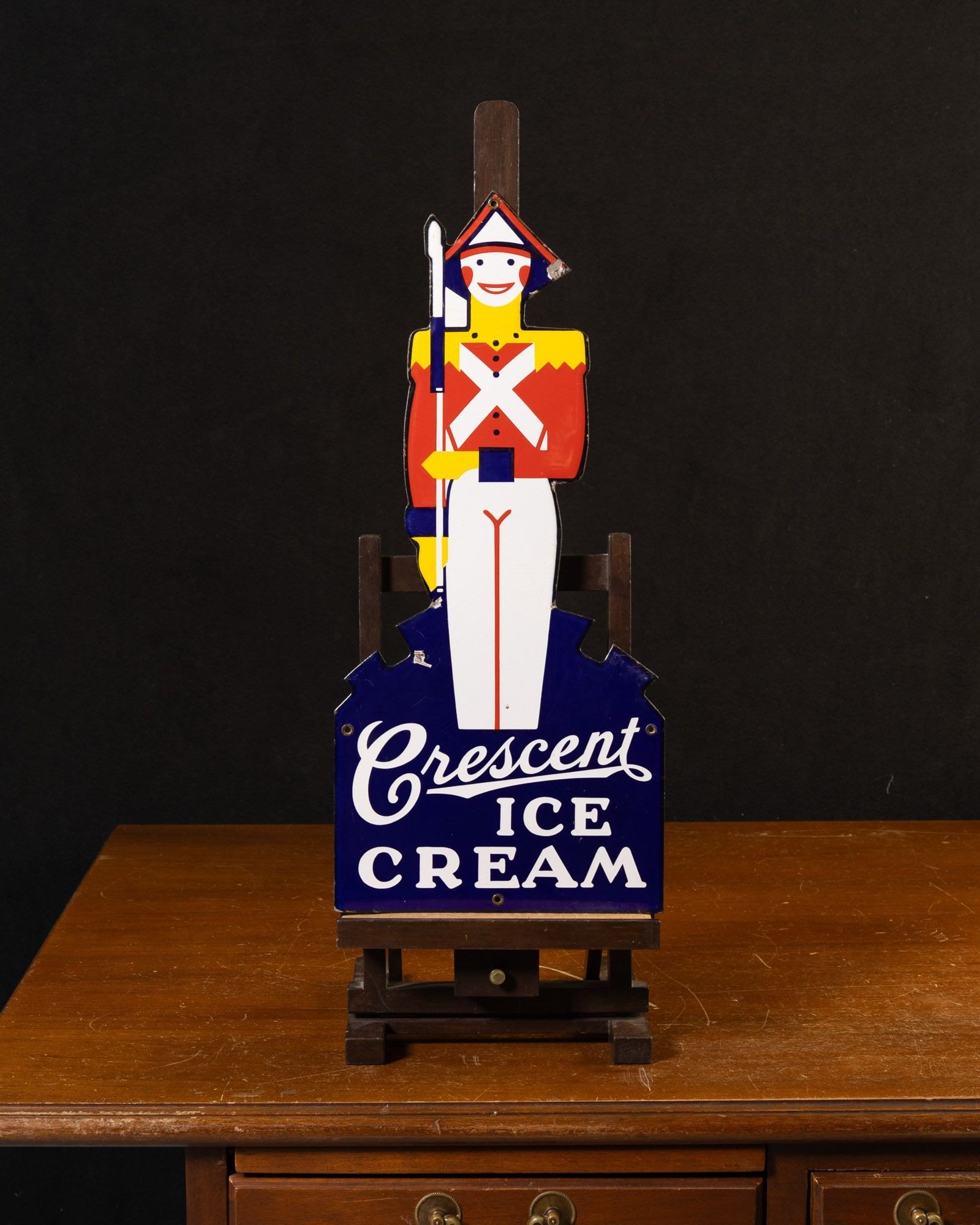
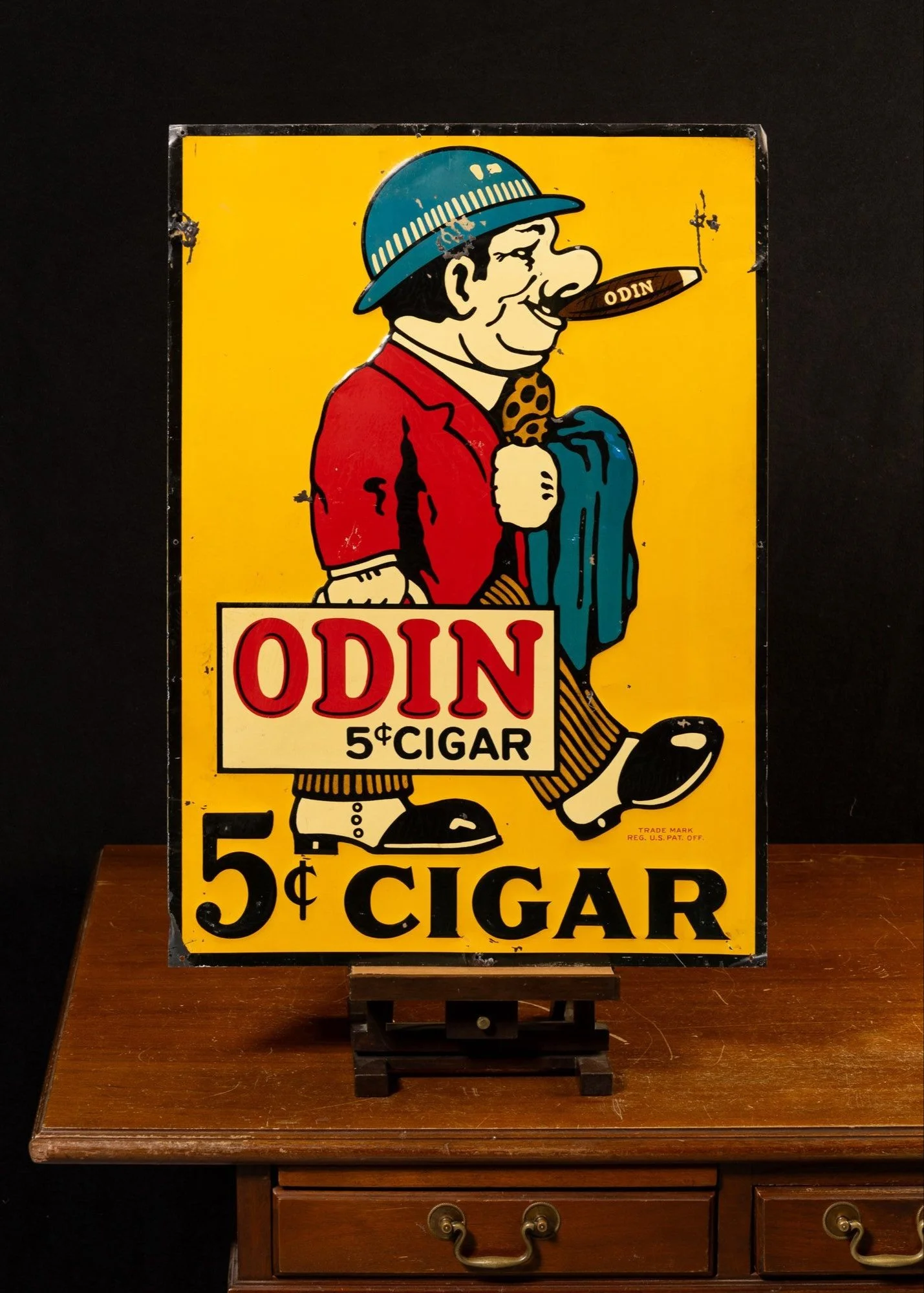
A number of the signs in Don’s collection feature brand mascots. Click each to view in the catalogue.
8. Out-Moded Price Shown
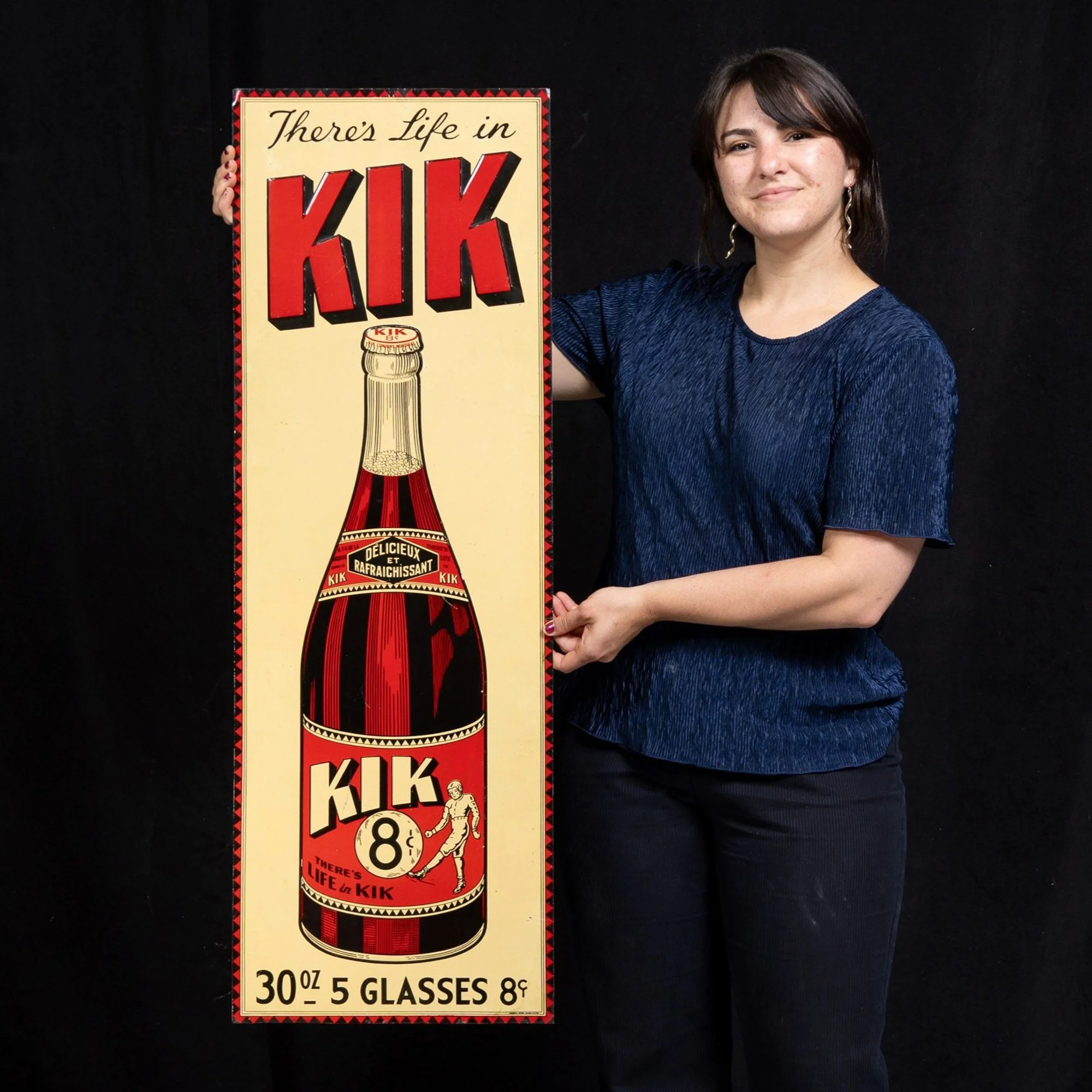
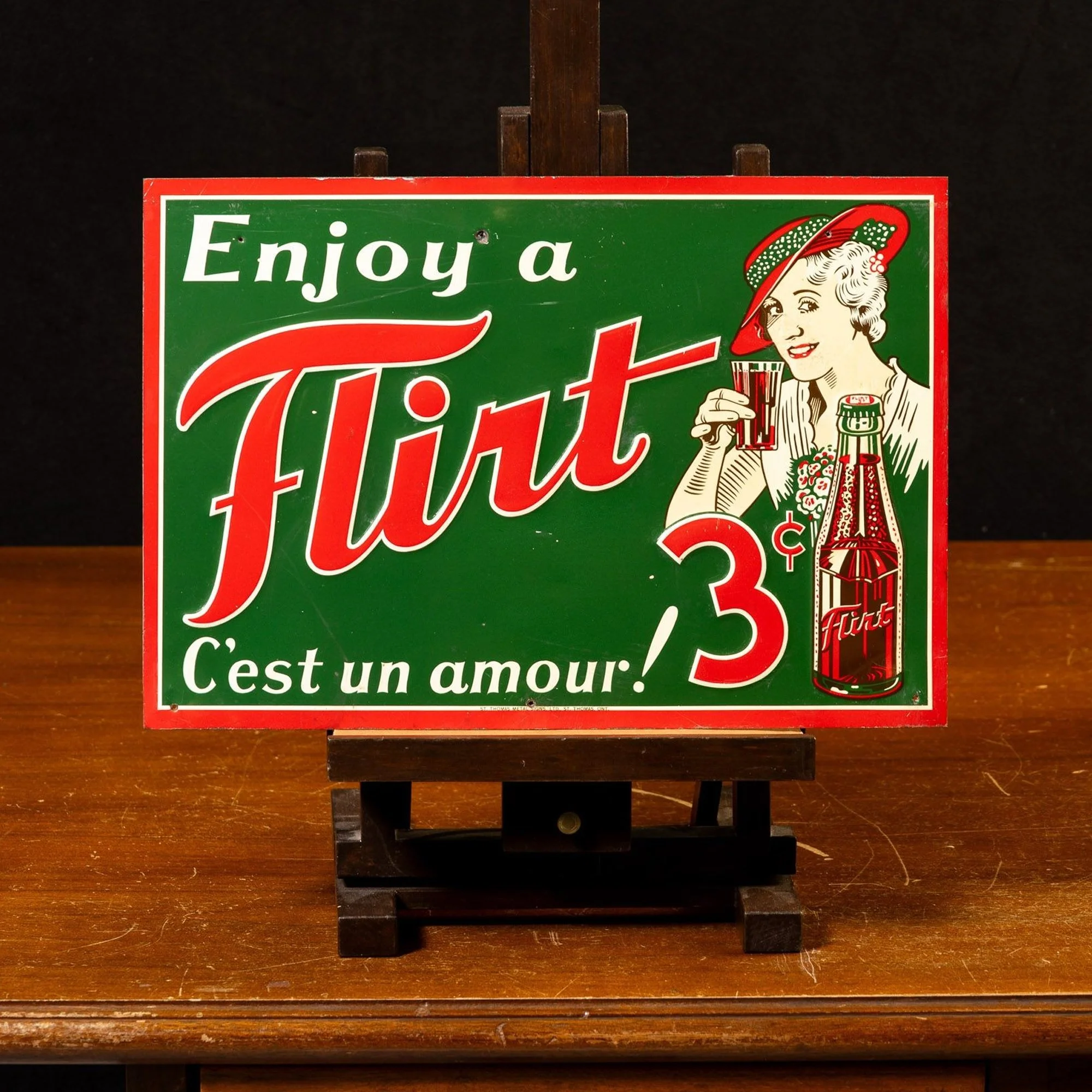
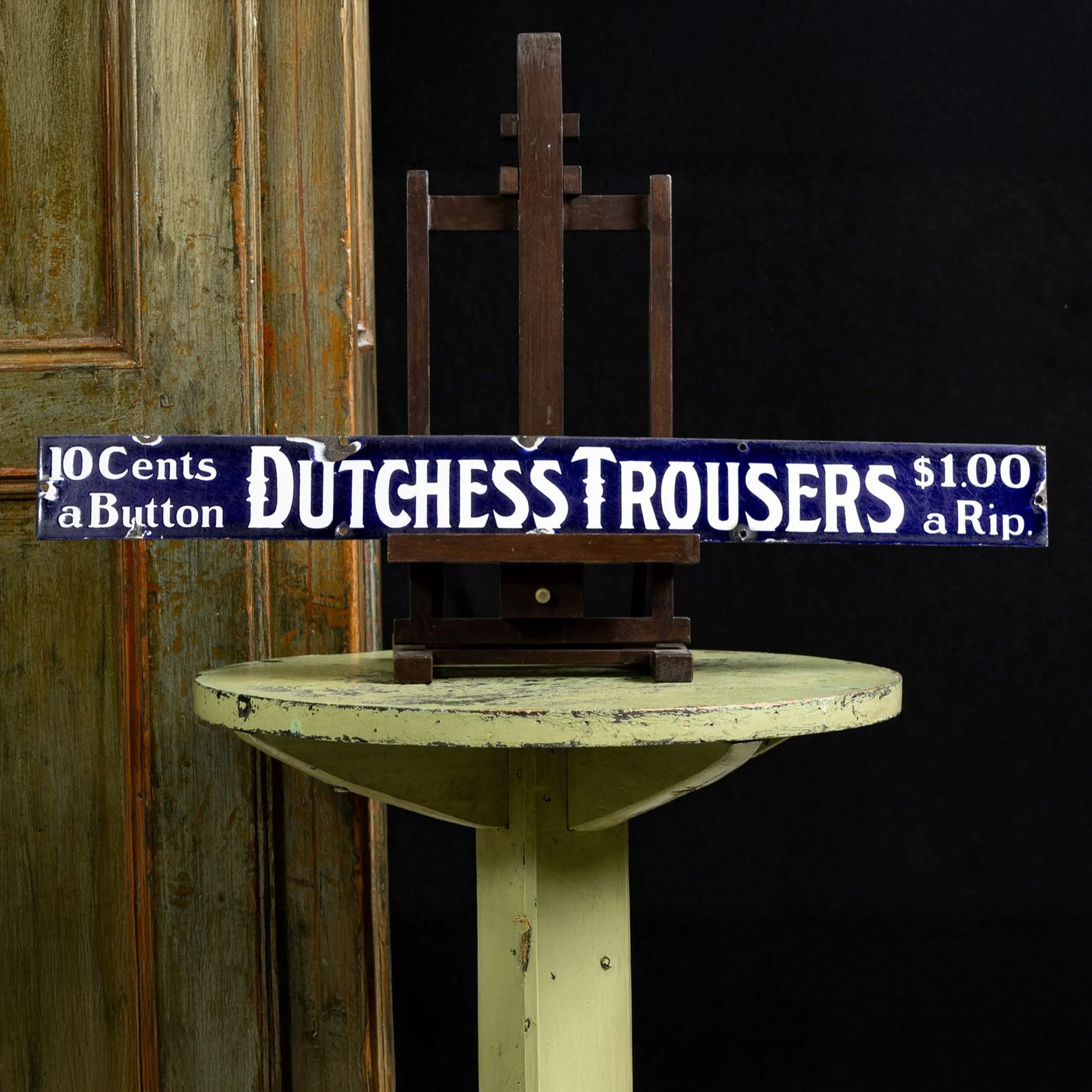
All sign collectors will agree that signs including a price (i.e. KIK Cola 8c) adds interest. But why? Don argued that the value lies in nostalgia for long gone low prices which he refers to as “out-moded prices”. The Dutchess Trousers strip sign (lot 1016) promised “10 cents a button, $1 per rip”, a guarantee unthinkable today. Likewise, the Kik Cola vertical sign (lot 1105) boasts a bottle for just eight cents, while the Flirt Soda sign (1078) offers a bottle for just three cents!
9. Obsolete Products
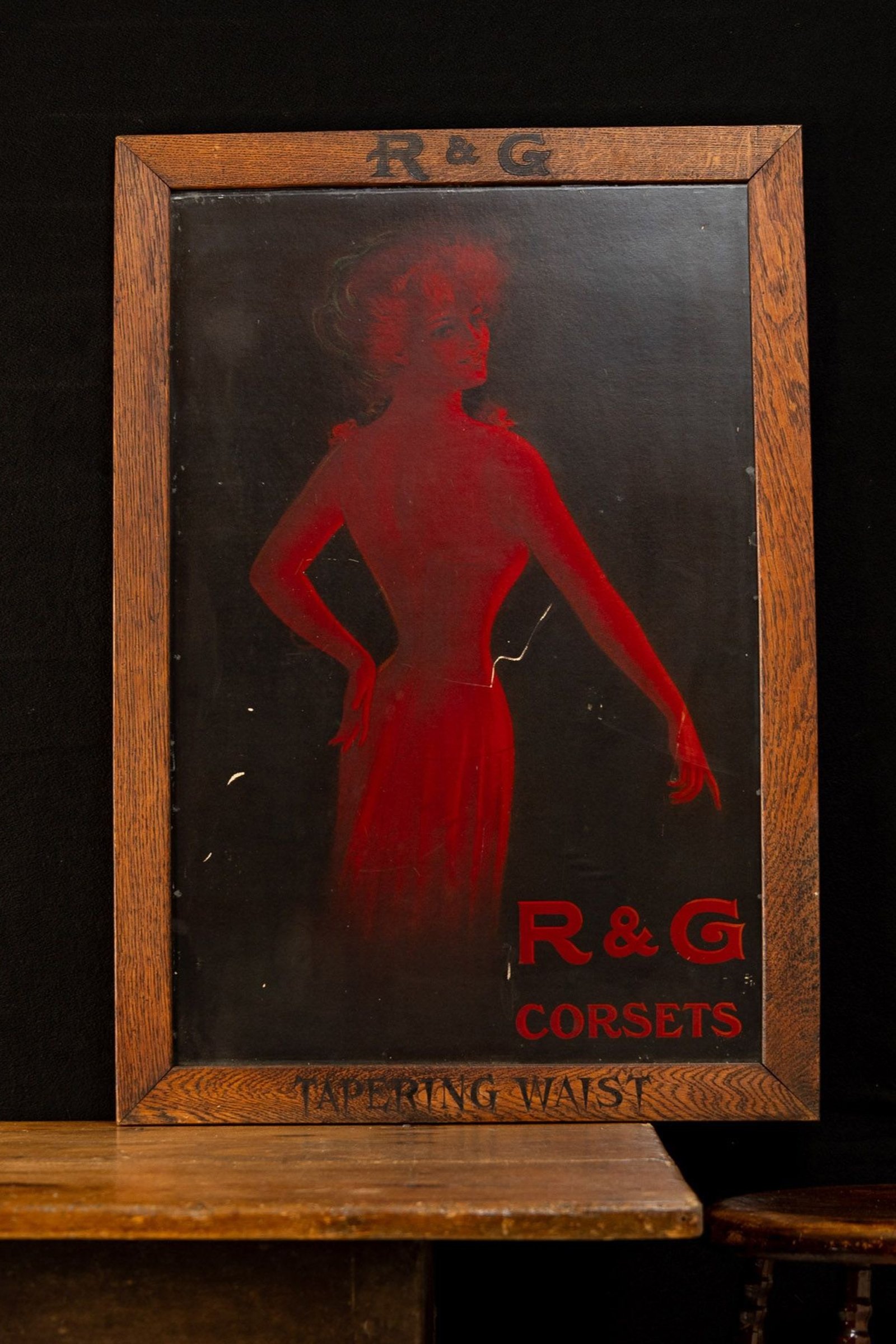
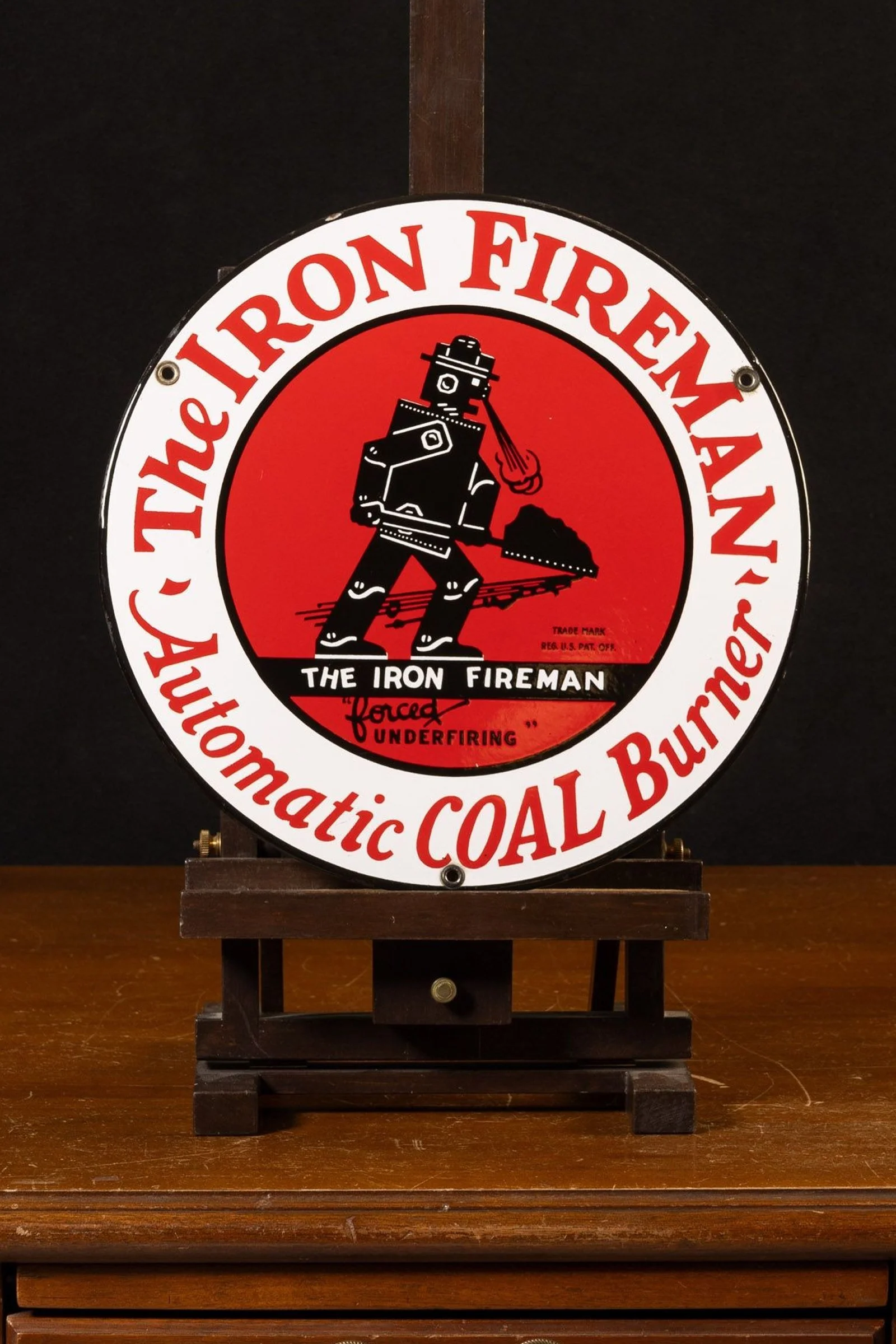
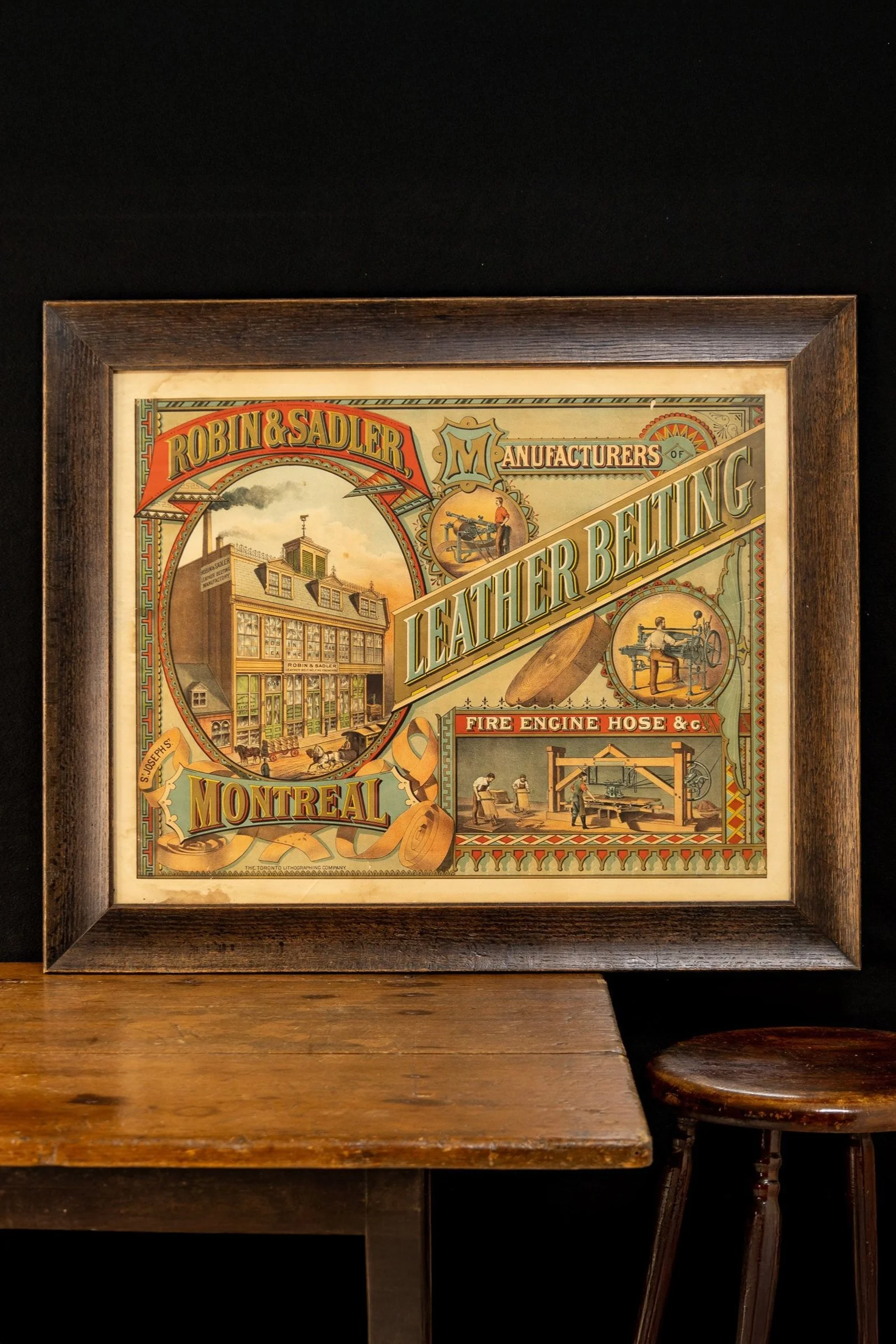
Don also prized signs featuring obsolete products from vanished products or industries. The R.G. Corsets framed lithograph (lot 1154) advertises a long gone staple of Victorian fashion. The Iron Fireman Coal Furnace sign (lot 1270) and Robin & Sadler Leather Belting lithograph (lot 1185) represent industries once central, now consigned to memory.
10. “Snake Oil” Products
Prior to US President Theodore Roosevelt’s 1906 Pure Food and Drug Act, unscientifically based “cures” abounded in advertisements. Don actively sought these pre-1906 advertisements boasting “snake-oil” cures of all kinds. The Papillon Cure lithograph (lot 1091), titled Cleopatra Before Caesar, used exotic imagery and historical drama, rather than science, to imply potency.
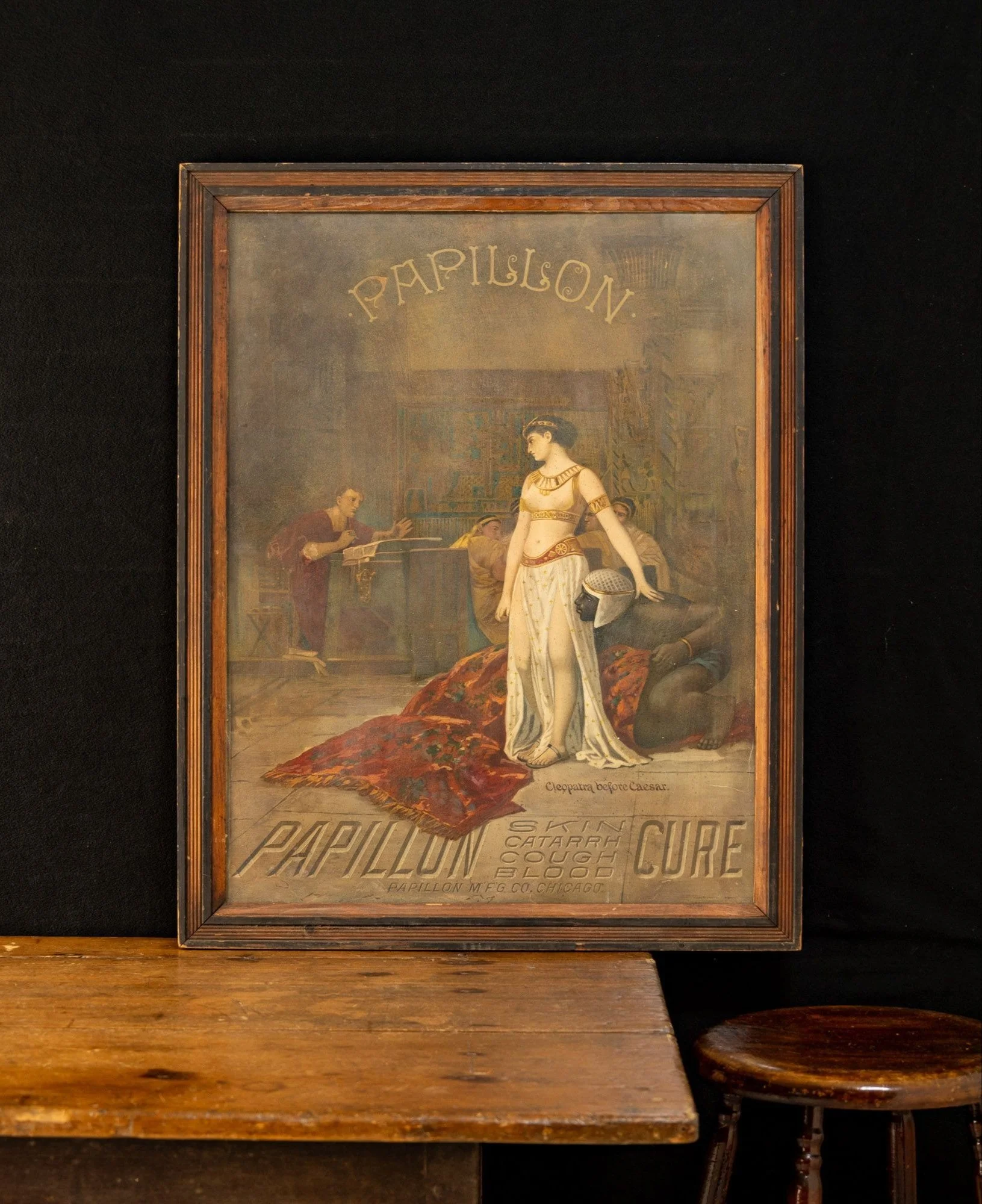
Lot 1091 - Papillon Cure "Cleopatra Before Caesar" Framed Lithograph
11. Illustrator Art
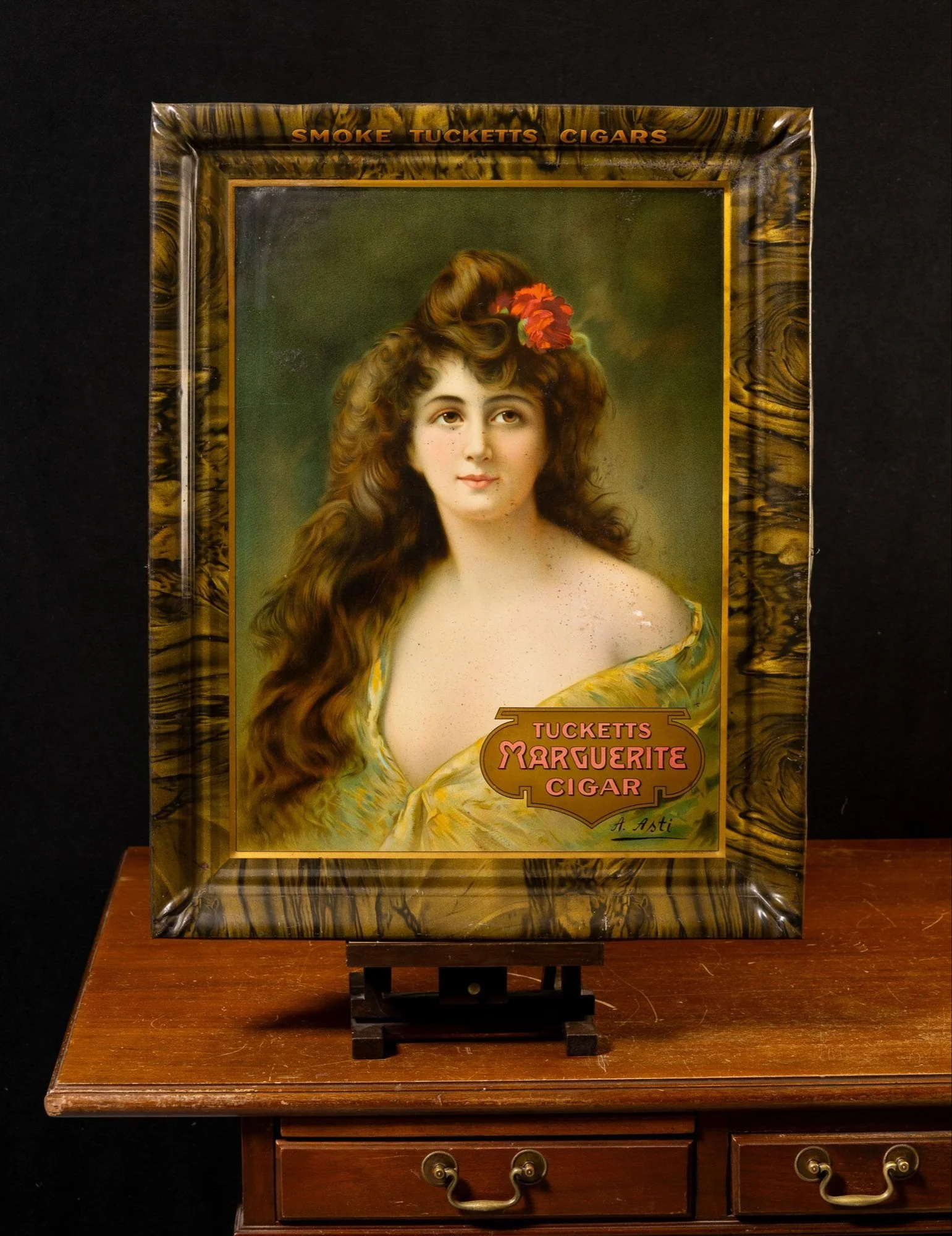
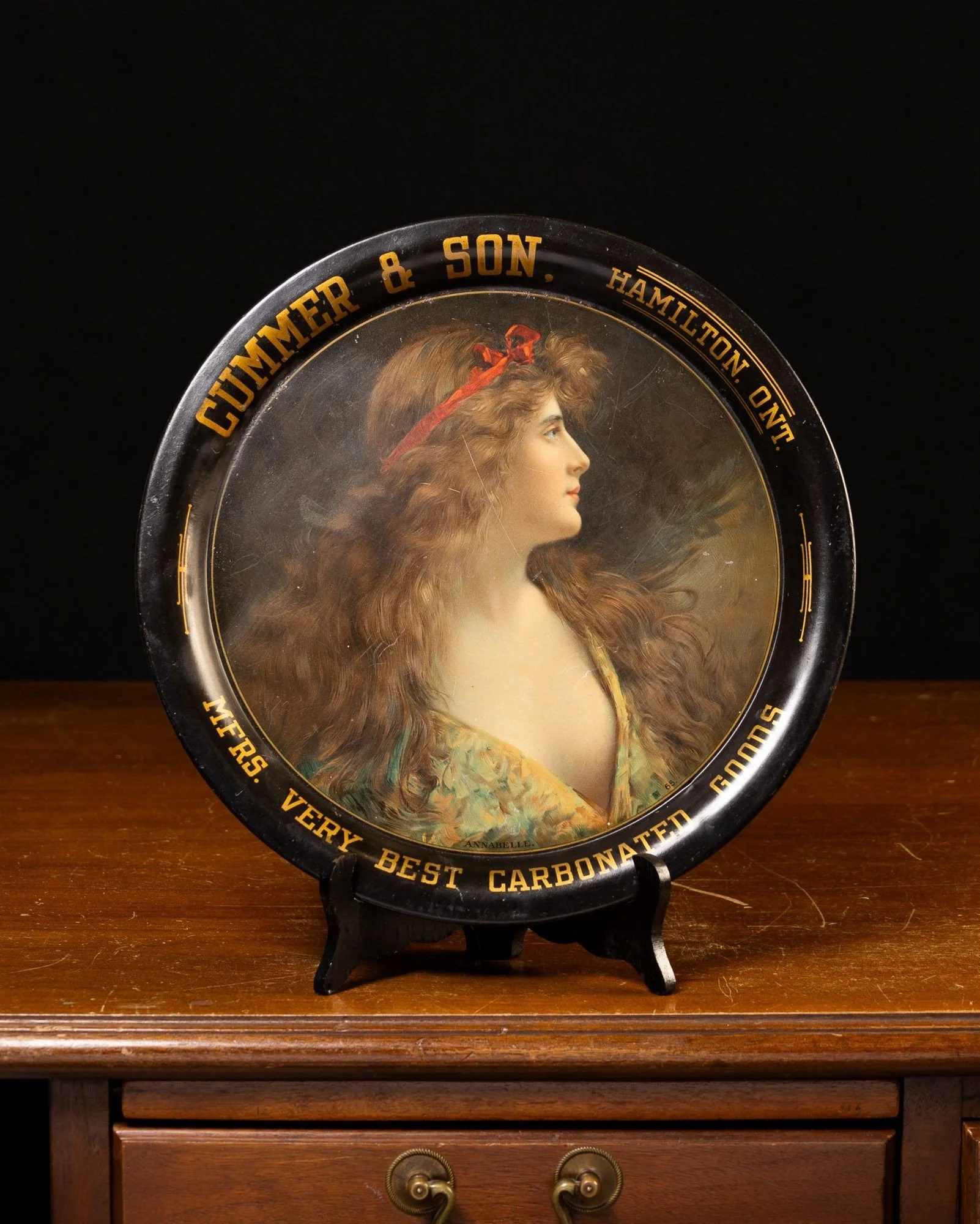
Advertisements featuring illustrator art by famous artists like Angelo Asti (1847-1903) lent refinement through seduction. Don’s eye for these subjects, often in the female form, comprise some his most memorable pieces. Asti’s romantic portraits of women were widely used at the turn of the century in tobacco, and also in cosmetics and soda. Advertisements with an Asti image featured the glamour of a beautiful woman as opposed to a possibly mundane product.
12. Victorian Advertising
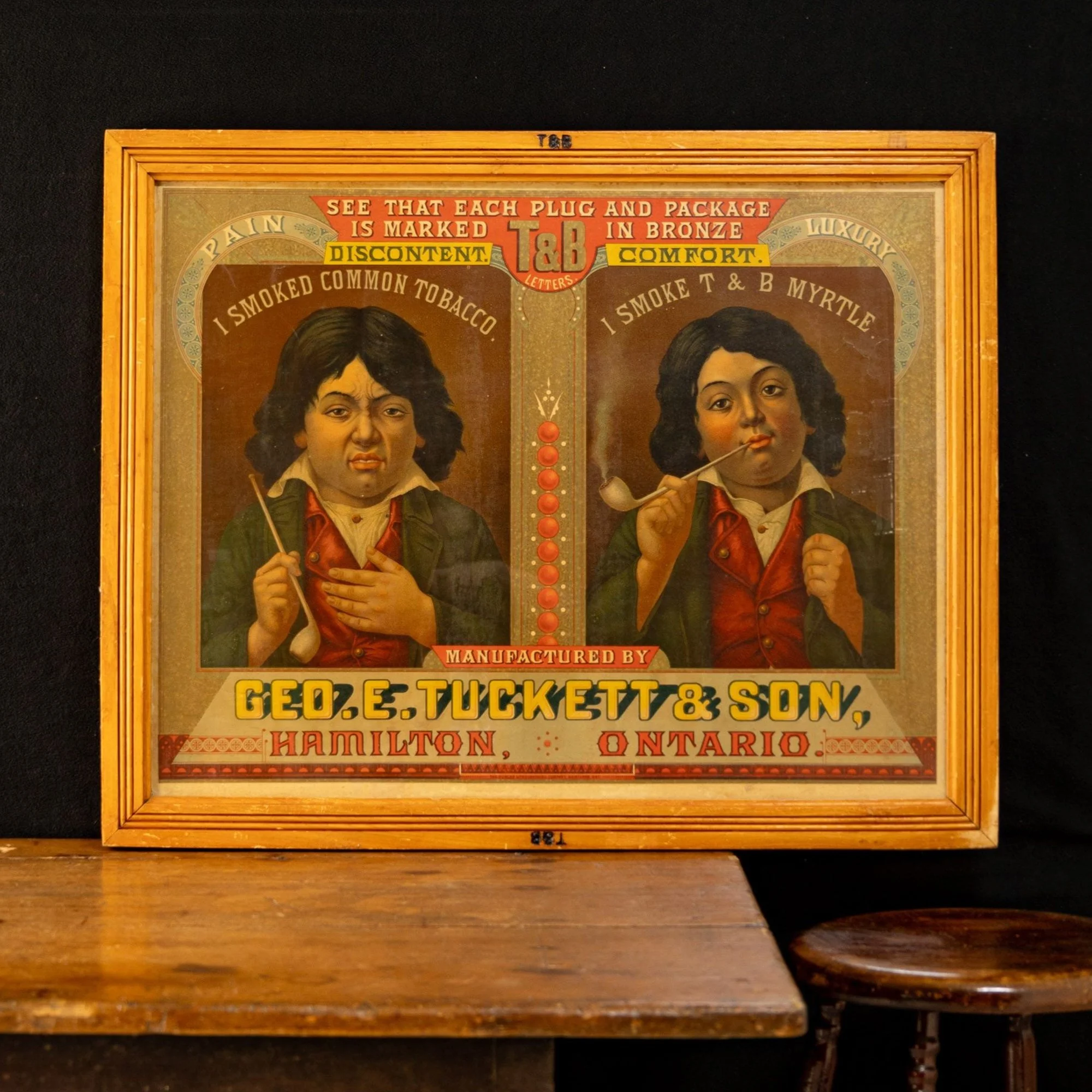
Victorian advertising comprises a large proportion of Don’s collection. One convention popular with ad makers of the Victorian era was the before-and-after scene, designed to dramatize the effect of a product. The Tuckett’s Two Boys lithograph (lot 1143) depicts a boy grimacing over “common” tobacco in one frame, then satisfied after smoking T&B’s Myrtle Tobacco in the next. Similarly, the Sweet Caporal Cigarettes lithograph (lot 1162) shows a young cherub imagining herself transformed into a mature majorette as a result of smoking Sweet Caporal cigarettes.
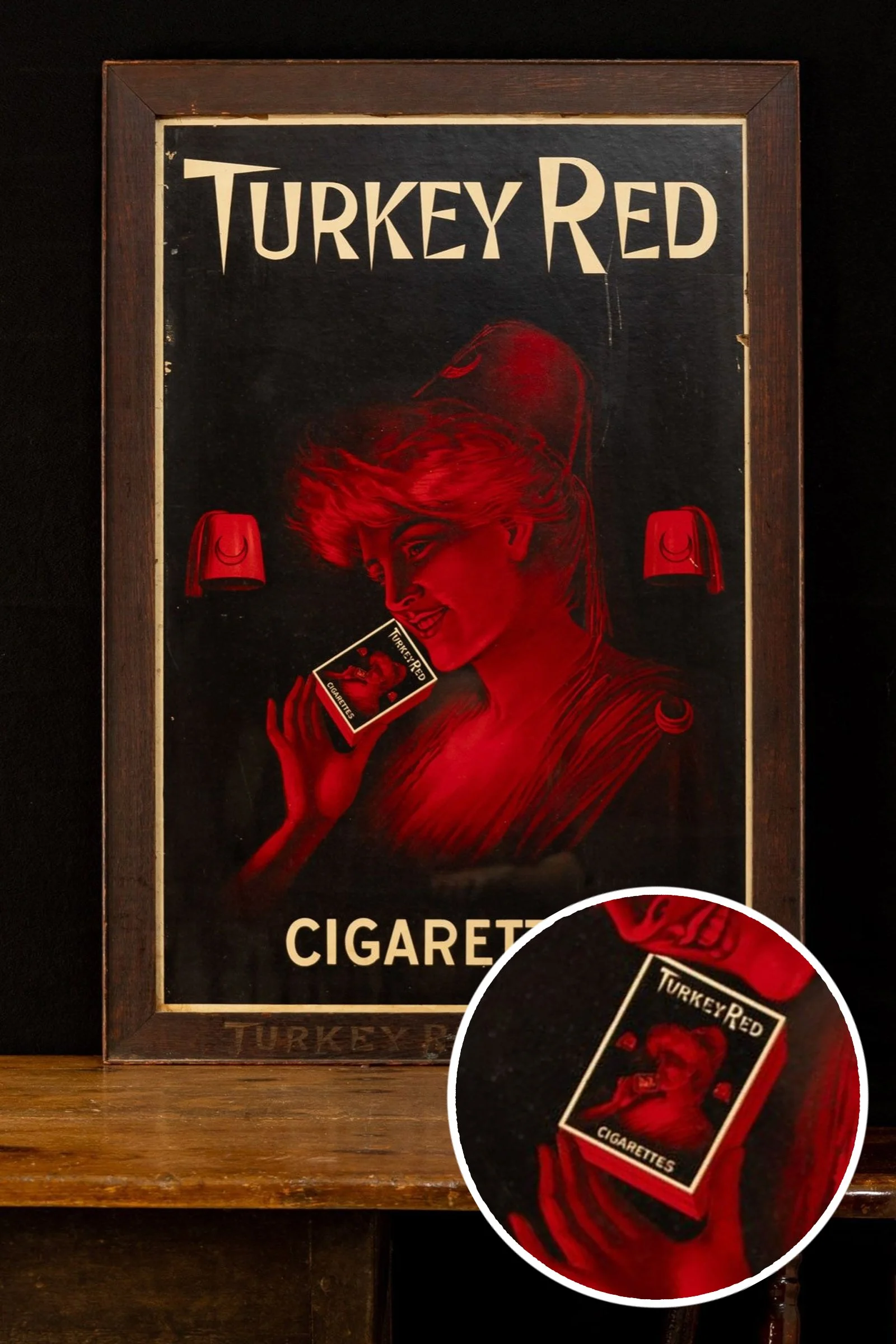
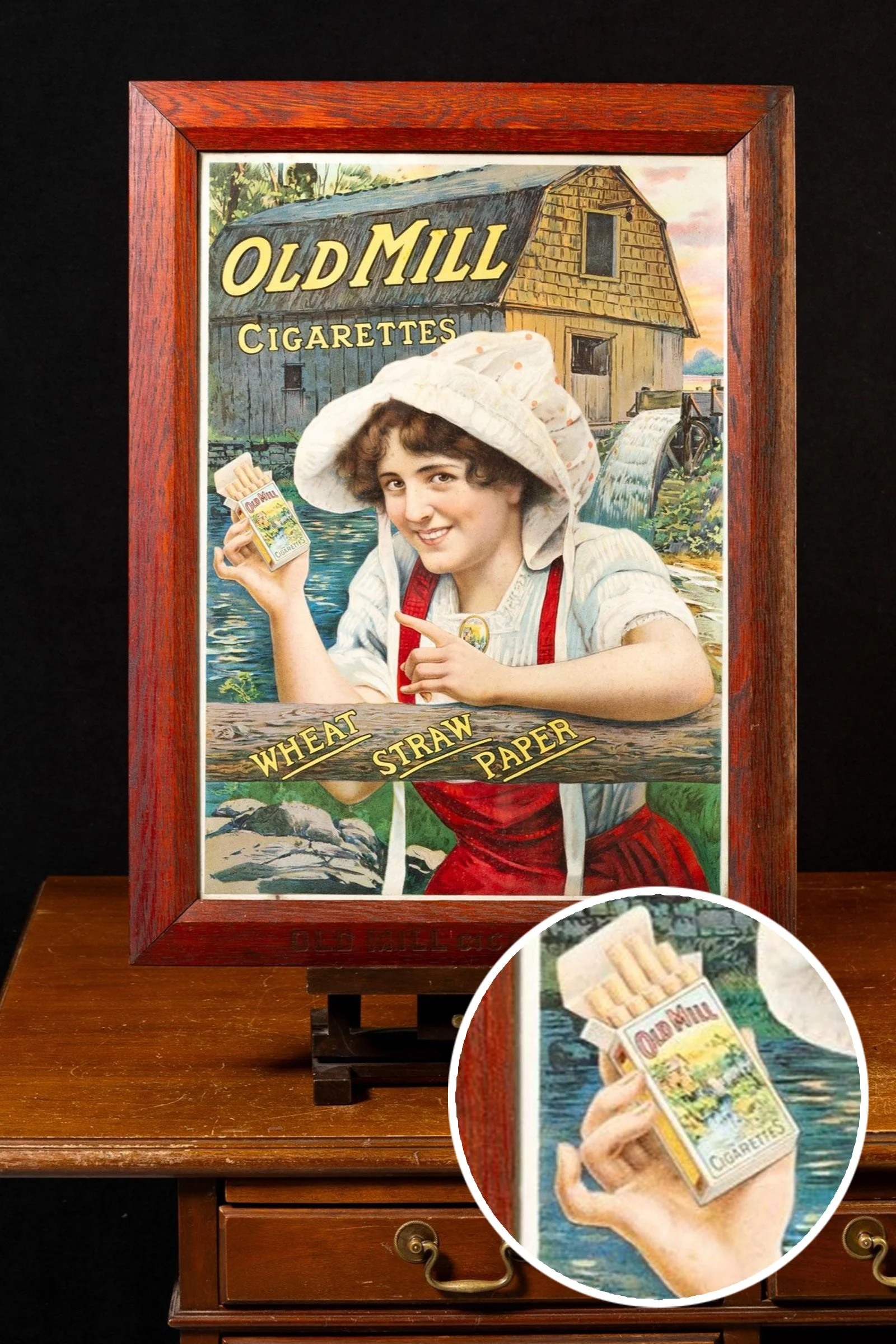
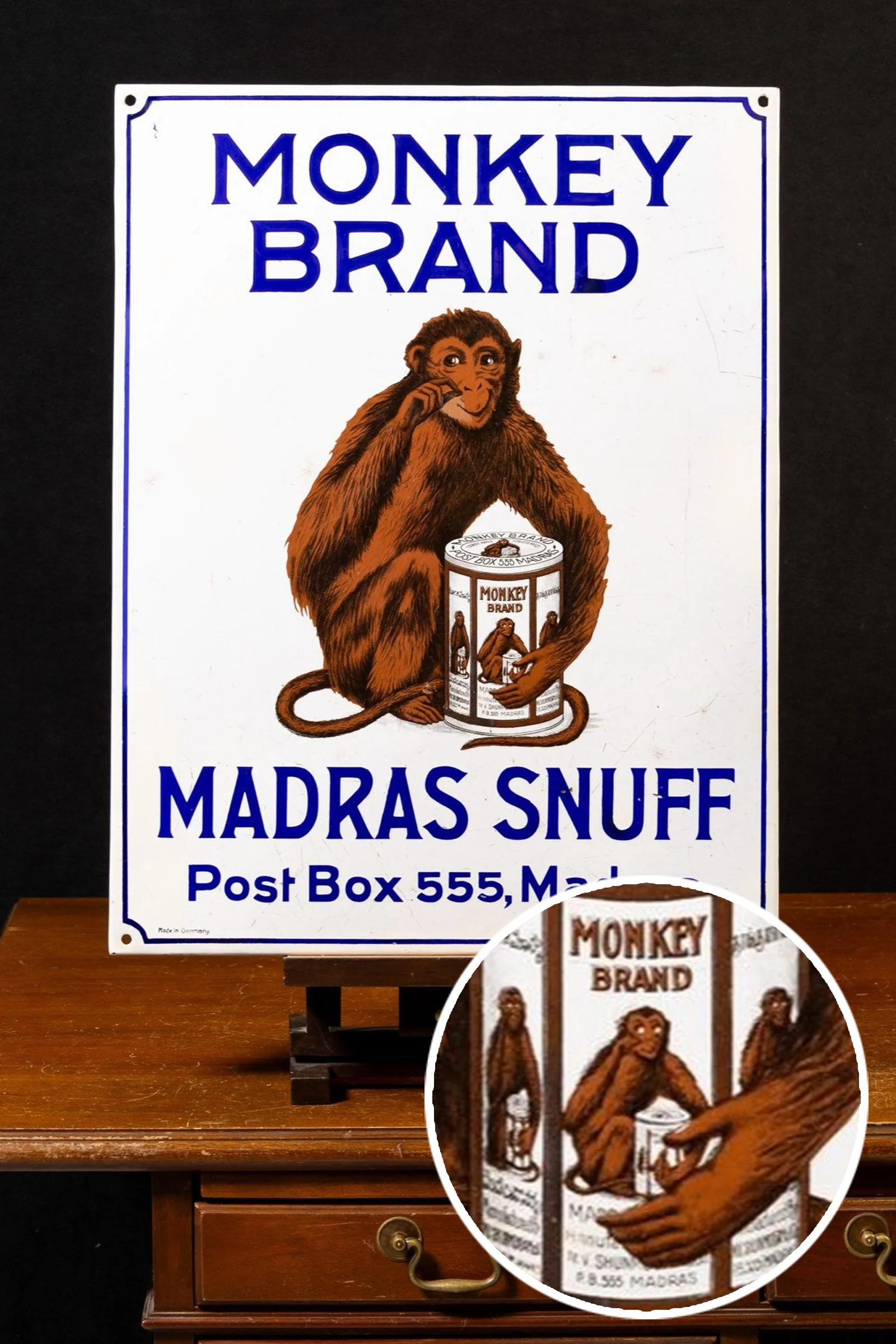
Another theme popular in Victorian era advertisements is the repeating image, where the scene (or a portion of the scene) is shown again in miniature. The Turkey Red Turkish Cigarettes lithograph (lot 1290) exemplifies the style, as the whole scene is repeated in miniature on the cigarette pack in hand. In the Old Mill Cigarettes lithograph (lot 1305) the scene (minus the woman) is shown in miniature on the brooch. The Monkey Brand Snuff sign (lot 1311) features a monkey holding an oversized canister of the product with a miniature version of the image repeated on the canister.
A Final Word
A Miller Times collector biography entitled, “Don Titherington: The man who ran out of space”, tells the stories behind how advertising collector Don Titherington managed to acquire and display his collection. This story examined what Don collected, based on his own set of criteria. These elements of “great” advertising, though intended by the designer, are not necessarily apparent to the viewer. We hope Don’s approach to collecting guides future collectors to see differently. After that, as Don reminded us, “the fun part begins”: to sit back, admire, enjoy.
Sale Information:
General Store Advertising | The Don Titherington Collection
September 14, 2025 | 9am EST | Live Webcast
Additional online-only segment to take place at 6pm EST.
Bidding is now open.
SELL WITH US
Do you have a collection or significant piece of Advertising with a story to tell? We’d love to hear more.
Request a free, no-obligation auction evaluation from our experts today.
Did you enjoy this story? Feel free to share it using the buttons below: