
Goalie stick used in winning game for 1902 Stanley Cup
Consigned by one of Canada’s prominent hockey historians

A game-used goalie stick from the 1902 Stanley Cup Final, belonging to W.C. “Billy” Nicholson, comes to auction on September 28.
A hockey stick once used by a colourful and talented goalie to help win the Stanley Cup in 1902 is on the auction block, consigned by one of Canada’s prominent hockey historians, former Hockey Night in Canada commentator Brian McFarlane.
“I was never really a collector, I was always a hockey historian,” says McFarlane, who has written over 100 hockey-related books during his long and distinguished career.
The goalie stick originally belonged to W.C. ‘Billy’ Nicholson, who played on the 1902 Montreal Amateur Athletic Association (MAAA) championship team, was one of nine players on the squad. The MAAA defeated the Winnipeg Victorias in a best-of-three series, winning the Stanley Cup, just two months after the Victorias had won it against the Toronto Wellingtons. Back then teams had the right to challenge Stanley Cup winners to take the cup away. There was no annual playoff structure so theoretically the cup could change hands every few months.
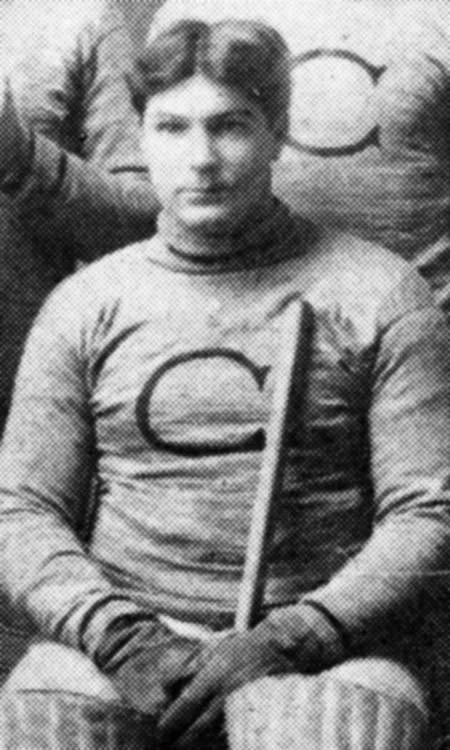
This photo shows Nicholson after his MAAA tenure, while playing with the Calumet Miners (Michigan) in the International Hockey League (1904–1907). Source.
According to a news story from 1980, Billy Nicholson had his sticks custom made and his name was embedded on the shaft. During that fateful 1902 game he cracked his stick, but it was repaired on the spot and he finished the game with it.
That goalie stick is now being sold at Miller & Miller’s Pre-1980 Sports Memorabilia sale on Sunday Sept. 28, 2025, estimated at CA$2,000 to $3,000. It bears his name, measures just 54 inches and shows the repair at the three-quarter mark.
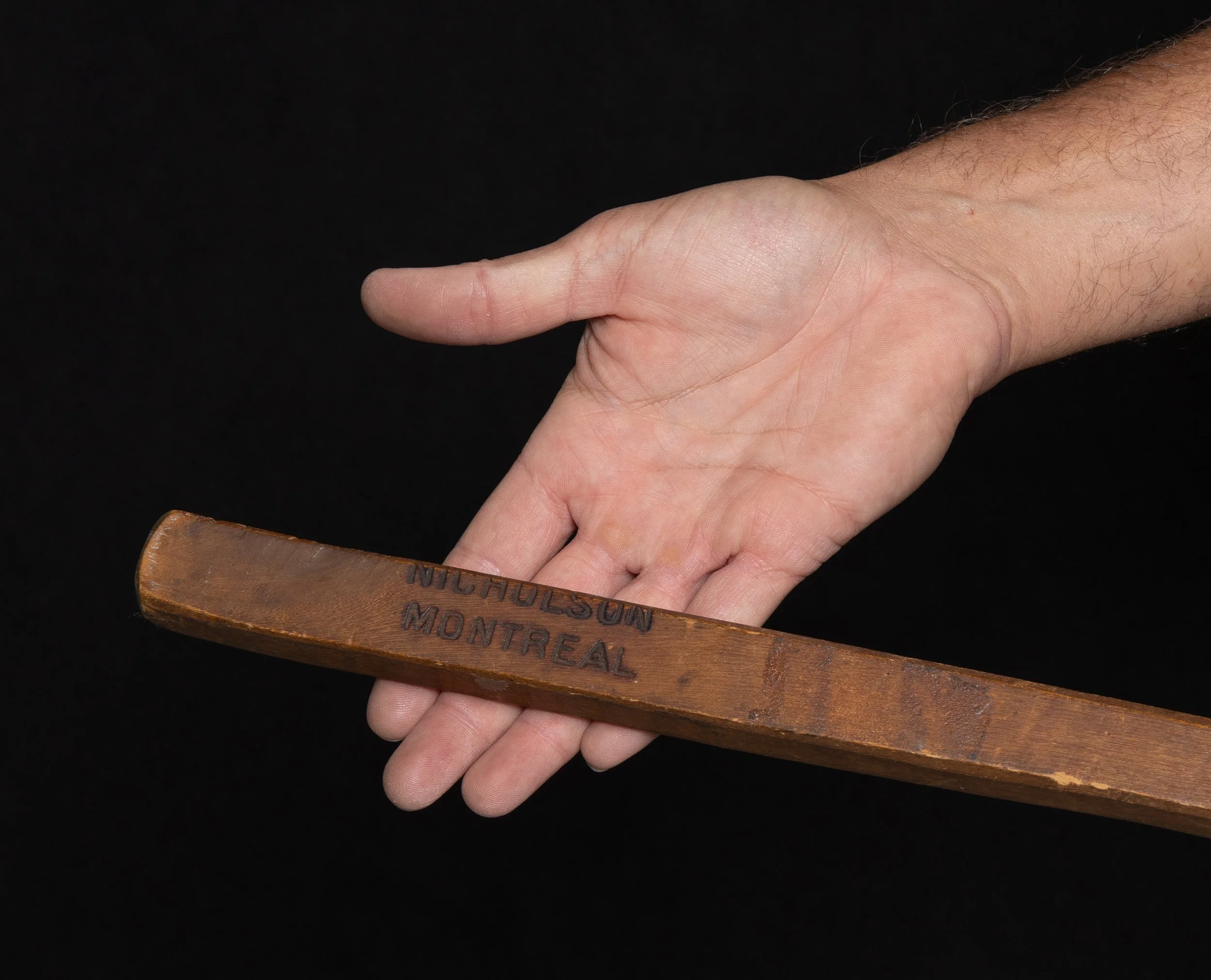
Billy Nicholson had his sticks custom made and his name was embedded on the shaft, as shown in the example offered in the upcoming sale.
“The stick is an artifact of hockey history and shows how far the game has come since the early days,” says Ben Pernfuss, Miller & Miller’s Consignment Director for Sports Cards & Memorabilia.
“The stick is very short in length because players leaned over a lot more when they played back then,” points out McFarlane, who has been inducted into five halls of fame, including the media section of the Toronto-based Hockey Hall of Fame.
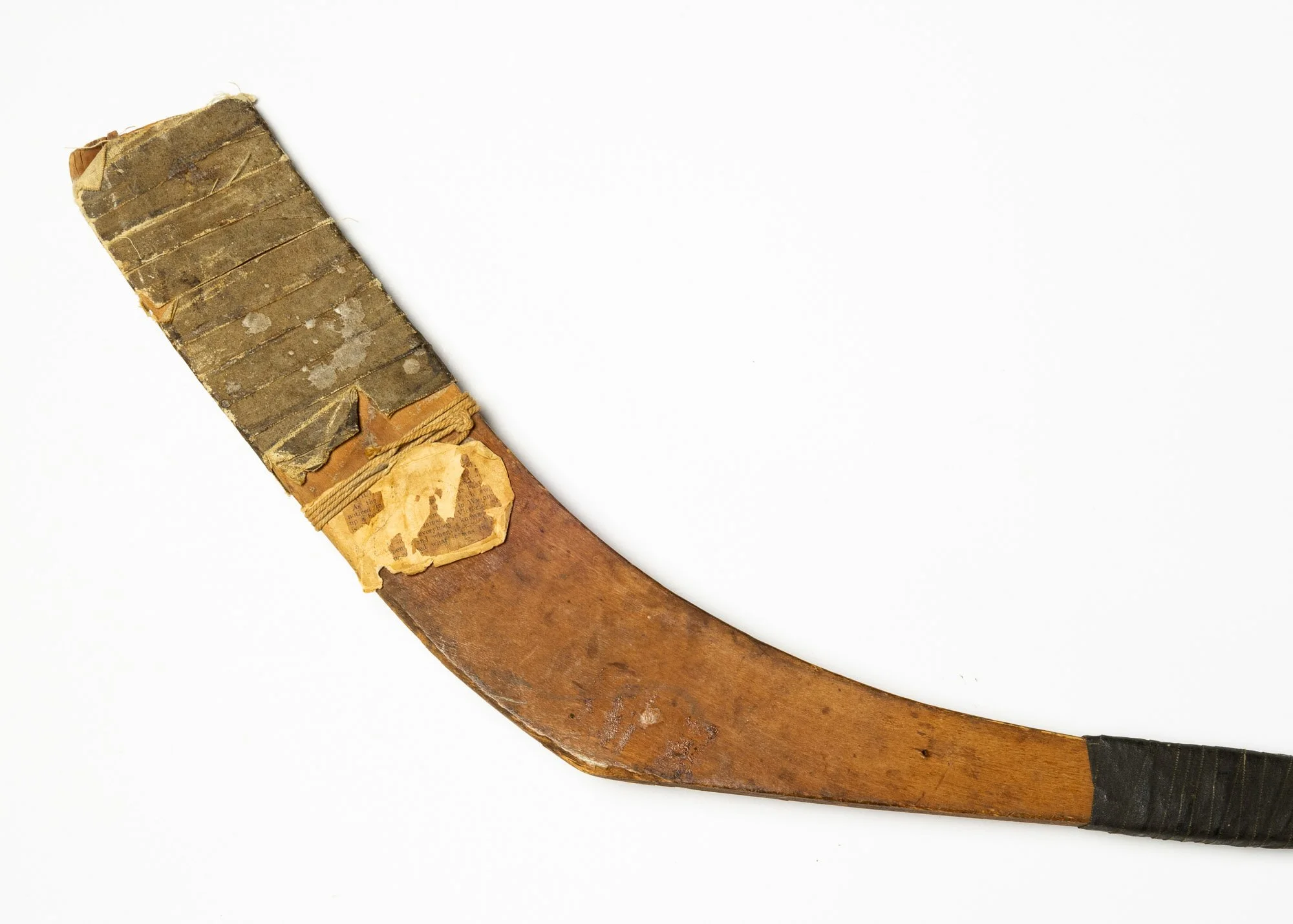
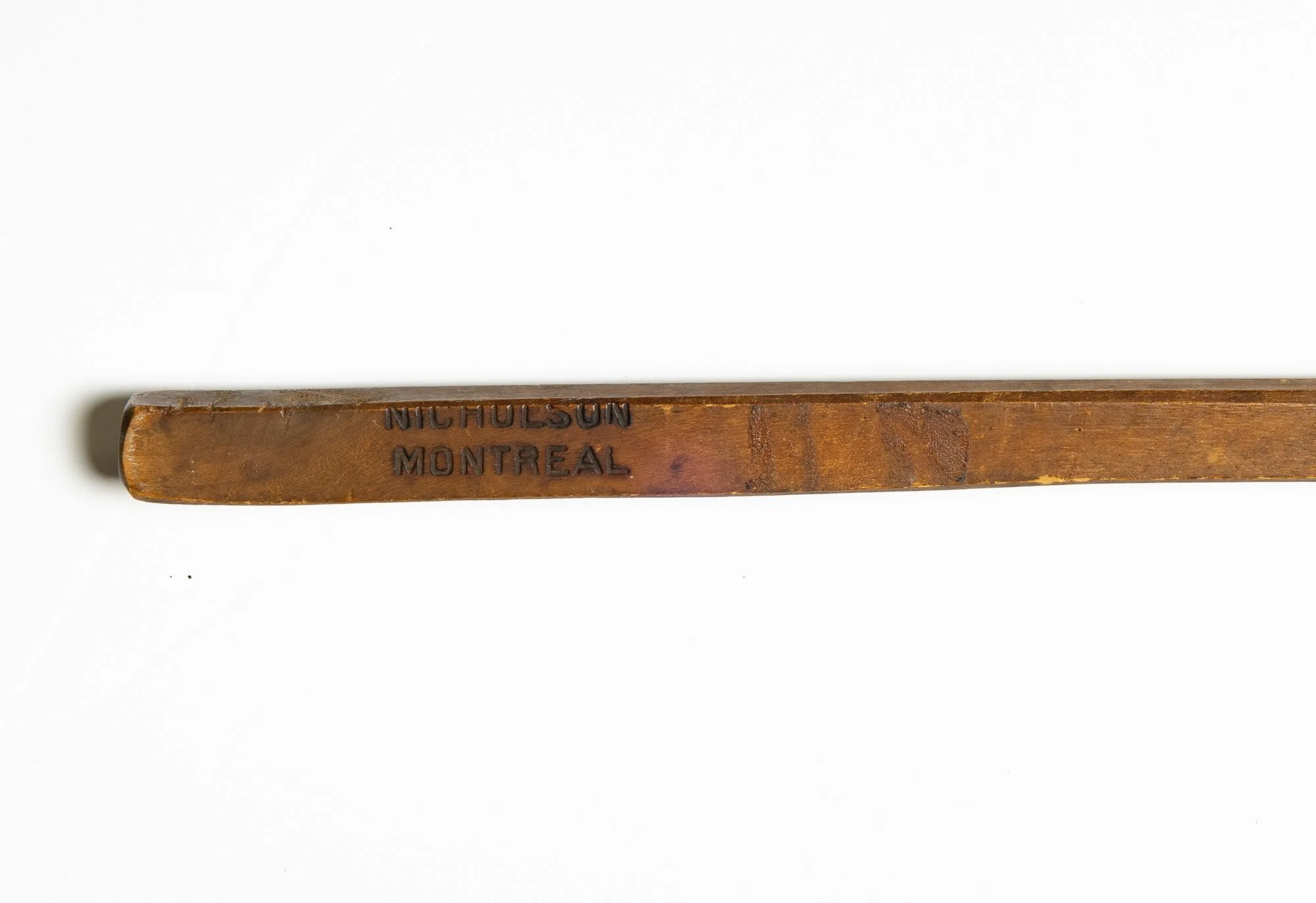
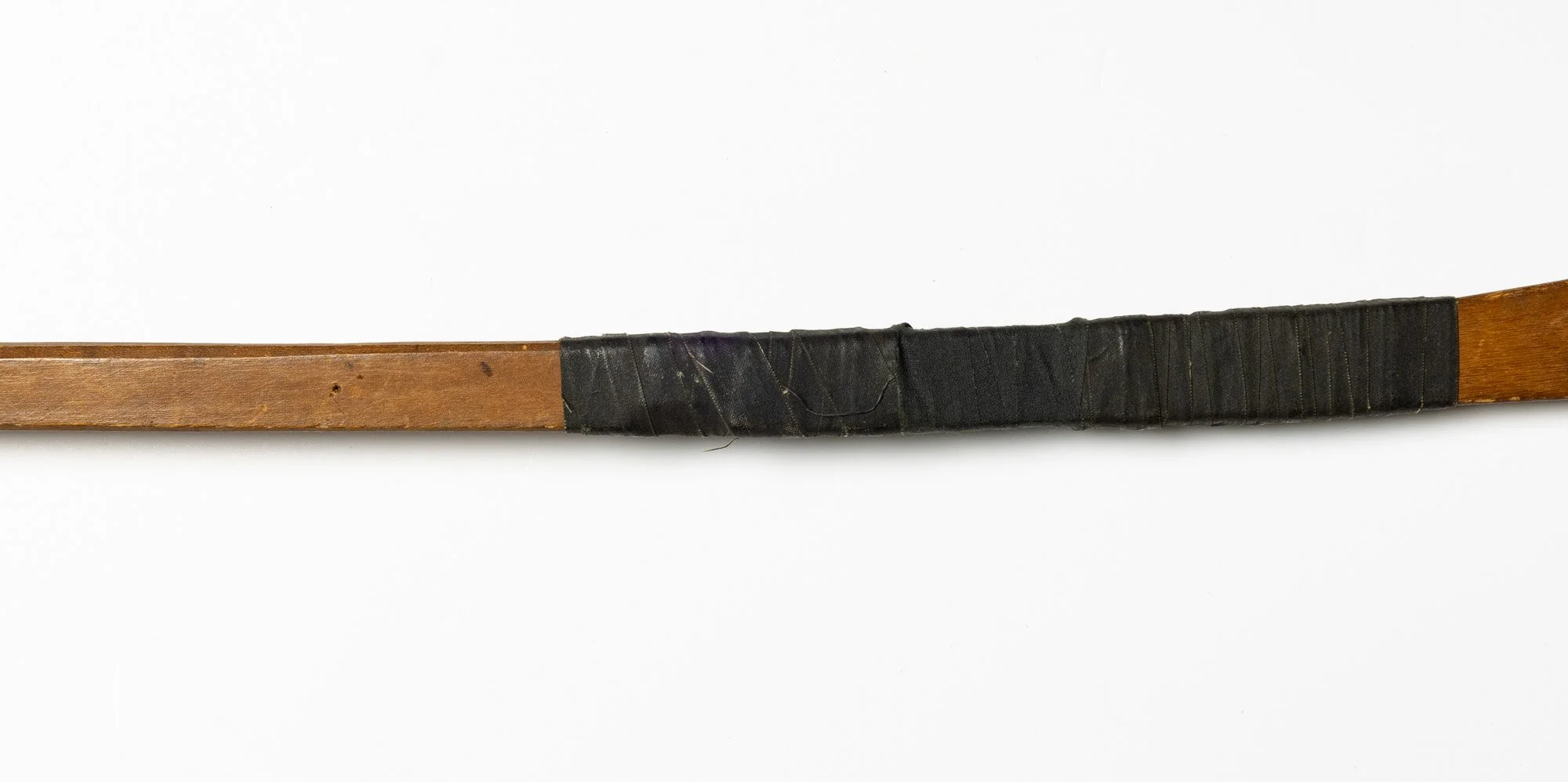
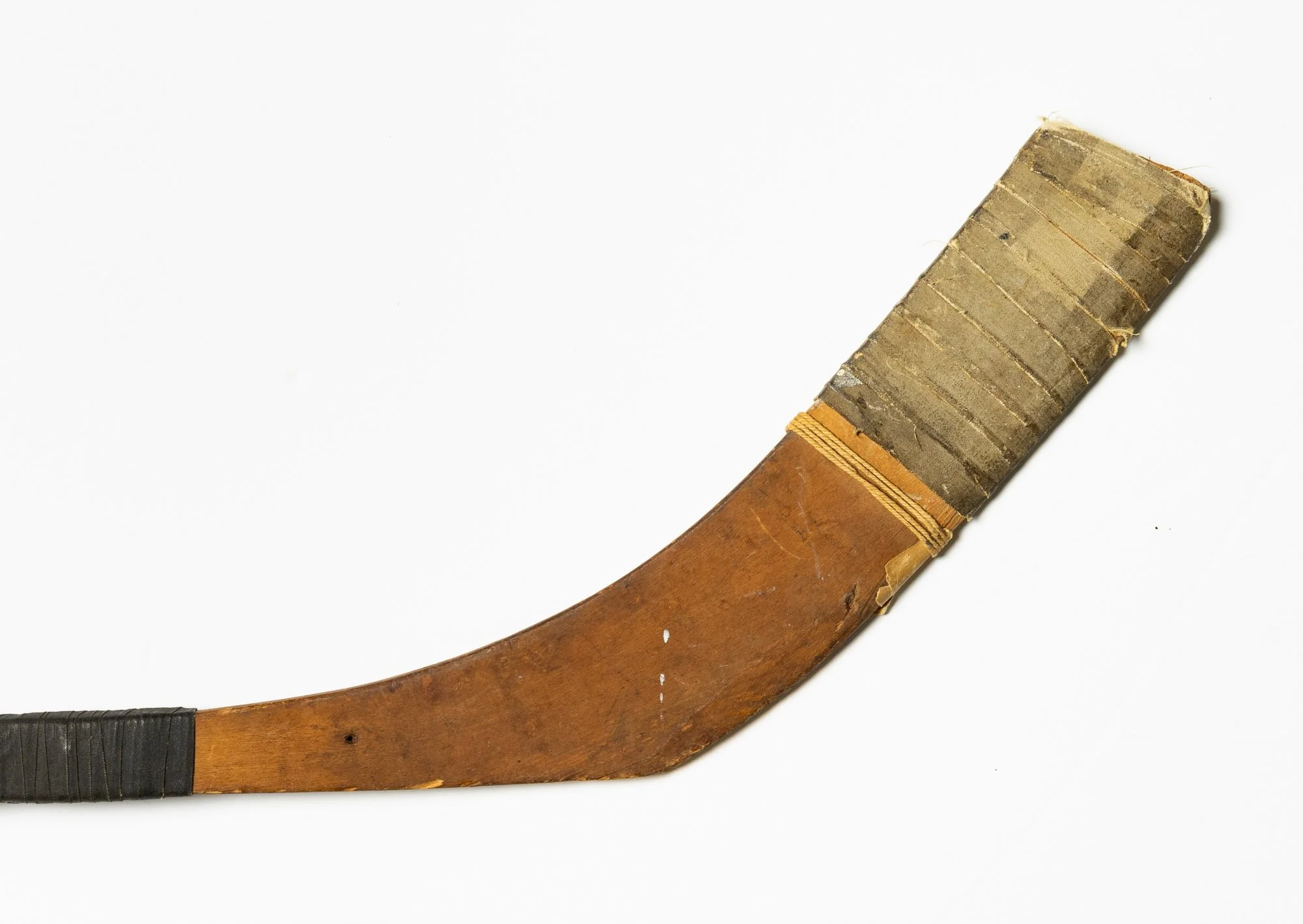
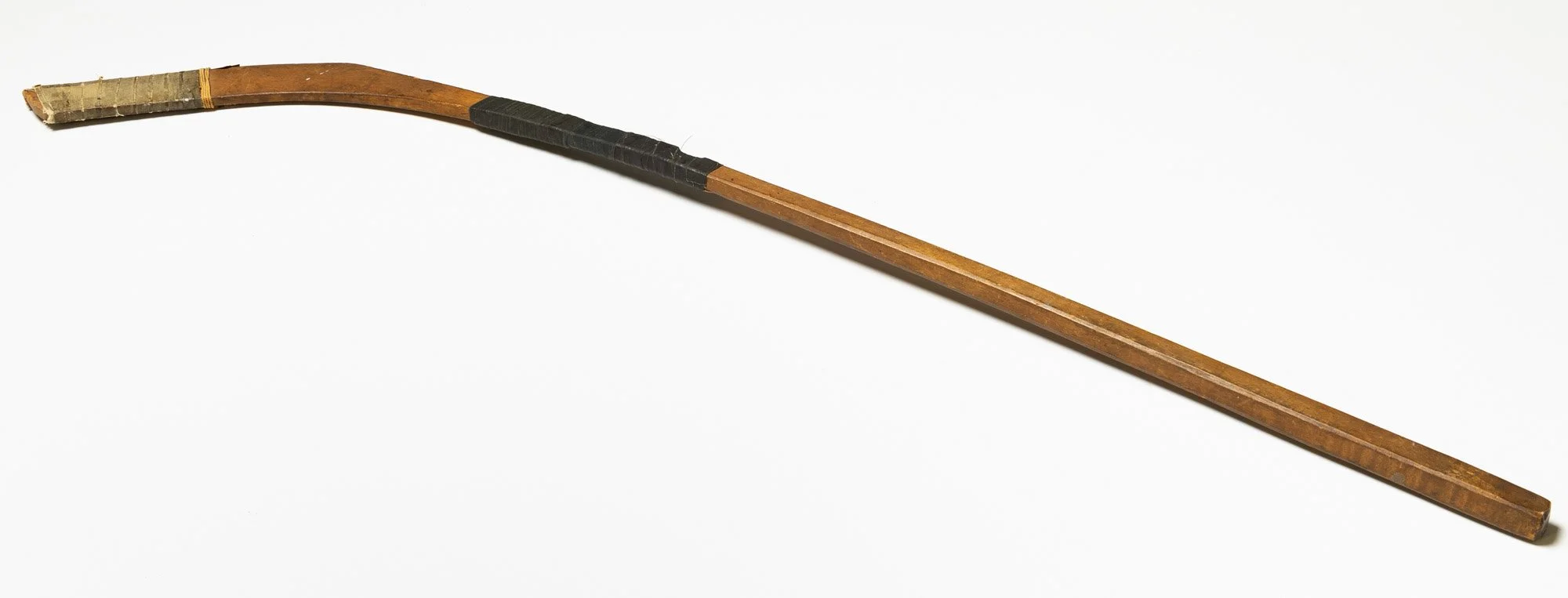
A hockey stick used by Billy Nicholson to help win the Stanley Cup in 1902 comes to auction at Miller & Miller on September 28.
Billy Nicholson (1878-1947) was said to be the heaviest of players. A Montreal Gazette newspaper article from June 1993 – the 100th anniversary year of the Stanley Cup – featured an interview with his daughter Gwen Nicholson-McRae, who was then 81. The story reported, “in one newspaper account Nicholson is referred to as the best player in the world…Other adjectives used to describe him included rotund, old and fat.” News clippings of the day said he weighed 300 pounds, the heaviest in the league, but more current sources place him around 220.
McFarlane created multiple hockey museums in his lifetime, including the former Brian McFarlane Hockey Museum at the Big Apple Theme Park in Colbourne, Ontario, which later moved to Niagara Falls. It was roughly around the year 2000 when he was doing research for his book on the history of women’s hockey that he met with the Waltho family in Cornwall, Ontario whose daughter Helen was an outstanding hockey player. It was through the Walthos that he acquired the Billy Nicholson stick. Fred Waltho had previously been featured with it in a July 1980 news story in the Cornwall Standard-Freeholder.
Fred Waltho had previously been featured with the stick in a July 1980 news story in the Cornwall Standard-Freeholder. Click to enlarge and read.
In the middle of his hockey career Billy Nicholson moved up to Haileybury in Northeastern Ontario. According to McFarlane it was during the silver rush in the nearby Cobalt mines and people were craving excitement so two hockey franchises were set up. The 1993 Montreal Gazette story said they were dubbed “the highest-priced team in the world” since players were reportedly paid $5,000 per game, plus mining claims. Fans would throw money onto the ice and Billy Nicholson would scoop it into the net with his stick. According to McFarlane, someone put a tub on the ice for the money and Billy would sit on top of it.
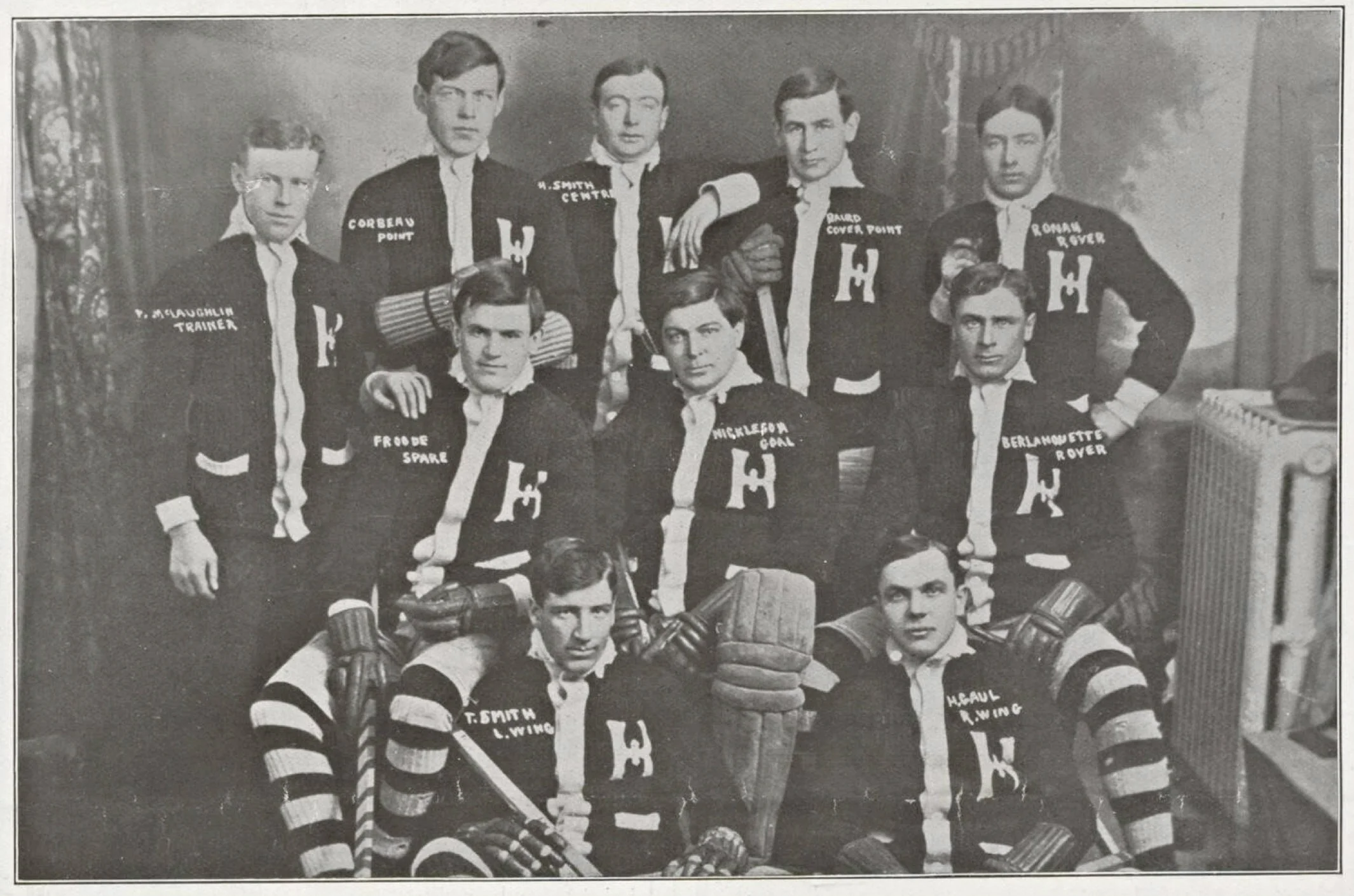
Haileybury Hockey Club, 1908–09. Nicholson is seated in the middle row, second from the right, wearing goalie pads. Source.
The Gazette article also refers to the book, The Stanley Cup Story by Henry Roxborough, in which a story is told about a game between Cobalt and Haileybury. Apparently, Haileybury was losing 5-0 and the team’s sponsor Noah Timmins had bet $50,000 his team would win the game (roughly $1.7 million in today’s dollars). “Timmins burst into his team’s dressing room and delivered a diatribe to his team in general and Nicholson in particular. And then in great majesty Billy Nicholson, the biggest goalkeeper in the history of the game, arose and demanded, ‘Why all the excitement?’ Why criticize me? I never get properly warmed up until the other fellows get five goals. After that I’m invincible. This game isn’t over. Be of good cheer’.” Haileybury went on to tie the game in the second half and win it in overtime.
Back when McFarlane was a year into his 28-year career with Hockey Night in Canada he wrote a song about Toronto Maple Leaf player Eddie Shack, a scrapper known for bumping into other players, including those on his own team. McFarlane’s brother-in-law who had a doctorate in music wrote the music for the song and a band was hired to play it. Clear the Track, Here Comes Shack came out in February 1966 and was number-one on the Toronto music charts for two weeks, “beating out The Rolling Stones and The Beatles,” according to McFarlane.
In 1966, a year into his Hockey Night in Canada career, McFarlane wrote the chart-topping song Clear the Track, Here Comes Shack about Leafs fan-favourite Eddie Shack.
Hockey’s clearly not just a sport, it’s a game of stories and a 123-year-old goalie stick used in a winning Stanley Cup game by the heaviest goalie in the league during the earliest days of hockey is surely one for the books.
By Diane Sewell
Diane Sewell has been a writer for more than 25 years, producing feature stories for some of the country’s top newspapers and consumer magazines, as well as client newsletters and commissioned books.
Sale Information:
Pre-1980 Sports Cards & Memorabilia
September 28, 2025. Online-only.
Bidding now open.
SELL WITH US
Do you have a collection or significant piece of Sports History with a story to tell? We’d love to hear more.
Request a free, no-obligation auction evaluation from our experts today.
Did you enjoy this story? Feel free to share it using the buttons below: